






NEWS
Categories List
Recent Posts
 Netherlands Client Delegation Visits Our Factory to Advance European Highway Guardrail CooperationOct 10, 2026
 AASHTO M180 Guardrail Requirements: A Practical Guide to Material ComplianceOct 10, 2026
 Port Safety Barriers: Selecting Protection for Vehicle Lanes and Loading AreasOct 10, 2026
For large-scale transport infrastructure projects, C Posts are rarely a line item that can be priced in isolation for very long. Early budget estimates may start with a per-ton or per-piece assumption, but once the project moves into supplier evaluation, the real question becomes more complex: what exactly is being bought, under which standard, in what volume, and with what delivery and quality risk attached?
That matters because two offers for “C Posts” can look similar on paper while carrying materially different total costs. For business evaluators, the procurement decision is not just about the lowest unit rate. It is about identifying the cost drivers that affect installed value, compliance exposure, delivery certainty, and future maintenance liabilities.
There is no universal C Post price benchmark
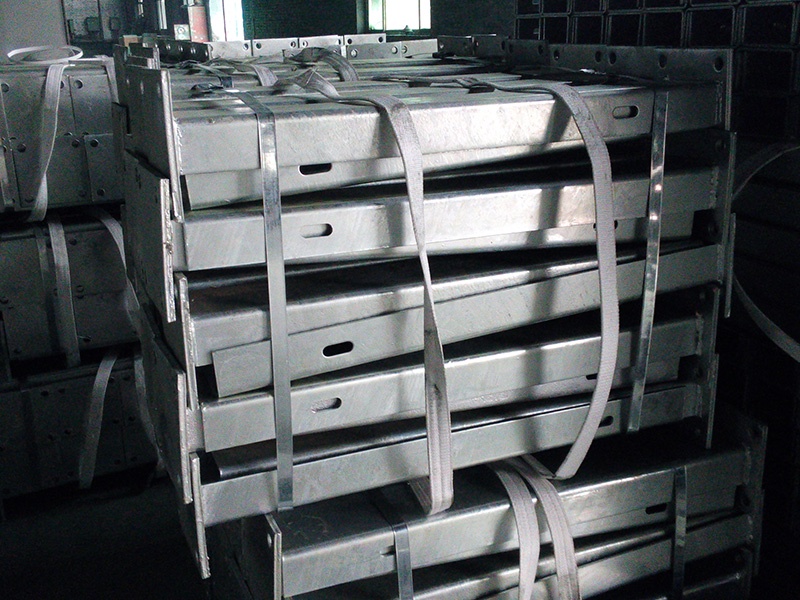
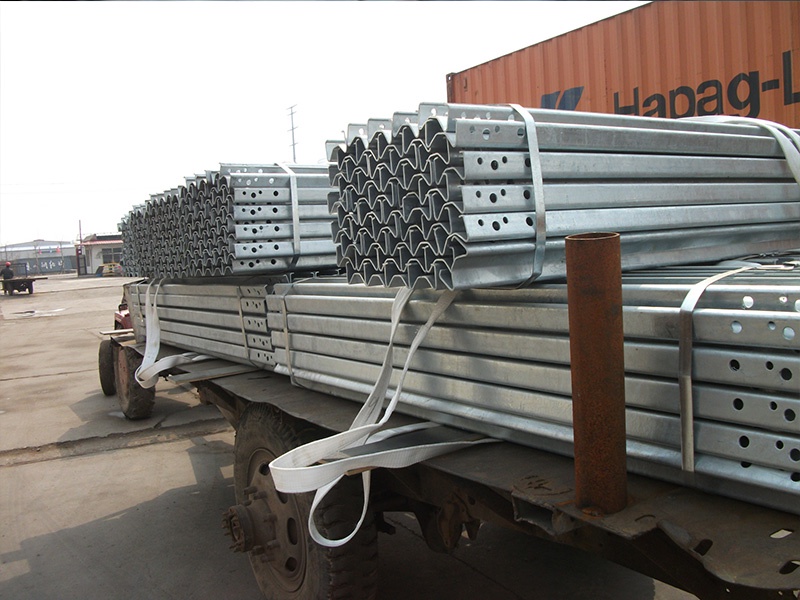
In transport infrastructure procurement, C Posts are usually used as support members in guardrail systems and related roadside safety applications. Their cost depends on variables that change from project to project: steel thickness, profile dimensions, post length, punching pattern, coating system, tolerance requirements, and the governing road authority specification.
Because of that, market pricing is commonly quoted in one of three ways:
- per piece, for a defined size and coating specification;
- per ton, for framework budgeting or export comparison;
- as part of a complete guardrail system package, including beams, posts, fittings, fasteners, and sometimes installation support.
For large-scale projects, the third approach is often more meaningful. A low post price can be offset by higher freight, poor galvanizing consistency, rejection risk, or compatibility issues with other system components.
What drives the cost of C Posts most strongly
The biggest cost variable is usually steel input. C Posts are formed from steel whose price moves with regional raw material markets, mill supply conditions, energy costs, and trade measures. In periods of volatility, quotations may remain valid only for a short window. Evaluators comparing bids across countries should pay attention to whether the supplier is pricing from current coil or plate procurement, existing stock, or a forward production plan.
Dimensions and weight per post are the next major factor. A heavier post with thicker material and longer embedment length may look only marginally different in drawings, but at project scale it can change total steel consumption substantially. Punching and drilling patterns also matter. Non-standard hole spacing, special slots, tighter tolerances, or project-specific modifications increase manufacturing time and reduce production efficiency.
Coating is another decisive cost component. Hot-dip galvanizing remains the standard choice for many highway applications, but coating thickness requirements, zinc consumption, surface preparation quality, and inspection criteria can all affect price. In corrosive environments such as coastal corridors, estuary crossings, or regions with heavy de-icing salt use, a cheaper coating specification may create a much higher lifecycle cost. Some projects also require additional painting or duplex systems for visibility or environmental durability.
Order volume cuts both ways. Large quantities generally lower the unit manufacturing cost because tooling, setup, and inspection resources are spread across more units. At the same time, very large projects often impose stricter quality documentation, staged delivery requirements, traceability obligations, and third-party inspections, all of which add cost back into the offer.
Why project location changes the true procurement cost
For cross-border sourcing, ex-works price is only the start. Freight can become a major cost element because C Posts are steel products with significant weight and relatively limited value density. Ocean rates, inland trucking, port congestion, and container or break-bulk availability can materially change the landed cost.
Import duties, customs classification, local certification requirements, and origin-related trade restrictions should also be checked early. For some buyers, the larger risk is not duty but delay. A competitively priced offshore quotation may become uneconomic if it introduces schedule risk to a highway package with liquidated damages exposure.
This is particularly relevant on projects where posts are only one component in a broader roadside safety system. If the supply chain for beams, terminals, transition sections, and hardware is fragmented across multiple vendors, coordination costs rise. In some cases, sourcing a compatible system package is commercially safer than optimizing each part separately.
Cheap C Posts can become expensive after award
Business evaluators often see the same pattern in infrastructure tenders: a supplier wins attention on unit price, but post-award costs emerge through quality deviations, missing documentation, or installation inefficiencies.
Common hidden cost triggers include:
- galvanizing that does not meet specified coating performance or appearance criteria;
- dimensional inconsistency that slows installation on site;
- insufficient material traceability for engineer approval;
- rework caused by incompatible hole positions or connection details;
- packaging and handling damage during long-distance shipment;
- limited ability to support urgent replenishment orders.
These issues matter more on large-scale transport projects than on small local purchases because the downstream cost of delay is amplified. A post that is marginally cheaper at the factory can become significantly more expensive if it interrupts installation sequencing or fails inspection during a critical construction window.
How experienced buyers compare offers
Serious comparison starts by normalizing the quotation basis. Evaluators should make sure all suppliers are pricing against the same drawings, steel grade, coating requirement, test standard, tolerance expectations, and Incoterm. If one bidder includes fasteners, base plates, NDT records, or third-party inspection while another excludes them, the price gap may be misleading.
It is also useful to separate cost into five layers:
- raw material and forming;
- surface treatment;
- packaging and logistics;
- quality assurance and certification;
- commercial risk allowance, including lead time and replacement support.
This approach helps identify whether a supplier is genuinely efficient or simply light on scope. It also makes negotiation more practical. In many cases, cost can be optimized not by pressuring the supplier on headline price, but by standardizing hole patterns, consolidating lengths, improving batch sizes, or clarifying inspection protocols before production starts.
Where projects include higher-risk roadside zones, buyers may also compare alternative barrier-support configurations rather than treating all steel members as interchangeable commodities. In some locations, system performance requirements justify moving beyond a basic component-by-component cost mindset. For example, in bridge approaches, median openings, or high-impact sections, a more robust system element such as Open Box Beam 4.8m may be evaluated alongside standard support components because its higher stiffness and crash resistance can influence overall system design, maintenance frequency, and long-term asset value.
Specification discipline matters more than aggressive bargaining
One of the most common procurement mistakes is seeking price before locking the technical basis. When specifications remain open, suppliers make different assumptions. One may quote to a lighter coating, another to a different steel source, and another to a looser tolerance range. The result is not a real price comparison.
For C Posts, buyers should confirm at minimum:
- material grade and source expectation;
- profile dimensions and thickness;
- length, punching pattern, and any special fabrication details;
- galvanizing or other coating standard;
- inspection and test documentation requirements;
- packing method and shipment format;
- whether the posts must match an existing guardrail system.
On larger international tenders, samples or pre-production approval can be worth the time. They reduce the risk of mass non-conformity and give the buyer evidence of process capability before committing to volume production.
What pricing signals can indicate supplier risk
If one quotation is materially below the market cluster, it deserves closer review rather than automatic preference. The gap may be legitimate if the supplier has scale, in-house galvanizing, favorable freight access, or a strong raw material contract. But it can also indicate under-scoped quality control, optimistic lead times, or assumptions that do not fully match the tender requirement.
Evaluators should look for pricing signals such as:
- very short quotation validity during volatile steel markets;
- unclear wording around coating thickness or inspection basis;
- separate charges for tooling that were not visible in the initial quote;
- unusually low packaging and logistics allowances for export shipments;
- limited warranty or weak replacement commitment for defective batches.
Factory capability also needs verification. For safety-related highway steel products, cost competitiveness is stronger when the manufacturer controls core steps such as drilling, bending, rust removal, shot peening, galvanizing, painting, and inspection rather than outsourcing critical processes across multiple vendors. That does not automatically guarantee lower price, but it usually improves consistency and schedule control.
The better question is not “How much do C Posts cost?” but “What will compliant C Posts cost this project?”
For budgeting purposes, C Posts should be treated as a specification-sensitive steel product, not a simple commodity. Their final cost is shaped by steel markets, design details, coating performance, project location, compliance demands, and delivery risk. On large-scale transport infrastructure work, those variables can outweigh the apparent savings from a low opening quote.
The most reliable procurement outcome usually comes from aligning technical scope early, comparing offers on a landed and compliance-adjusted basis, and checking whether the supplier can support the project beyond the first shipment. That is where commercial value is actually created. In roadside safety procurement, especially where higher-performance systems or severe environmental conditions are involved, unit price is only one part of the decision.
Leave A Reply
Need More Details?
Contact me for details on creating and managing design projects, project features, and services and prices
consult
Our company was established in 1998. It‘s a Chinese pioneer enterprise integrating production and sales, committed to providing high-quality steel products to customers at home and abroad.

First class quality service and professional after-sales team.
Get in Touch
*We respect your confidentiality and all information are protected.