






NEWS
Categories List
Recent Posts
 Netherlands Client Delegation Visits Our Factory to Advance European Highway Guardrail CooperationOct 10, 2026
 AASHTO M180 Guardrail Requirements: A Practical Guide to Material ComplianceOct 10, 2026
 Port Safety Barriers: Selecting Protection for Vehicle Lanes and Loading AreasOct 10, 2026
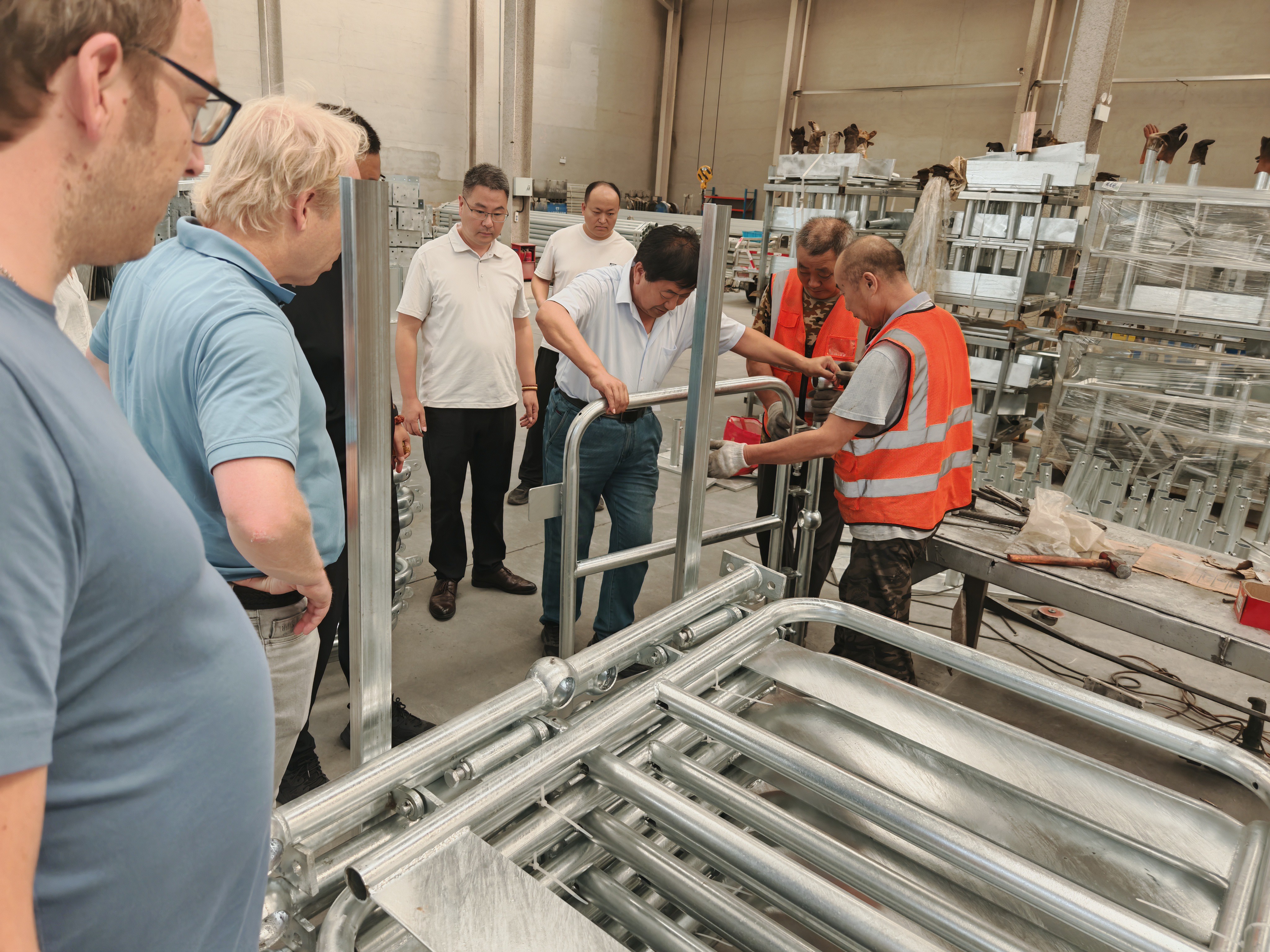
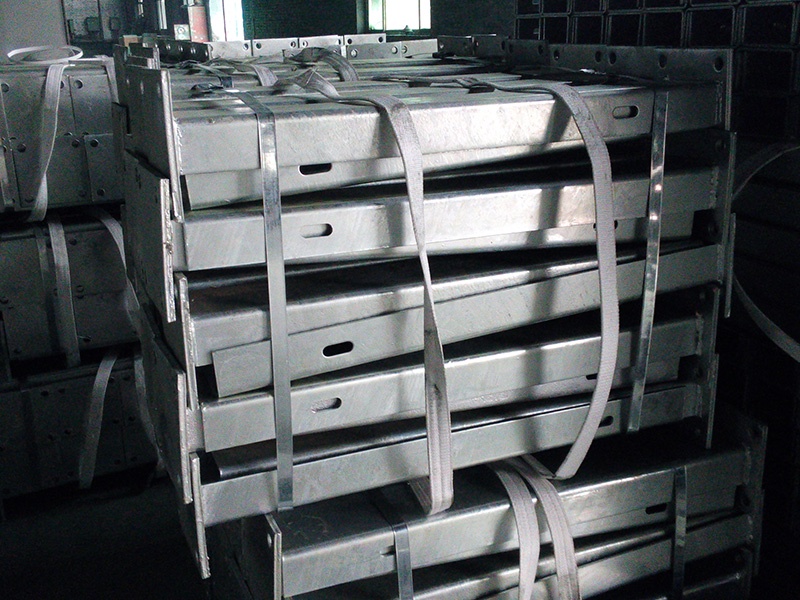
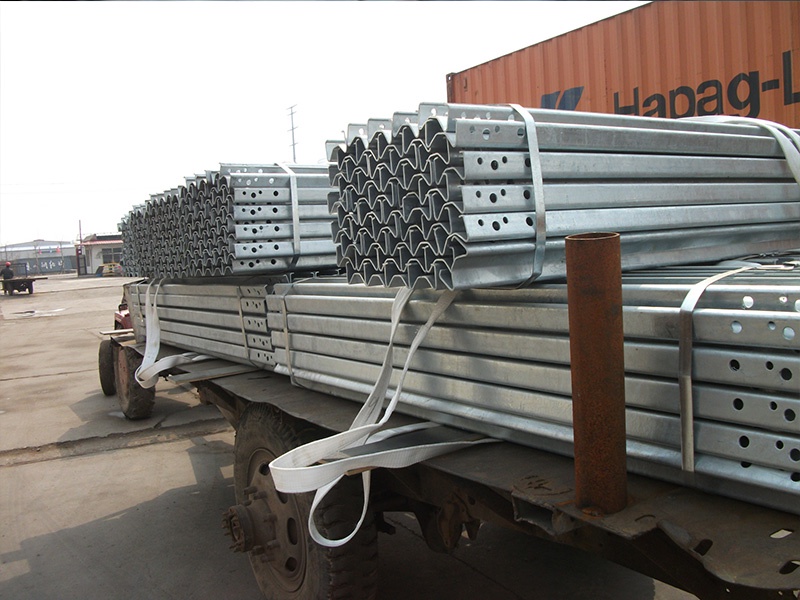
A Z post guardrail price comparison becomes misleading when it is reduced to a single number per meter. In transport infrastructure, the visible line item usually reflects only the steel member itself, while the actual cost is shaped by corrosion protection, base material consistency, post spacing, connection hardware, foundation conditions, and the amount of field adjustment required during installation. A lower quoted price may still lead to a higher project cost if the system needs extra reinforcement, earlier replacement, or repeated site corrections.
Steel grade and section geometry are usually the first technical points worth examining. A Z post is selected for its structural behavior under impact and for the way it supports the guardrail beam under working loads. If two quotations look close in profile dimensions but differ in wall thickness, forming accuracy, or tolerances at bolt holes, they are not equal offers. Drilling precision, bending consistency, and surface preparation all affect whether posts line up cleanly during installation or force crews to rework connections on site. That labor exposure rarely appears clearly in an initial comparison sheet.
Material quality changes the real price
Raw material cost is one of the main reasons guardrail quotations vary, but the issue is not simply whether the steel is cheaper or more expensive on a given day. Thickness uniformity matters because weak variation across a batch can affect both structural behavior and coating performance. A post that arrives with dimensional inconsistency may complicate beam alignment, spacer placement, and bolt fastening. Over a long roadside section, small deviations can accumulate into visible waviness or connection stress.
Surface treatment has the same effect on long-term cost. Galvanizing is often treated as a routine finishing step, yet the quality of rust removal, shot peening or comparable cleaning, and the control of the hot-dip galvanizing process influence coating adhesion and durability. In areas exposed to runoff, coastal air, deicing chemicals, or frequent wet-dry cycles, poor coating quality can shorten the maintenance interval. A buyer comparing only the base steel price may miss the fact that corrosion resistance is carrying part of the service-life value.
Where the design includes support components such as U Post Base Plate, cost should also be read together with the post arrangement rather than as an isolated accessory price. In highway guardrail systems, base-supported elements are expected to transfer load downward, resist shift, and maintain overall line stability. If the assembly uses hot-dip galvanized parts, matching connectors, and spacing suited to the alignment, it can reduce later correction work at joints and critical positions.
Spacing, terrain, and impact zones alter the comparison
One frequent mistake is to compare posts on a standard spacing assumption without checking whether the road section actually allows that layout. A nominal spacing of 4 meters may be workable on regular stretches, but locations near ramps, curves, embankment transitions, bridge approaches, culvert edges, or median openings may require tighter spacing such as 2 meters in critical zones. Once spacing changes, the total quantity of posts, fasteners, and labor hours shifts immediately. A quotation based on ideal spacing can look attractive until the final design is coordinated with the site plan.
Ground conditions create another gap between quoted and actual cost. Driven posts and base-mounted posts do not behave the same in rocky ground, backfilled shoulders, soft subgrade, or areas with buried utilities. Where the foundation is difficult, installation speed may drop sharply, and some post types may need a modified detail. If this is not identified during comparison, a low initial unit rate may depend on assumptions that do not survive field conditions.
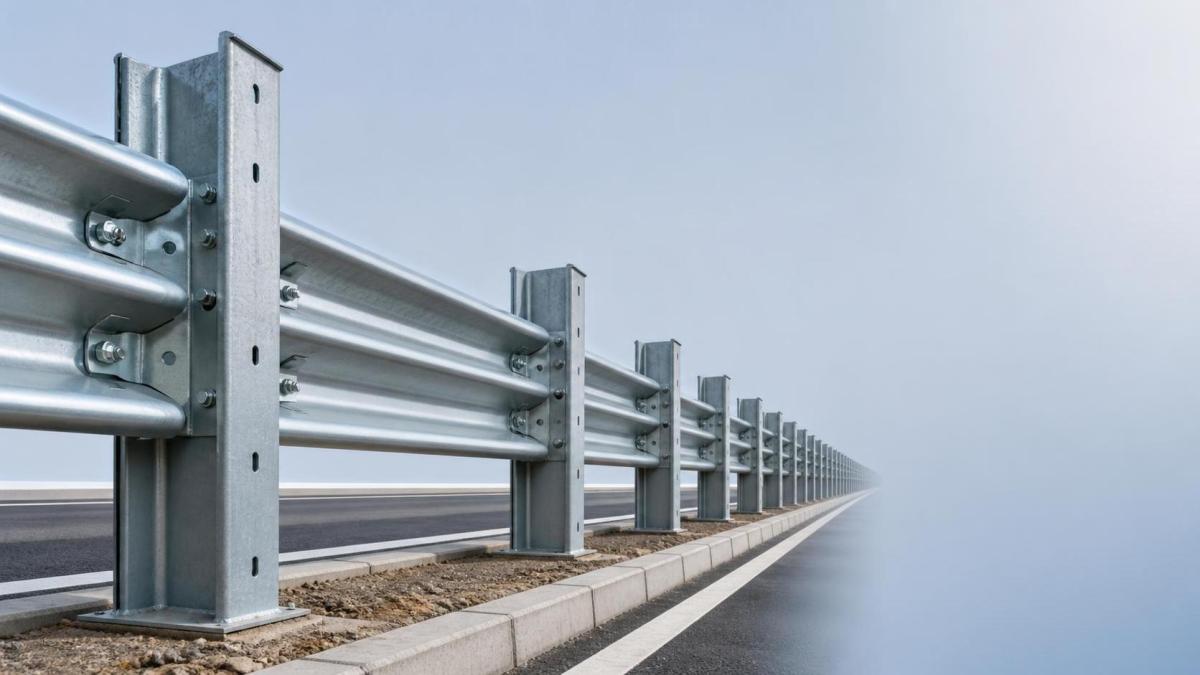
Transport projects also have sections where impact resistance expectations are higher because the consequences of guardrail failure are more severe. On these segments, heavier sections, reinforced transitions, or closer post intervals may be justified. Comparing those units directly against standard roadside lengths creates a distorted picture. The better approach is to separate ordinary runs from critical locations and compare each category on its own technical basis.
Processing details often explain the price gap
Manufacturing operations add cost in ways that are easy to overlook when reviewing a short quotation table. Drilling, forming, non-destructive testing where specified, galvanizing, and painting all involve different levels of control. A Z post that has been processed with tighter fabrication discipline may carry a higher ex-works price, but it is also less likely to create alignment problems, coating defects, or hidden weaknesses near holes and bends. That matters because impact-loaded roadside components do not fail only from dramatic overload; they can also degrade from poor processing quality over time.
Custom fabrication deserves careful treatment in any price comparison. Non-standard posts with different diameters, wall thicknesses, or lengths are common when drawings must match existing infrastructure or unusual shoulder geometry. Once customization enters the scope, the lowest standard catalog price no longer says much. The important questions become whether the modified section can be produced consistently, whether bolt patterns remain compatible with the rest of the barrier line, and whether the finish on custom parts matches the corrosion protection level of standard members.
Freight, packaging, and site handling are part of the number
Guardrail posts are heavy, long steel components, so logistics can change the economics significantly. Freight cost may depend on route distance, loading efficiency, packaging method, and whether mixed components are shipped together or in separate batches. Damage risk during transport should also be considered. If the coating is scratched because bundling or unloading was poorly managed, the project may inherit rework before installation even begins.
Site handling affects labor in quieter ways. Posts that are clearly marked, bundled in erection sequence, and delivered with connection hardware grouped by section can save time during unloading and placement. A cheaper shipment that arrives without organized identification may slow the crew, especially on long highway sections where staging space is limited. The additional labor may not be dramatic in one day, but over an extended installation window it can become a meaningful cost driver.
Read the quotation against the full assembly
Another weak comparison method is to look at Z posts alone without reviewing the rest of the guardrail assembly. The post, beam, spacer, bolts, blockouts, terminal details, and foundation interface work as a system. If one quotation assumes standard bolts while another includes corrosion-matched connectors and energy-absorbing blocks, the difference should not be treated as a simple pricing discrepancy. It is a difference in configuration. In some layouts, C-type, U-type, Z-type, or H-type support elements may be chosen to suit the alignment and loading path, and that choice changes both fabrication and installation requirements.
It is also sensible to read any drawing-based quotation for omissions. Coating thickness assumptions, hardware grade, post caps, tolerances, testing requirements, and painting scope can all sit in the grey area between “included” and “understood.” Post caps may seem minor, yet in exposed outdoor conditions they can help limit rainwater entry and internal corrosion. If they are absent from one offer and present in another, the comparison should acknowledge that difference instead of flattening both into one unit price.
Maintenance exposure should be considered early
Long-term cost is shaped by how easily the system can be inspected, repaired, and matched with replacement parts after an impact event. A slightly higher upfront price may be justified if the section geometry, coating quality, and accessory compatibility make future replacement straightforward. In contrast, a lower-cost system with inconsistent dimensions or uncommon connection details can create delays when damaged posts need to be replaced quickly to restore roadside protection.
The most reliable comparisons usually come from aligning all quotations to the same drawing basis, spacing assumptions, corrosion treatment level, and installation condition notes. Once those variables are fixed, the remaining price difference becomes easier to interpret. Without that alignment, a Z post guardrail comparison is often comparing different technical assumptions rather than different costs.
Leave A Reply
Need More Details?
Contact me for details on creating and managing design projects, project features, and services and prices
consult
Our company was established in 1998. It‘s a Chinese pioneer enterprise integrating production and sales, committed to providing high-quality steel products to customers at home and abroad.

First class quality service and professional after-sales team.
Get in Touch
*We respect your confidentiality and all information are protected.