






NEWS
Categories List
Recent Posts
 Netherlands Client Delegation Visits Our Factory to Advance European Highway Guardrail CooperationOct 10, 2026
 AASHTO M180 Guardrail Requirements: A Practical Guide to Material ComplianceOct 10, 2026
 Port Safety Barriers: Selecting Protection for Vehicle Lanes and Loading AreasOct 10, 2026
Why Fish Plate Connector Size and Load Matching Matter
Selecting the right Fish Plate Connector sizes and load capacity is critical for safe, durable transport infrastructure. Accurate matching affects stability, installation speed, and long-term maintenance cost.
In highway guardrail systems, bridge sections, and impact-prone transitions, a mismatched Fish Plate Connector can create stress concentration, loosen under vibration, or reduce overall system performance.
That is why technical evaluation should go beyond nominal size. It should include section fit, bolt pattern, steel grade, coating, fabrication accuracy, and expected field loads.
What to verify before confirming a Fish Plate Connector
A practical review usually starts with a few basic checks. If these are confirmed early, later design revisions and installation delays are much easier to avoid.
- Match connector thickness, hole spacing, and profile geometry to the joined rail or beam. Small dimensional errors often create bolt preload loss and uneven force transfer in service.
- Confirm the design load case first, including impact load, dynamic vibration, and local bending. A Fish Plate Connector chosen only by static load can be under-rated.
- Check steel grade and forming quality together. Strength on paper is not enough if drilling, bending, or edge condition reduces the effective performance of the part.
- Review corrosion protection based on site exposure. Galvanizing, painting, or zinc-aluminum-magnesium coatings can greatly affect service life near coastlines or deicing salt routes.
- Verify tolerance compatibility with adjoining components and fasteners. Good fit reduces installation correction work and helps the Fish Plate Connector maintain stable contact under traffic loading.
- Ask for manufacturing and testing records. Non-destructive testing, shot peening, rust removal, and coating control provide useful evidence when evaluating connector reliability.
How to match size with real load conditions
The best Fish Plate Connector is not simply the largest one. It is the one that matches the connected member, expected impact path, and maintenance environment.
Start with the connection geometry
Check width, thickness, hole diameter, edge distance, and overlap length. These dimensions determine whether the connector can distribute force smoothly without local tearing or bolt slip.
Then evaluate the load path
In transport applications, loads rarely stay purely axial. Vehicle impact, guardrail deflection, bridge movement, and thermal expansion all change how a Fish Plate Connector performs over time.
If the joint sits near a high-risk transition, stronger adjacent members may also be required. In such cases, systems using Open Box Beam 2.4m can be relevant because of their extremely high section modulus and bending stiffness.
A quick comparison table for evaluation
Common situations where wrong matching causes problems
Bridge sections and expansion influence zones
These locations often see combined vibration and movement. A Fish Plate Connector may pass basic strength checks yet still loosen if slot position, bolt clamping, or tolerance control is poor.
It helps to compare drawing dimensions with actual fabricated samples before mass production. This is especially useful when connection details interact with multiple steel components.
Median openings, ramps, and diverging zones
Impact direction changes quickly in these sections. The Fish Plate Connector should be checked for local bending demand, not just average line load across the barrier system.
Where the barrier itself needs stronger crash response, adjacent members with higher stiffness can improve performance. For example, Open Box Beam 2.4m is often suitable for high-risk expressway sections and pier protection zones.
Details that are often overlooked
- Do not review connector capacity alone. Bolt grade, washer selection, and hole quality can limit the actual working strength of the complete joined assembly.
- Watch edge finishing after drilling or cutting. Burrs, heat-affected zones, or poor rust removal may accelerate coating failure and shorten Fish Plate Connector service life.
- Check whether installation access affects tightening quality. A correct design can still perform badly if site geometry prevents consistent bolt torque or alignment.
- Request sample-based verification for critical projects. Trial assembly often reveals tolerance stacking that is hard to spot from drawings and data sheets alone.
What a reliable supply process should include
For transport steel products, connector performance depends heavily on process control. Quotation, design review, manufacturing, and installation support should work as one continuous chain.
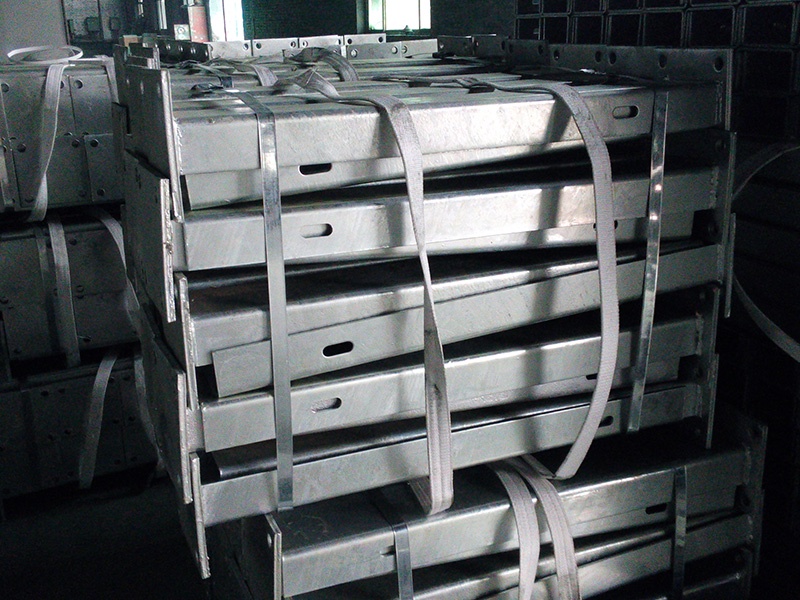
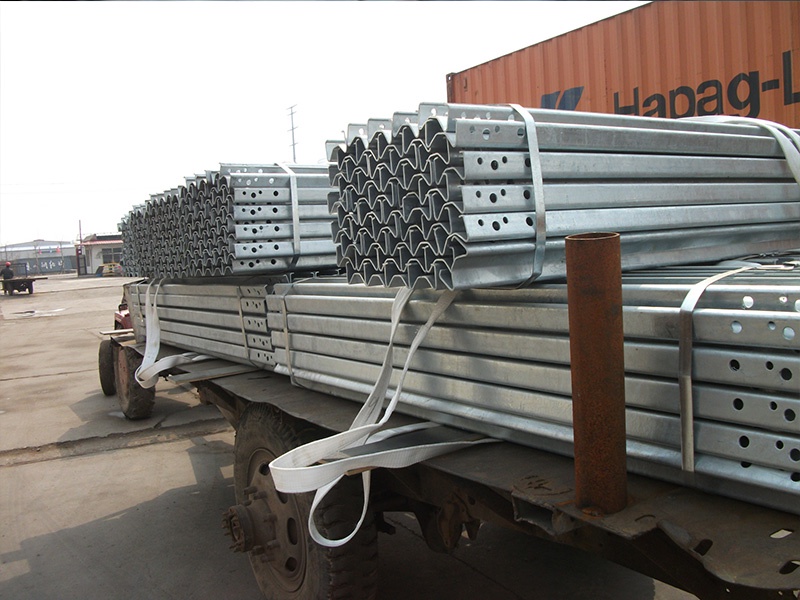
A dependable production route usually includes drilling, bending, rust removal, shot peening, non-destructive testing, galvanizing, and painting. When parts are manufactured according to project drawings, these steps help keep the Fish Plate Connector consistent with real design intent.
This is particularly important when producing guardrails and related steel products for custom highway projects. Precision fabrication reduces fit-up issues and improves installation efficiency on site.
A practical way to decide
If a Fish Plate Connector is being evaluated for a live project, start with three questions: Does it fit the drawing exactly, does it match the true load case, and can the process quality be verified?
If one of those answers is unclear, ask for revised calculations, sample confirmation, or manufacturing records before approval. That extra step usually saves far more time than correcting a failed connection later.
In short, good Fish Plate Connector selection is really about matching geometry, load, durability, and fabrication quality together. Once those four stay aligned, decision-making becomes much more confident and practical.
Leave A Reply
Need More Details?
Contact me for details on creating and managing design projects, project features, and services and prices
consult
Our company was established in 1998. It‘s a Chinese pioneer enterprise integrating production and sales, committed to providing high-quality steel products to customers at home and abroad.

First class quality service and professional after-sales team.
Get in Touch
*We respect your confidentiality and all information are protected.