






NEWS
Categories List
Recent Posts
 Netherlands Client Delegation Visits Our Factory to Advance European Highway Guardrail CooperationOct 10, 2026
 AASHTO M180 Guardrail Requirements: A Practical Guide to Material ComplianceOct 10, 2026
 Port Safety Barriers: Selecting Protection for Vehicle Lanes and Loading AreasOct 10, 2026
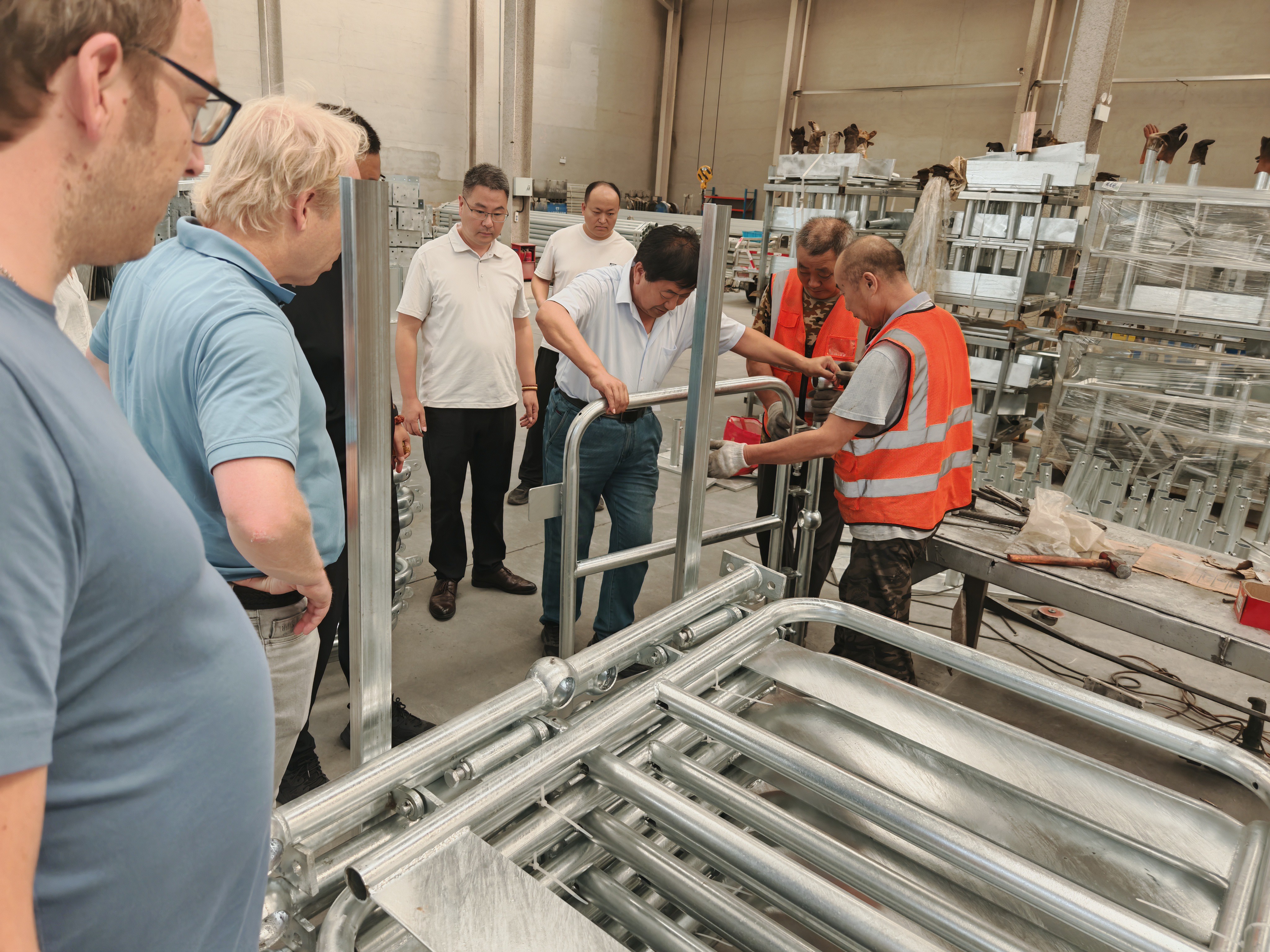
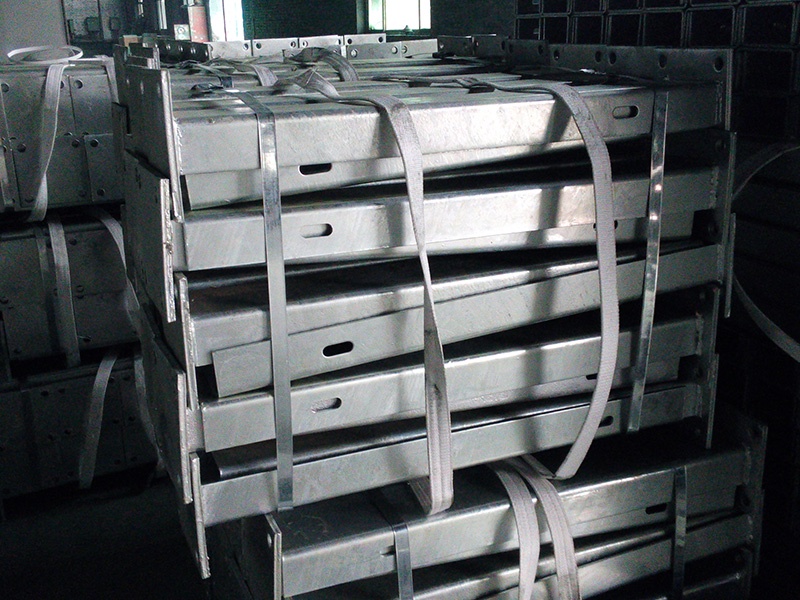
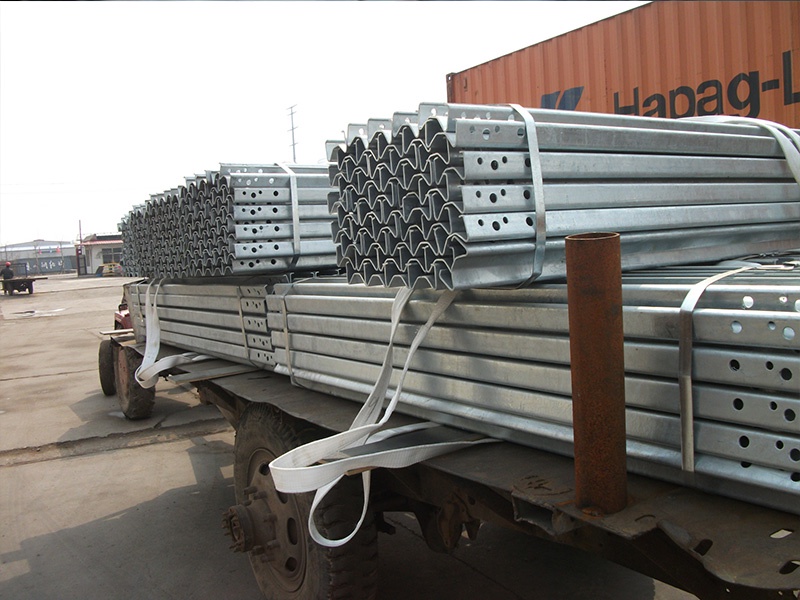
A highway guardrail is a specialized longitudinal roadside barrier engineered to enhance vehicular safety. Its core purpose is to prevent out-of-control vehicles from departing the roadway and striking fixed hazards—such as bridge piers, utility poles, trees, or steep downhill slopes.
By deforming predictably upon impact, a well-designed guardrail system dissipates kinetic energy, reducing the severity of collisions for vehicle occupants while preventing head-on cross-median crashes.
Highway Guardrail Specifications Explained
Understanding the mechanical and physical specifications of highway guardrails is essential for highway engineers, project managers, and procurement officers.
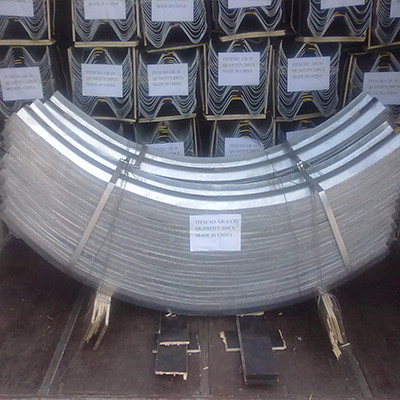
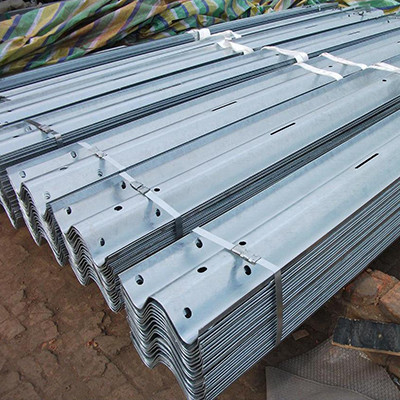
Profile Types: The most common profiles are W-Beam (double wave) and Thrie-Beam (triple wave). W-beams are widely used on standard highways, while Thrie-beam guardrails offer higher cross-sectional stiffness for high-impact zones, mountain passes, and heavy-truck routes.
Material & Thickness: Manufactured from high-tensile structural steel (commonly 12-gauge / 2.67 mm or 10-gauge / 3.43 mm thickness).
Support Posts: Guardrail panels are mounted on heavy-duty steel posts (C-posts, Sigma posts, or I-beam posts) spaced systematically to control deflection during impacts.
End Terminals: Equipped with specialized impact-absorbing crash cushions or flared fish-tail end treatments to eliminate the risk of the rail spearing a vehicle during a head-on collision.
Standards & Compliance: Quality systems strictly adhere to international benchmarks such as AASHTO M180 and ASTM A653/A123, while passing full-scale crash tests under MASH (Manual for Assessing Safety Hardware) or NCHRP Report 350 guidelines.
What Is the Standard Length of Highway Guardrail?
In global highway construction, standard guardrail panel lengths are dictated by standardized post-spacing dimensions. The most widely produced effective length for a standard W-beam section is 12 feet 6 inches (3.81 meters).
When measuring guardrail panels, manufacturers distinguish between total overall length and effective laying length (center-to-center distance between post mounting holes). Longer custom panels—such as 25-foot sections—are also manufactured to reduce overlapping joints and speed up installation on long straightaways.
How Is Highway Guardrail Manufactured?
The production of high-performance steel guardrail is a multi-step precision process designed to maximize structural strength and longevity:
Uncoiling & Feeding: Heavy-duty carbon steel coils (such as Q235B or Q355B) are unrolled and fed into automated production lines.
Cold Roll Forming: The flat steel sheet passes through a series of precision rollers that gradually bend and shape the metal into a perfect double-wave (W-Beam) or triple-wave (Thrie-Beam) cross-section without weakening the steel's structural integrity.
Punching: Automated hydraulic presses punch mounting slot holes for post bolts and panel splicing at exact interval dimensions.
Cutting to Length: High-speed flying shears cut the formed profiles into standard panel lengths.
Surface Treatment: The raw steel panels undergo chemical cleaning, pickling, and hot-dip galvanization to prepare them for extreme outdoor exposure.
Hot Dip Galvanized Highway Guardrail: Benefits and Applications
Corrosion is the greatest threat to long-term roadside safety infrastructure. Hot-dip galvanizing provides a protective zinc coating that bonds metallurgically with the steel substrate.
Superior Corrosion Resistance: The zinc layer acts as a sacrificial anode, protecting the underlying steel even if the surface gets scratched during installation or minor impacts.
Extended Service Life: Hot-dip galvanized guardrails typically offer a maintenance-free service life of 20 to 50+ years, even in harsh coastal, humid, or de-icing salt environments.
Cost Efficiency: Eliminates the need for frequent repainting or structural replacement, significantly reducing long-term highway maintenance budgets.
Highway Guardrail Installation Guide
Proper site installation is just as critical as manufacturing quality to ensure the barrier performs as intended during a collision.
Site Surveying & Marking: Lay out post locations based on engineered drawing specifications and utility clearances.
Post Driving / Foundation Set: Steel posts are driven directly into compact soil using hydraulic pile drivers, or anchored to concrete bases on bridges and retaining walls.
Offset Block Mounting: Install steel or composite spacer blocks onto the posts. Offset blocks prevent vehicle wheels from snagging on the posts during an impact.
Panel Splicing: Align guardrail beams in the direction of traffic flow (to prevent snagging vehicle edges) and secure overlapping panels using high-strength splice bolts.
Terminal & Transition Fitting: Attach crash-worthy end terminals, transition pieces, and retroreflective delineators.
Highway Guardrail Quality Inspection Checklist
Prior to project handover, quality control teams must execute a thorough inspection covering both material integrity and field assembly:
Zinc Coating Thickness: Use a digital coating thickness gauge to confirm compliance with AASHTO M180 standards (typically $ge 550text{ g/m}^2$ or 75–80 microns).
Steel Base Thickness: Measure panel and post wall thickness with micrometer calipers.
Post Depth & Alignment: Check post driving depth, plumbness, and center-to-center spacing tolerance.
Bolting & Torquing: Ensure all splice bolts are tightened to specified torque ratings and that overlap direction aligns with traffic flow.
End Terminal Alignment: Verify that energy-absorbing crash terminals are installed in strict accordance with the manufacturer's crash-tested manual.
How Much Does Highway Guardrail Cost?
Highway guardrail pricing varies depending on steel market fluctuations, panel specifications, and order volume. Key cost breakdown factors include:
Material Class: Thrie-beam panels cost more per linear foot than standard W-beam panels due to higher steel volume.
Steel Thickness (Gauge): Thicker 10-gauge steel commands a premium over standard 12-gauge steel.
Galvanizing Thickness: Heavy-duty zinc coating coatings or secondary polymer coatings increase unit cost.
Complete System Hardware: Overall project budgeting must account for beams, posts, spacer blocks, splice bolts, reflector tabs, and specialized end terminals.
Highway Guardrail Manufacturer vs Supplier: What Is the Difference?
When sourcing guardrails for civil engineering contracts, understanding supplier distinction is vital for quality assurance and cost management:
How to Choose a Highway Guardrail Manufacturer?
Selecting a reliable manufacturing partner ensures your road safety products pass inspection and withstand real-world impacts:
Check International Certifications: Verify that the factory operates under ISO 9001 quality management and produces goods certified to AASHTO M180, EN 1317, or MASH crash-test requirements.
Inspect Raw Material Sourcing: Ensure the factory uses prime steel coils from reputable steel mills with full material traceability.
Evaluate Galvanizing Facilities: In-house hot-dip galvanizing lines guarantee strict control over coating uniformity and adhesion quality.
Request Mill Test Certificates & Sample Testing: Always require third-party inspection reports (such as SGS or BV) and physical samples before placing bulk production orders.
Leave A Reply
Need More Details?
Contact me for details on creating and managing design projects, project features, and services and prices
consult
Our company was established in 1998. It‘s a Chinese pioneer enterprise integrating production and sales, committed to providing high-quality steel products to customers at home and abroad.

First class quality service and professional after-sales team.
Get in Touch
*We respect your confidentiality and all information are protected.