






NEWS
Categories List
Recent Posts
 Netherlands Client Delegation Visits Our Factory to Advance European Highway Guardrail CooperationOct 10, 2026
 AASHTO M180 Guardrail Requirements: A Practical Guide to Material ComplianceOct 10, 2026
 Port Safety Barriers: Selecting Protection for Vehicle Lanes and Loading AreasOct 10, 2026
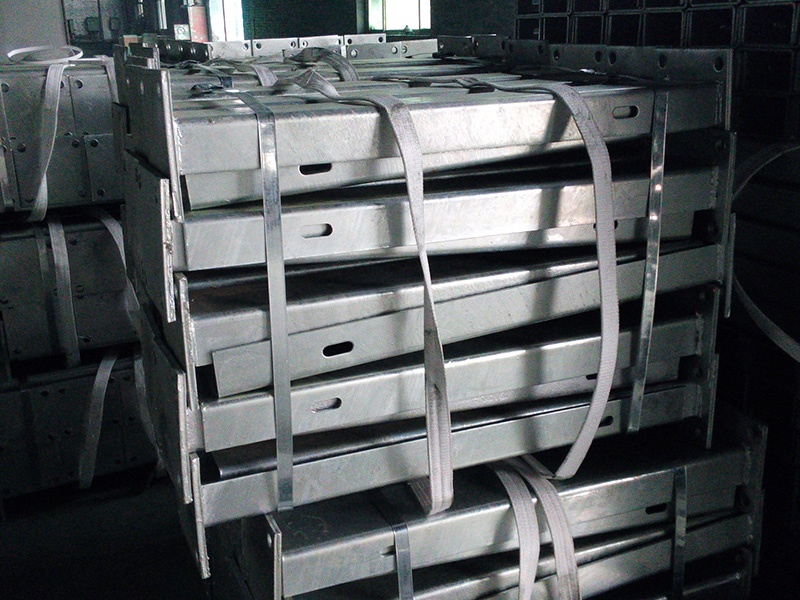
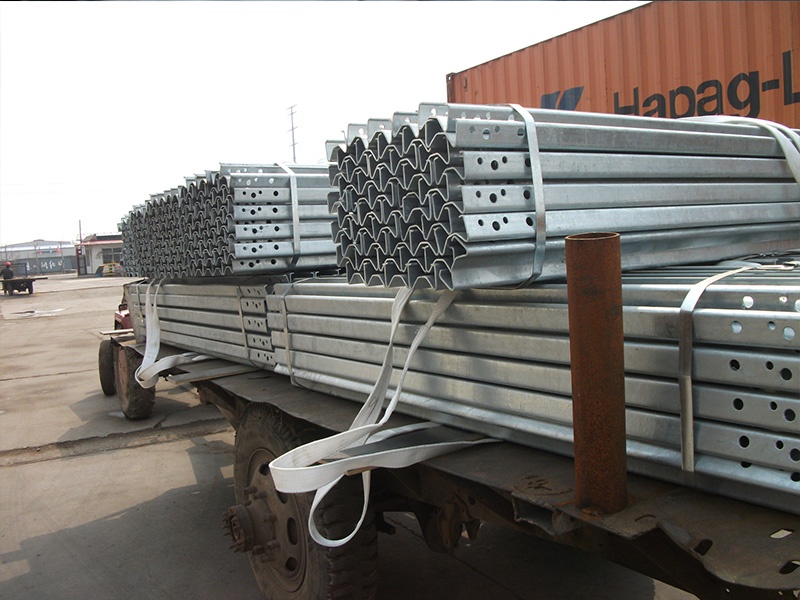
Material compliance for an AASHTO M180 guardrail is not established by a galvanized appearance alone. A rail can look acceptable on delivery yet create installation problems, coating failures, or documentation gaps that delay approval. The practical task is to verify that the steel, formed rail, protective coating, and supporting records all describe the same compliant product.
AASHTO M180 covers corrugated sheet steel beams used in highway guardrail systems, commonly including W-beam and thrie-beam profiles. It is a material specification, so it should be read alongside the project drawings, contract requirements, applicable installation specifications, and the requirements for posts, hardware, terminals, and crashworthy system configuration. Treating M180 as approval for an entire roadside barrier system is a common and costly mistake.
Start with the correct product scope
Before reviewing mill certificates or measuring a rail, confirm what the purchase order actually calls for. The rail profile, nominal steel thickness, coating type, rail length, slot pattern, and end treatment must match the approved drawing and bill of materials. A W-beam rail and a thrie-beam rail are not interchangeable simply because both are galvanized corrugated guardrail components. Their geometry, connection details, and role within a tested system can differ.
Also separate the rail requirement from the system requirement. M180 addresses the beam material and coating; it does not by itself establish correct post spacing, blockout selection, splice orientation, terminal performance, or installation height. Quality teams should maintain one traceable package for the whole assembly, while reviewing each component against its own applicable requirement.
What to verify before fabrication is released
The best time to prevent nonconforming guardrail is before drilling and roll forming begin. The supplier should work from controlled drawings that identify the beam type, hole locations, dimensions, coating requirement, and any project-specific marking or packaging instructions. Where the guardrail is made to drawings, the drawing revision must be visible on the production record and inspection plan.
Steel traceability should remain intact from incoming coil or sheet through the finished bundle. In practice, this means the material certificate, coil or heat identification, production batch, and finished rail marking can be connected without relying on memory or informal labels. If a coating issue or dimensional deviation is found later, this chain makes the affected quantity identifiable.
The documentation review should focus on whether the supplied steel meets the specified grade and whether the certificate relates to the actual production lot. A certificate with correct-looking values is not enough when the batch number cannot be tied to the rails delivered to site.
Forming and punching are compliance points, not cosmetic details
Guardrail performance depends on a profile that can overlap, splice, and deform as intended. Roll forming, punching, and cutting therefore need controlled checks. Distorted corrugations, cracked edges, elongated slots, burrs that prevent fit-up, or hole patterns shifted from the drawing can all create field problems. Some faults become visible only when rails are nested or bolted together, which is why a trial fit is useful for first-off parts and after tooling changes.
Dimensional inspection should concentrate on features that affect assembly: overall beam geometry, rail length, slot position, end geometry, and hole alignment. Checking only one overall dimension can miss the defect that matters most. A rail may be the correct length but still fail to connect correctly if its bolt slots are misplaced.
For projects with demanding corrosion exposure, surface preparation before galvanizing deserves equal attention. Oil, scale, weld residue, sharp burrs, and poorly finished cut edges can affect coating quality. Manufacturing controls such as rust removal, shot treatment where specified, non-destructive examination for relevant fabricated items, and inspection before galvanizing help prevent defects from being hidden beneath the final coating.
Galvanizing: inspect coverage, condition, and repairability
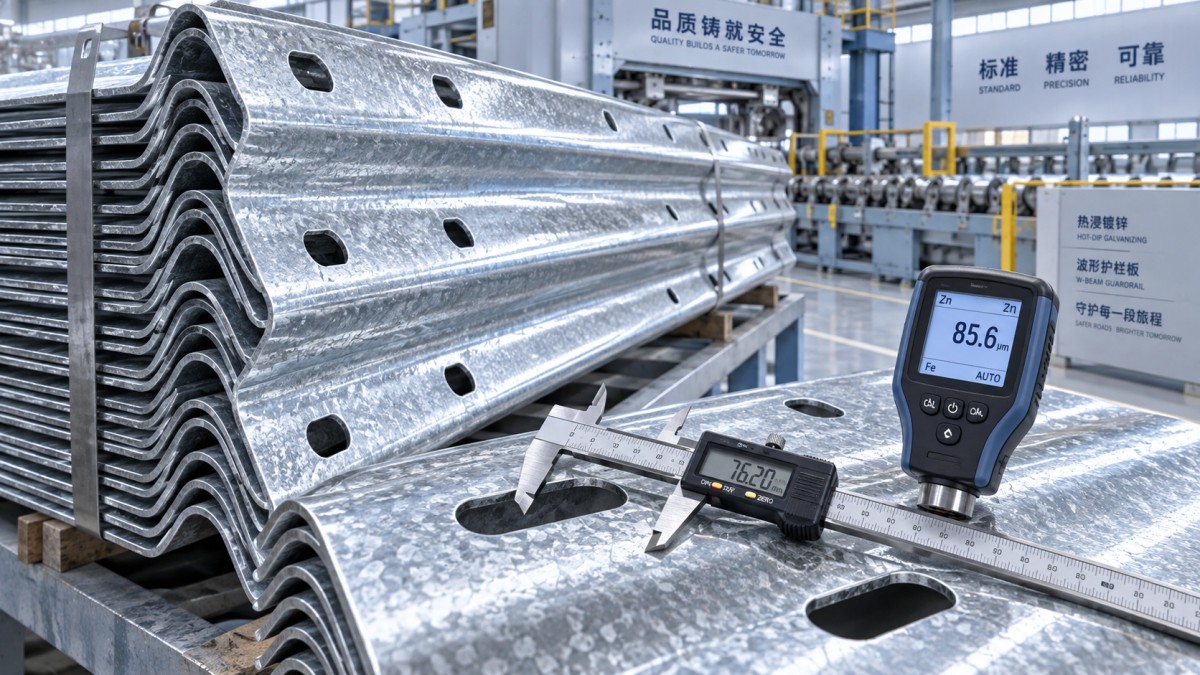
Hot-dip galvanizing is commonly used to protect highway guardrail steel, but the inspection question is broader than “is there zinc on the rail?” The coating should be continuous, adherent, and free from conditions that compromise protection or assembly. Look for bare areas, excessive buildup around slots, rough accumulations that obstruct splices, peeling, and damage from handling or transport.
Coating thickness and acceptance criteria should be assessed using the project requirement and the applicable galvanizing requirement, with measurements taken under a defined inspection process. Do not assume that a heavier-looking coating is automatically better. Excess buildup can interfere with bolted connections, while localized thin areas may shorten service life in wet, salted, or industrial environments.
Any permitted repair must be controlled and recorded. Site touch-up is appropriate only for limited handling damage when the contract allows it; it is not a remedy for widespread poor galvanizing, unsuitable base material preparation, or recurring bare areas. Rails with extensive coating defects should be segregated before they are mixed into installed stock.
A receiving inspection that catches practical failures
A focused receiving inspection is more useful than an oversized checklist that no one can complete consistently. Inspect enough bundles and rails to confirm that the delivered product matches the approved submittal and that there is no evidence of batch variation. Keep bundles identified until the documentation review and visual acceptance are complete.
Do not overlook terminals and transitions
A compliant rail section does not make an unsafe end condition acceptable. End terminals, transitions, posts, and hardware must be selected as a compatible system under the project’s safety design. This is particularly important where a vehicle could strike the end of a guardrail head-on. The intended function of a terminal is to manage impact energy, reduce the chance of rail penetration, and guide or slow the vehicle in the manner its system design requires.
When reviewing an end-treatment option such as a Ped Terminal, assess more than the galvanized finish. Confirm compatibility with the rail profile, posts, fasteners, installation layout, and the project’s required performance configuration. Its hot-dip galvanized coating can support corrosion resistance, but a terminal is only effective when the complete assembly is installed exactly as required.
Documentation should follow the product to the site
For quality managers, the closeout package should be built during production, not reconstructed after delivery. It should include approved drawings, material certificates, production and inspection records, coating records where required, nonconformance reports and dispositions, and shipment identification. Clear photographs of markings, bundle labels, representative profile checks, and coating condition can also resolve disputes quickly.
Safety managers should use those records to support field controls. Before installation, verify that rails are not mixed with visually similar but different profiles, that damaged pieces have been removed from use, and that installers have the correct hardware and terminal components. A guardrail installation can appear complete while containing mismatched parts that were never intended to work together.
The practical approval sequence is straightforward: match the drawings to the delivered components, establish material traceability, verify formed geometry and connection features, inspect galvanizing and handling damage, then confirm that rails, terminals, posts, and hardware form the specified roadside system. That sequence turns AASHTO M180 material compliance from a paperwork exercise into a meaningful control over roadside safety.
Leave A Reply
Need More Details?
Contact me for details on creating and managing design projects, project features, and services and prices
consult
Our company was established in 1998. It‘s a Chinese pioneer enterprise integrating production and sales, committed to providing high-quality steel products to customers at home and abroad.

First class quality service and professional after-sales team.
Get in Touch
*We respect your confidentiality and all information are protected.