






NEWS
Categories List
Recent Posts
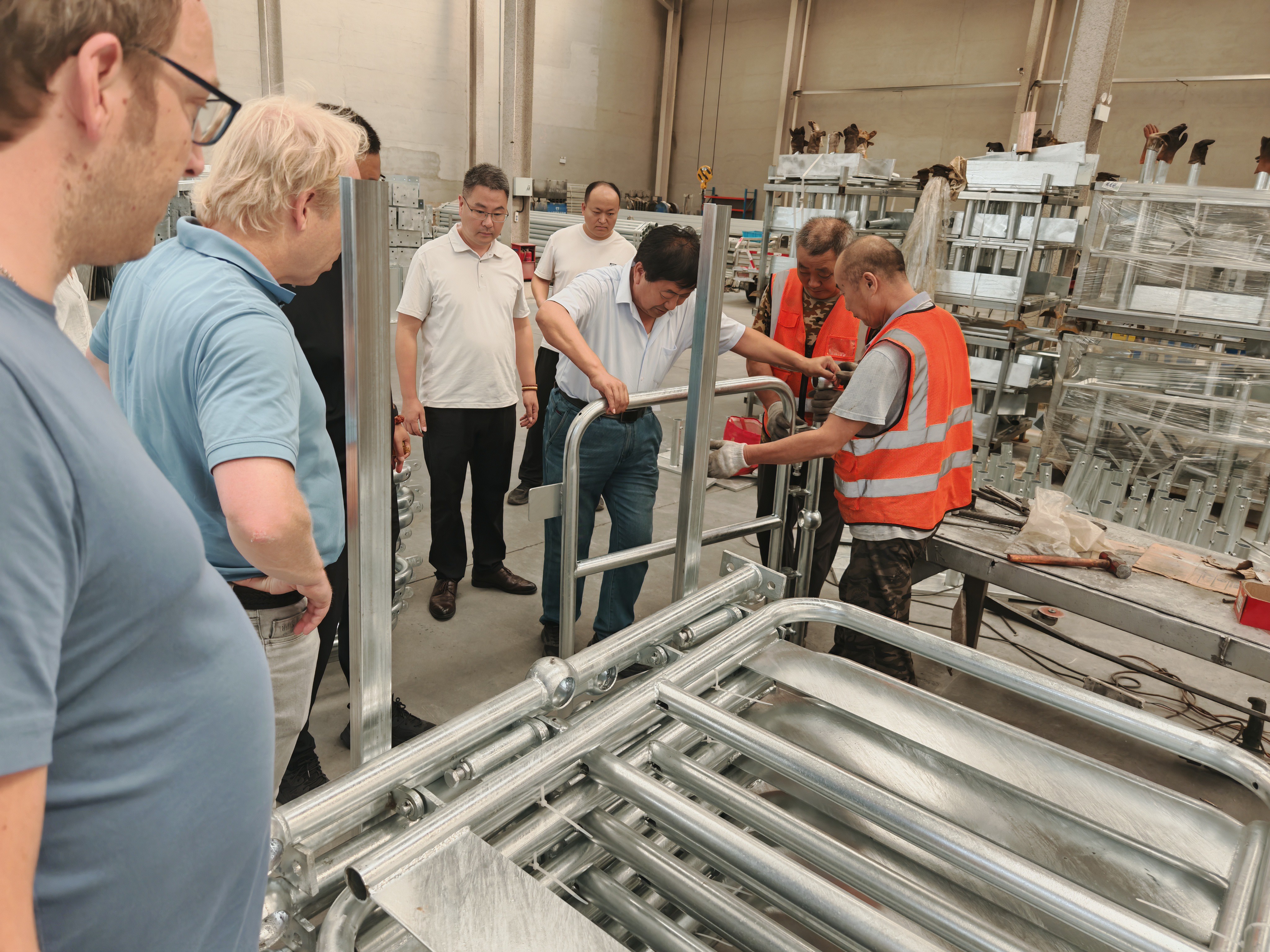
 Netherlands Client Delegation Visits Our Factory to Advance European Highway Guardrail CooperationOct 10, 2026
 AASHTO M180 Guardrail Requirements: A Practical Guide to Material ComplianceOct 10, 2026
 Port Safety Barriers: Selecting Protection for Vehicle Lanes and Loading AreasOct 10, 2026
Z Post Material, Coating, and Thickness: Key Specs Buyers Should Compare
When sourcing Z Post products for highway guardrail systems, price is usually the easiest figure to compare and often the least useful on its own. A lower unit cost can hide thinner steel, a lighter coating, or a material grade that does not match the road class, climate, or project standard. For procurement teams, the real job is to understand which specifications affect service life, installation performance, and compliance risk before the order is placed.
That matters even more in transport infrastructure, where a Z Post is not working alone. It supports the rail, interacts with fasteners and spacers, and has to perform under impact, corrosion, and long maintenance cycles. If the post is underspecified, the whole barrier line can become the weak point.
Material grade is where performance starts
Buyers sometimes treat steel grade as a background detail because the drawing already shows dimensions. In practice, material grade affects strength, forming quality, welding behavior where relevant, and consistency from batch to batch. A Z Post that looks correct on paper may still create problems if the base steel does not meet the mechanical properties expected by the applicable standard or project specification.
The key question is not simply “what steel is used?” but “what steel is required for this barrier system and jurisdiction?” Some projects are driven by local transport authority requirements, while export projects may need alignment with buyer-issued drawings or third-party inspection criteria. This is why procurement teams should ask for the mill information, applicable material standard, and traceability method early, not after production starts.
Material selection also has a manufacturing side. Processes such as drilling, bending, rust removal, shot peening, non-destructive testing, galvanizing, and painting all depend on stable input quality. Suppliers that can manufacture according to drawings and adapt to custom plans are usually in a better position to manage these details than factories that only offer fixed catalog items.
Coating type affects more than appearance
For roadside steel products, coating is really about corrosion control and maintenance planning. In many guardrail applications, hot-dip galvanizing remains the default choice because it protects steel surfaces in exposed outdoor conditions and is widely accepted across infrastructure projects. But buyers should still verify what “galvanized” means in the quotation. Not all coatings are equal in process quality, adhesion, surface condition, or expected behavior in coastal, high-rainfall, or de-icing salt environments.
A useful procurement habit is to compare the coating specification line by line: coating type, standard referenced, surface preparation, thickness or coating mass requirement if stated in project documents, and whether damaged areas after fabrication are treated according to the required method. If painting is included on top of galvanizing, the buyer should confirm whether it is for visibility, added corrosion protection, or both.
This point becomes clearer when comparing complete barrier systems. On highways and hazardous road sections, the rail element itself may be specified with hot-dip galvanized protection for long outdoor service. For example, Thrie-Beam Guardrail is commonly associated with applications where corrosion resistance, impact performance, and conformity to standards such as U.S. AASHTO M180 or Brazil’s ANBT standards may be relevant. Even if the project is focused on posts, the coating strategy should be checked across the entire system so that post and rail durability are aligned rather than mismatched.
Thickness is not just a number on the drawing
Thickness is one of the easiest specifications to compare and one of the most misunderstood. Buyers often use it as a shortcut for quality, but the right thickness depends on design loading, post spacing, soil and installation conditions, and the barrier system being used. A thicker post can improve structural robustness, but it may also affect weight, transport cost, handling, and sometimes compatibility with the original design intent.
What matters is consistency. If actual thickness varies beyond tolerance, installation crews may face alignment issues, bolt fit-up problems, or uneven driving resistance during placement. For procurement, that means asking how thickness is controlled in production, how it is measured, and whether inspection records can be supplied. A factory with in-house process control is usually better able to keep drilling accuracy, bending quality, and dimensional stability within the required range.
A practical comparison framework for buyers
Instead of comparing quotations only by tonnage or piece price, it helps to put four things side by side:
This kind of comparison often reveals that two offers with similar drawings are not truly equivalent.
Common sourcing mistakes
One frequent mistake is assuming that all Z Post products are interchangeable if the section shape looks the same. They are not. Slight differences in steel quality, protective coating, or dimensional tolerance can affect field performance and acceptance during inspection.
Another is separating the post purchase from the full barrier design review. If the rail, post, spacer, and fastener package were not considered together, the project may end up with compatibility issues. In systems designed to absorb collision energy and guide vehicles back toward their path, each component contributes to the overall behavior. A rail product such as Thrie-Beam Guardrail, for instance, is selected not only for shape but for its ability to work under impact while maintaining corrosion resistance over a service life that may exceed 20 years in the intended environment. Posts should be evaluated with the same system view.
A third mistake is leaving inspection requirements vague. If the purchase order does not define what documents, tests, or dimensional checks are needed, disputes tend to surface late, usually when delivery is near or goods arrive on site.
What to confirm before placing the order
Before approval, buyers usually benefit from confirming a short but meaningful set of points: the referenced drawings, material standard, coating requirement, thickness tolerance, inspection scope, and whether the supplier can manufacture to project-specific plans rather than forcing substitutions. It is also worth asking who handles quotation support, design coordination, production, and installation planning if required. Those steps are often separated across vendors, which can create avoidable gaps.
For projects with custom geometry or export requirements, a supplier that can work from your drawings, control fabrication in-house, and provide processes such as drilling, bending, surface treatment, non-destructive testing, galvanizing, and painting will usually make procurement more predictable. Not because every project needs every process, but because the capability is there when the specification demands it.
In the end, selecting a Z Post is less about finding the cheapest steel component and more about reducing technical mismatch. If the material grade fits the design, the coating matches the exposure conditions, and the thickness is controlled to the required tolerance, buyers are far less likely to face surprises during installation or years later in service. That is usually where the best long-term value comes from.
Leave A Reply
Need More Details?
Contact me for details on creating and managing design projects, project features, and services and prices
consult
Our company was established in 1998. It‘s a Chinese pioneer enterprise integrating production and sales, committed to providing high-quality steel products to customers at home and abroad.

First class quality service and professional after-sales team.
Get in Touch
*We respect your confidentiality and all information are protected.