






NEWS
Categories List
Recent Posts
 Netherlands Client Delegation Visits Our Factory to Advance European Highway Guardrail CooperationOct 10, 2026
 AASHTO M180 Guardrail Requirements: A Practical Guide to Material ComplianceOct 10, 2026
 Port Safety Barriers: Selecting Protection for Vehicle Lanes and Loading AreasOct 10, 2026
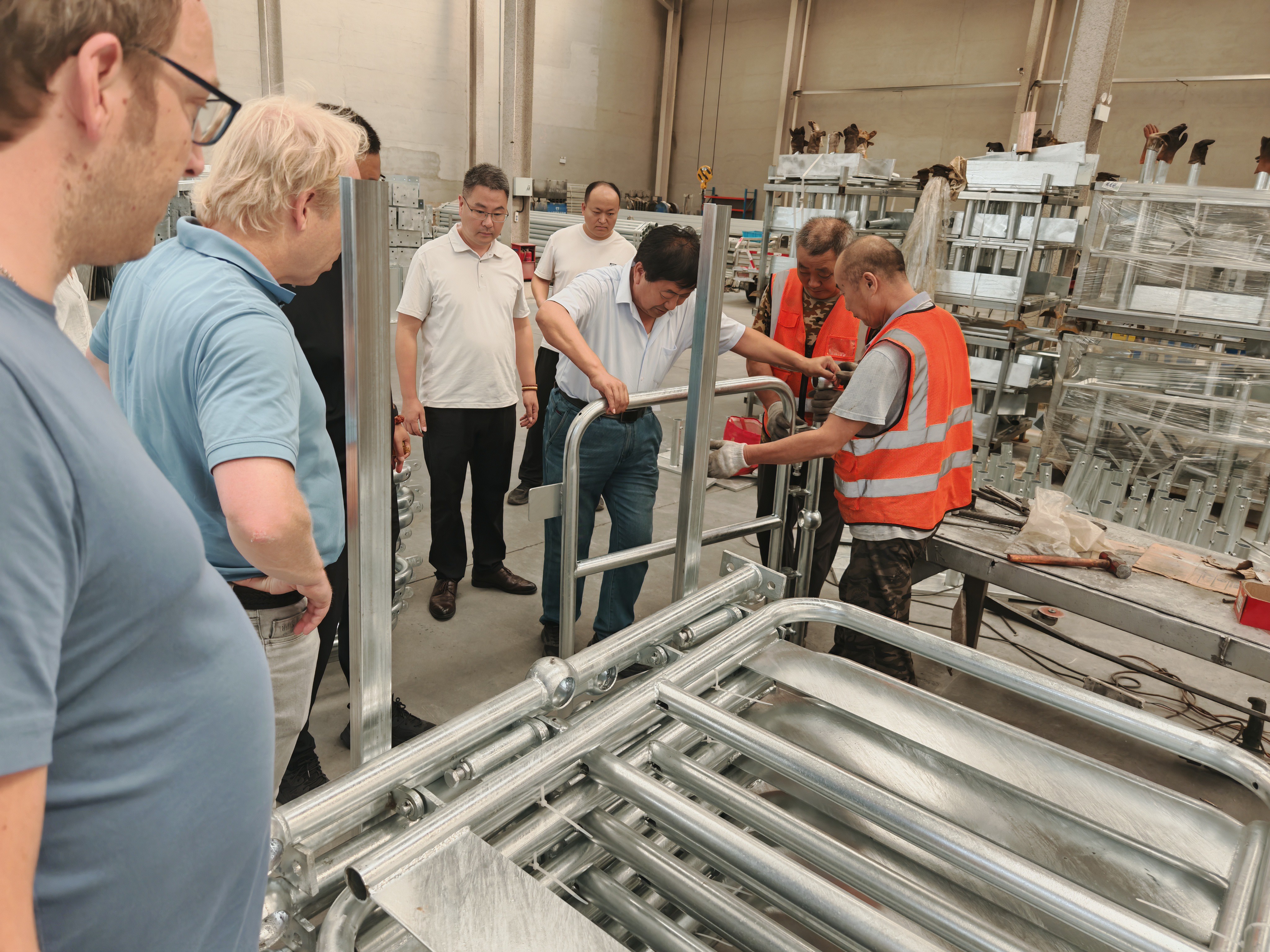
If you are comparing a Z Post Guardrail Manufacturer, the biggest mistake is choosing on unit price alone. A low quote can become expensive later if the steel thickness is inconsistent, the galvanizing fails early, hole positions do not match your drawings, or the supplier cannot support installation and field adjustments. Buyers usually get better long-term results when they check design capability, process control, corrosion protection, testing, and delivery reliability before placing the order.
In road safety projects, a guardrail is not just a steel product. It is part of a system that has to fit the site, the alignment, the connection details, and the maintenance conditions. That is why experienced buyers tend to ask a different question: not “Who is cheapest?” but “Who can manufacture what the project actually needs, without creating risk later?”
What separates a dependable Z Post Guardrail Manufacturer from a trading company
This is where many buyers lose time. Some suppliers are mainly brokers. They can send quotations quickly, but once you ask about hole tolerances, coating method, non-destructive testing, or installation details, the answers become vague. A real manufacturer should be able to discuss the drawing, confirm whether your design is practical to produce, and explain how they control quality at each stage.
For highway guardrails and related steel products, useful capability usually includes quotation support, design review, manufacturing, and installation guidance. If a supplier can work from your plan or manufacture directly from your drawings, that is already a better sign than a generic catalog-only approach. It means the factory is used to project-based production rather than only standard stock items.
A serious plant should also be transparent about its process. In this sector, buyers should expect to hear clear details about drilling, bending, rust removal, shot peening, non-destructive testing, galvanizing, and painting where required. These are not decorative process names. They affect fit-up accuracy, corrosion resistance, and service life.
Material quality matters more than many first-time buyers expect
Z posts often look simple on paper, so some buyers assume any steel section will do. That is risky. The post has to work as part of the guardrail system under real loading conditions, and poor raw material quality can show up as deformation, cracking near holes, or inconsistent performance during installation.
Ask what steel grade is being used, how material traceability is handled, and whether the manufacturer can keep consistency across batches. If your project has compliance requirements, confirm them early. Do not wait until production is underway. Rework at that stage usually affects schedule more than price.
It also helps to check whether the supplier understands the difference between a drawing that is technically manufacturable and one that is merely copied from an old project. In practice, some drawings need small production-oriented adjustments. A good manufacturer will raise those points early instead of building a problem into the shipment.
Galvanizing is not a detail. It is a life-cycle decision.
For outdoor roadside applications, corrosion protection is one of the first things to review. Buyers often ask for galvanized products, but not all galvanizing quality is equal. The useful questions are more specific: What standard is being followed? How is surface preparation handled? Is coating thickness checked? How are damaged areas treated after fabrication or transport?
A Z Post Guardrail Manufacturer that cannot explain its galvanizing process clearly is asking you to accept future maintenance risk without enough information. This matters even more in coastal zones, industrial environments, or regions with heavy rain, snow, or de-icing salts. In those settings, poor coating performance will show up faster.
If painting is part of the requirement, treat it as a system question as well. Paint over poor pretreatment rarely performs well for long. Surface preparation and coating sequence matter as much as the top layer.
Look at process control, not just finished photos
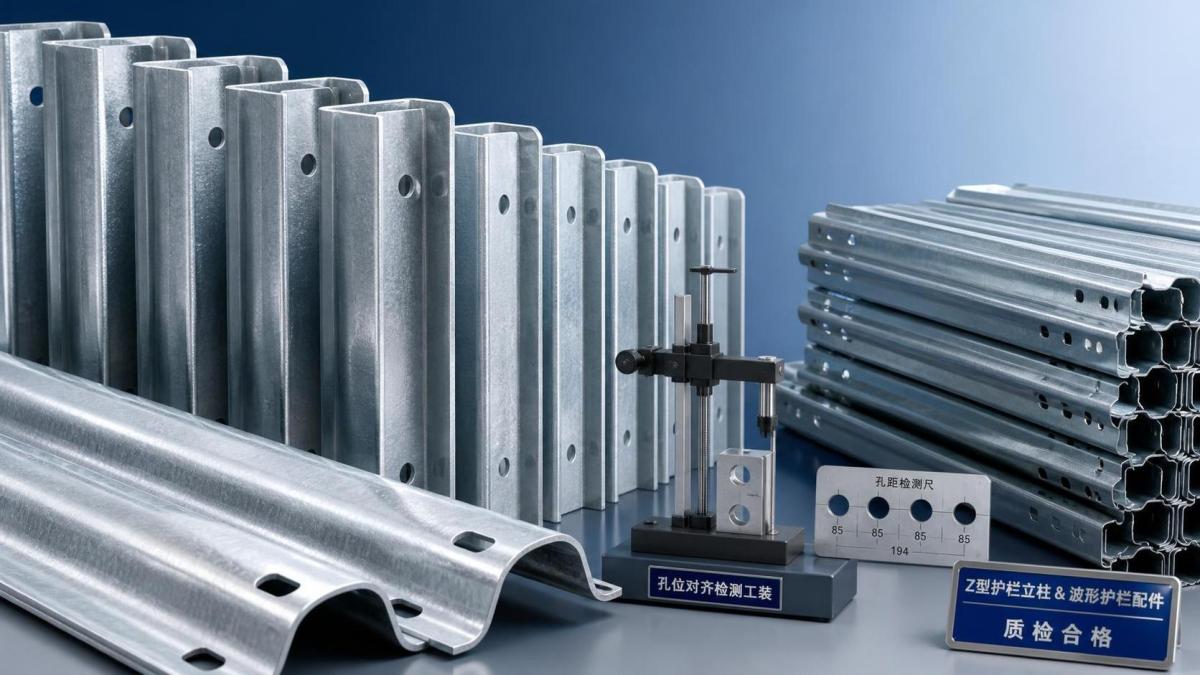
Product photos can be useful, but they do not tell you how stable the production process is. For guardrail posts, small dimensional errors can create real site problems: holes that do not align, posts that slow installation, or connection parts that need field modification. None of that helps a road project stay on schedule.
Ask for practical evidence. For example:
- How are drilling positions checked?
- How is bending accuracy controlled?
- What inspection records are available before shipment?
- Is non-destructive testing used where the project requires it?
- How are mixed batches identified and packed?
These questions are not overkill. They are basic purchasing discipline for fabricated steel used in transport infrastructure.
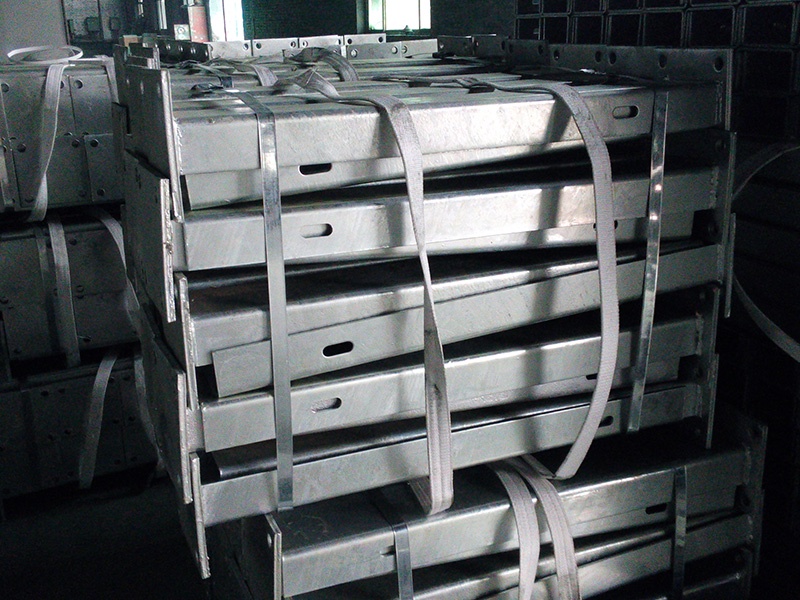
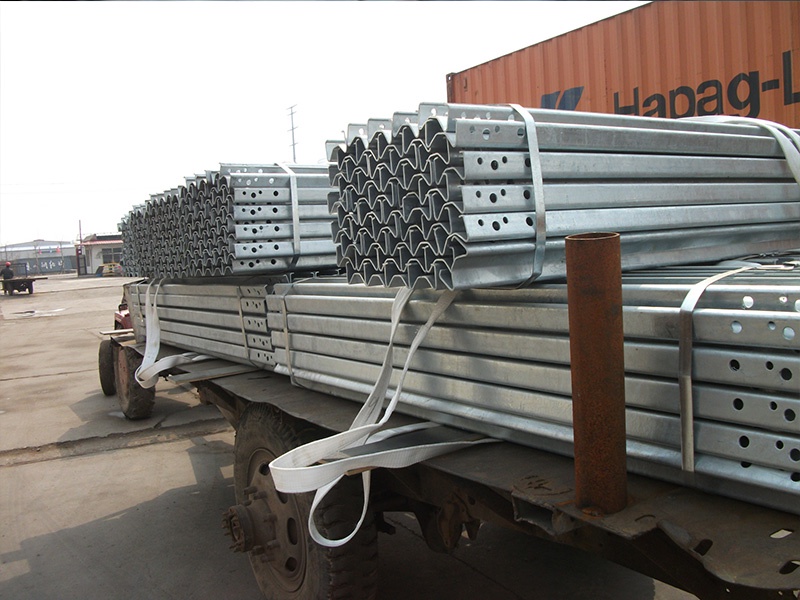
Another point many buyers overlook is packaging and shipment logic. If posts, beams, spacers, and fasteners arrive without clear identification, unloading and site sequencing become harder than they should be. A manufacturer that understands project delivery will usually think beyond the workshop gate.
Customization is useful, but only when the supplier can support it properly
Custom manufacturing is often necessary in transport projects, especially when the alignment, post spacing, foundation conditions, or transition details are different from standard layouts. But custom work only helps if the factory can read your drawings accurately and turn them into repeatable production.
That is why design support matters. Some manufacturers can review your plan, point out potential clashes, and then produce according to your approved drawings. That reduces the chance of finding mismatches after delivery. It is also valuable when your project includes more than one steel component family, because coordination tends to matter more than people expect.
In some projects, buyers also need related accessories rather than only posts and beams. If your layout includes impact-related or transition components, it can be useful to review whether items such as Spring Steel Buffers should be sourced within the same procurement package. That does not automatically make one supplier better, but it can simplify coordination when the manufacturer already handles a broader range of steel road safety products.
Installation support is where a lot of hidden value shows up
Some purchasing teams treat manufacturing and installation as separate topics. On paper that sounds tidy. On site, it often is not. If the supplier can provide installation guidance, confirm assembly logic, or help review field issues, the project usually runs more smoothly.
This does not mean every buyer needs full installation service. But at minimum, you want a manufacturer that can explain orientation, connection sequence, tolerance handling, and replacement logic. A supplier that disappears after shipment is harder to work with when the schedule is tight.
For overseas buyers, communication speed matters almost as much as technical quality. When there is a question about drawings, coating, packing list, or shipping marks, delayed replies create avoidable downtime.
Common buying mistakes
The first is comparing quotations that are not actually equivalent. One supplier may include thicker coating, stricter inspection, or better packaging, while another submits a lower number based on a lighter scope. Unless you normalize the quote, price comparisons can be misleading.
The second is assuming every factory is equally comfortable with custom drawings. Many are not. Some are efficient with standard products but struggle when tolerances, hole patterns, or project documentation become more demanding.
The third is failing to verify what happens before galvanizing. Fabrication quality, rust removal, and surface preparation have a direct effect on coating results. If the process before coating is weak, the final appearance may still look acceptable at delivery while long-term performance suffers.
What to ask before you place the order
A short, direct checklist usually works best:
- Can you manufacture according to our drawings, or do you need to revise them first?
- What material standards and inspection methods do you follow?
- How do you handle drilling, bending, rust removal, and galvanizing control?
- Can you provide production and inspection records before shipment?
- How are goods marked, packed, and organized for installation?
- What support is available if there is a field issue after delivery?
A capable Z Post Guardrail Manufacturer should be able to answer those questions without hiding behind general sales language.
Final thought
The right Z Post Guardrail Manufacturer is usually the one that can turn your drawings or project plan into consistent, installable, corrosion-resistant products with fewer surprises. Price still matters, but in transport infrastructure, process discipline and technical clarity matter more. If a supplier can show strong manufacturing control, explain the coating and testing approach, and support the job beyond the quotation stage, you are looking at a much stronger purchasing option.
FAQ
Should I choose a manufacturer that only offers standard sizes?
Only if your project is genuinely standard. If your drawings have special hole locations, spacing, or connection details, a factory with custom manufacturing experience is usually a better fit.
Is galvanizing always enough for roadside steel?
Not always. It depends on the environment and project requirement. In aggressive conditions, you may need to review additional coating or stricter corrosion protection standards.
How can I tell whether a supplier really manufactures in-house?
Ask specific process questions about drilling, bending, testing, galvanizing, inspection records, and packing. Real manufacturers usually answer with detail. Brokers often stay general.
When does installation support become important?
It becomes important when the project has custom layouts, tight deadlines, or multiple related components. Early guidance can prevent field delays and mismatched parts.
Image Placeholder Notes
Suggested placement: after the section discussing material quality and before corrosion protection.
Suggested image content: close-up comparison of Z guardrail posts during inspection, including hole alignment, surface condition, and galvanized finish.
Suggested alt text: Inspection points for Z post guardrail manufacturing quality
Internal Link Anchor Text Suggestions
- Highway guardrail manufacturing process: manufacturing capability or factory process page
- How galvanizing affects guardrail service life: corrosion protection topic page
- Custom steel fabrication for road safety projects: custom manufacturing service page
- Guardrail installation support and project coordination: installation or technical support page
- Road safety accessories and buffer components: accessory product category page
External Authority Source Suggestions
- National or regional highway safety standards and transport agency technical specifications
- Galvanizing industry association guidance on corrosion protection and coating inspection
- Independent testing or certification body documentation for steel product quality control
Leave A Reply
Need More Details?
Contact me for details on creating and managing design projects, project features, and services and prices
consult
Our company was established in 1998. It‘s a Chinese pioneer enterprise integrating production and sales, committed to providing high-quality steel products to customers at home and abroad.

First class quality service and professional after-sales team.
Get in Touch
*We respect your confidentiality and all information are protected.