






NEWS
Categories List
Recent Posts
 Netherlands Client Delegation Visits Our Factory to Advance European Highway Guardrail CooperationOct 10, 2026
 AASHTO M180 Guardrail Requirements: A Practical Guide to Material ComplianceOct 10, 2026
 Port Safety Barriers: Selecting Protection for Vehicle Lanes and Loading AreasOct 10, 2026
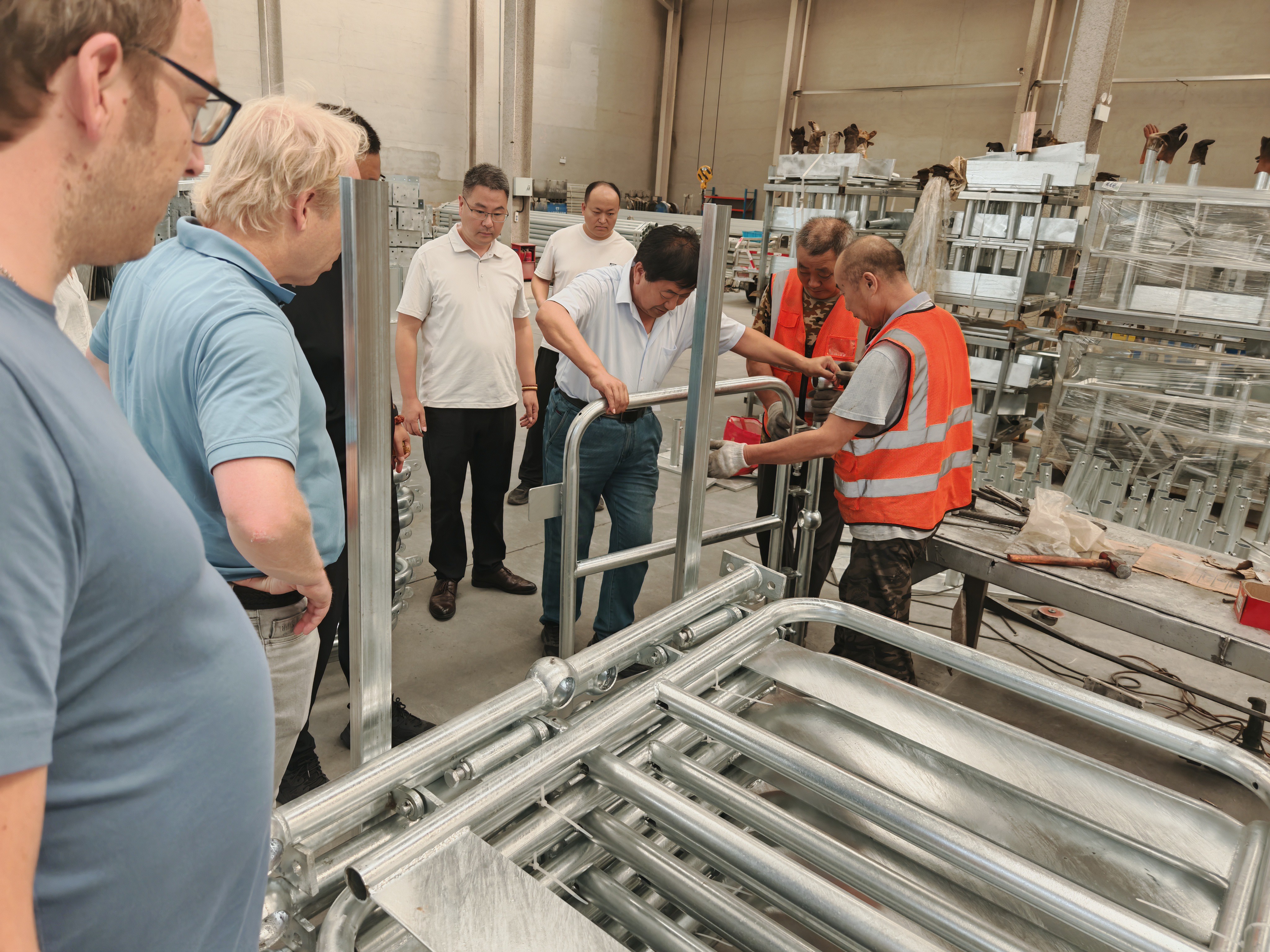
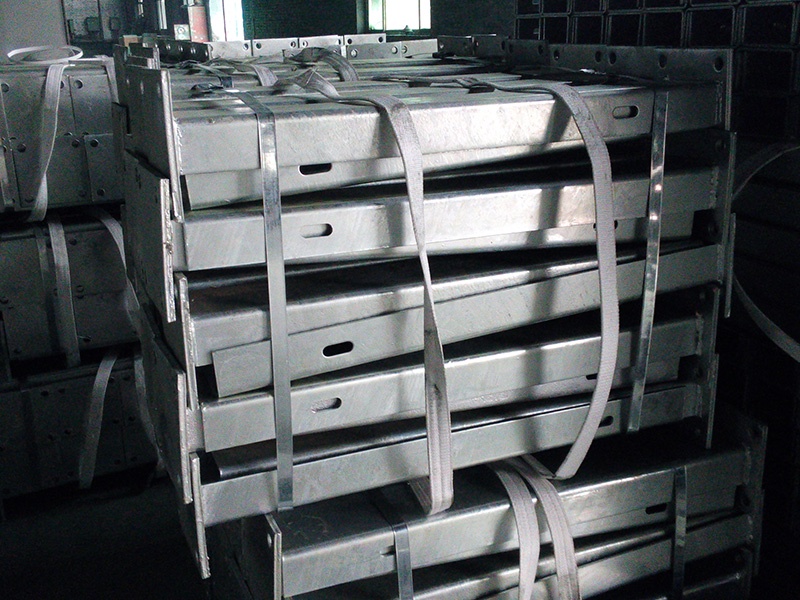
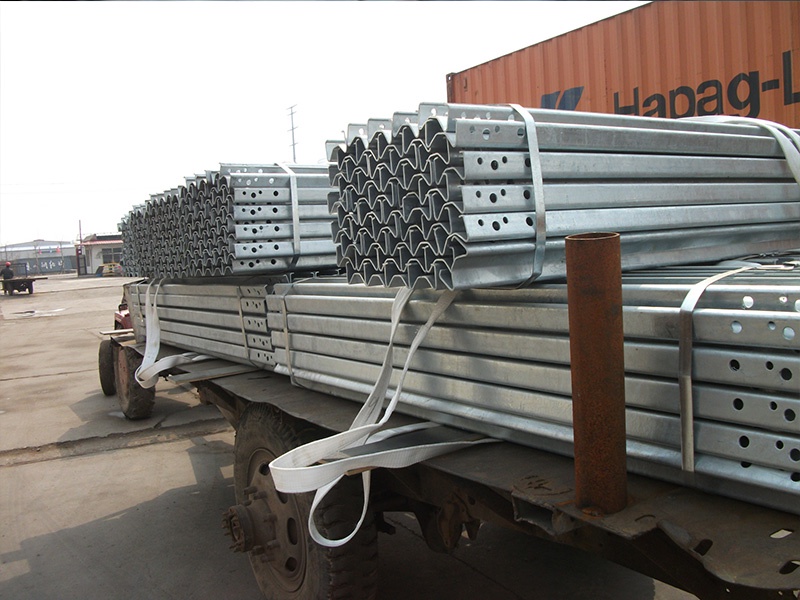
Choosing a Z post guardrail factory is not just a sourcing exercise. For transportation buyers, EPC contractors, and engineering teams, factory quality inspection is closely tied to crash performance, corrosion resistance, installation efficiency, and long-term maintenance cost. A guardrail system can look acceptable on a quotation sheet yet still create serious downstream risk if the manufacturer lacks process control, inspection discipline, or traceable documentation.
The real question is not whether a supplier says it can produce to drawing. The question is whether its factory inspection system can consistently prove that every batch meets the required material, dimensional, coating, and structural standards before shipment.
Why factory inspection matters more than many buyers assume
In road safety products, defects are rarely isolated cosmetic issues. Small deviations in steel grade, hole position, beam geometry, zinc coating thickness, or weld quality can affect assembly tolerance, barrier alignment, and performance under impact. For export buyers, the cost of discovering these problems after delivery is much higher than the cost of identifying them at the factory.
Three business risks usually sit behind weak inspection:
- Installation delays caused by mismatched holes, poor straightness, or dimensional inconsistency
- Reduced service life in coastal, humid, or high-salt environments because of inadequate surface treatment
- Compliance disputes when test reports, coating records, or mill certificates do not match the supplied goods
That is why experienced buyers assess not only the finished product, but the manufacturer’s inspection logic across the full production chain.
Start with raw materials, not finished samples
Many buyers focus heavily on finished appearance. In practice, raw material control is often the first useful signal of factory quality. A reliable manufacturer should be able to show traceable mill certificates for hot-rolled steel plates or coils, confirm incoming inspection procedures, and demonstrate how material batches are separated during production.
What matters here is not paperwork alone. Buyers should look for consistency between procurement records, heat numbers, thickness verification, and actual shop-floor identification. If the plant cannot clearly track which steel batch went into which production lot, later non-conformance analysis becomes difficult.
For projects in demanding environments, material selection becomes even more important. In higher-risk sections such as expressway divergences, bridge approaches, or pier protection zones, buyers may also evaluate whether the supplier has experience producing more rigid barrier components such as Open Box Beam 4.8m, which rely on high-quality hot-rolled steel plates and tighter manufacturing control to deliver higher stiffness and impact resistance.
Dimensional accuracy is a practical site issue, not a factory detail
Guardrail procurement often fails in a predictable way: the product passes a basic visual check, but installation crews later discover alignment problems. On Z posts and related barrier components, dimensional control directly affects fit-up with beams, spacers, bolts, and transition sections.
Inspection should cover:
- Post length, width, thickness, and section geometry
- Hole diameter, slot shape, and hole-to-hole spacing
- Verticality, straightness, and twist
- Consistency across a production batch rather than only one or two samples
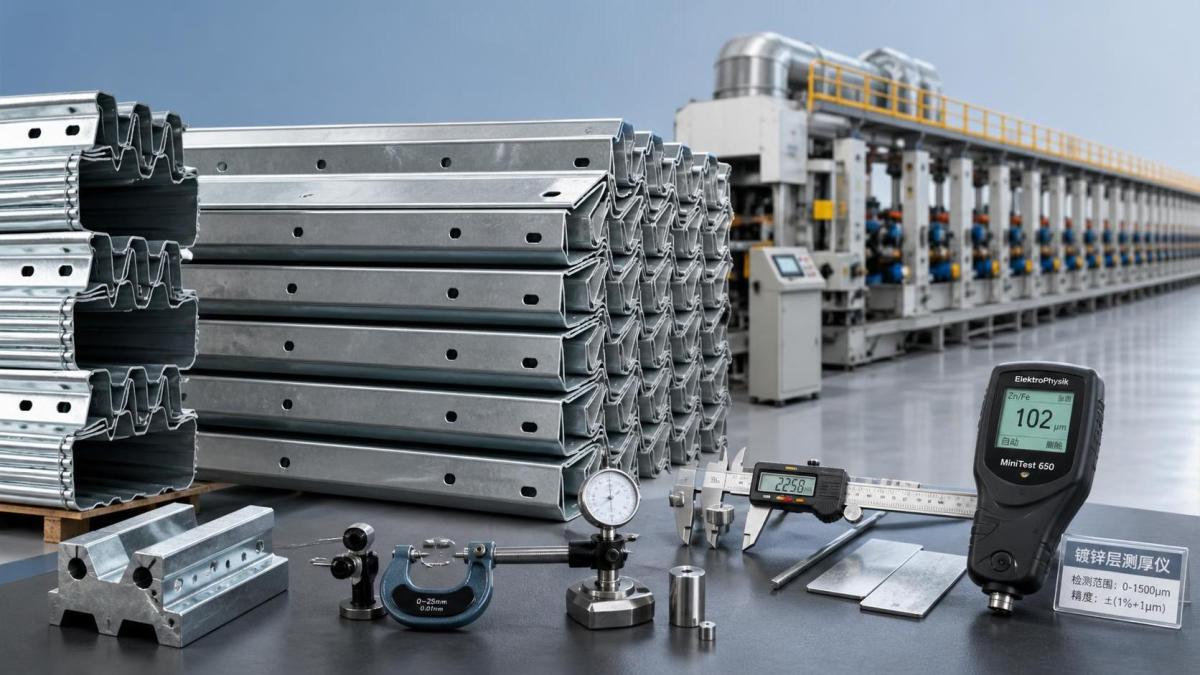
A factory with mature process control will typically use dedicated jigs, calibrated gauges, and lot-based inspection records after punching, drilling, or forming. A factory that relies mainly on manual rework may still ship usable goods, but the probability of batch inconsistency is higher. For large infrastructure projects, that inconsistency often becomes visible only when containers are opened on site.
Pay close attention to hole processing and forming quality
Drilling and punching are easy to underestimate. Burrs, edge cracking, out-of-position holes, and distortion around openings can all weaken assembly quality and create corrosion initiation points later. Buyers should ask how the factory inspects these stages and what rejection criteria are used.
The same applies to bending or forming. If a manufacturer produces posts, beams, and special sections with multiple forming steps, it should have controls for springback, deformation, and profile repeatability. This is particularly relevant when supplying components for complex highway safety systems rather than only standard straight sections.
In other words, quality inspection is not just a final QC department function. It should be embedded in each process where defects are created.
Surface treatment is often where long-term value is won or lost
For highway guardrails, corrosion protection is one of the most commercially important quality factors. A low initial price can become expensive if coating performance is poor and maintenance cycles accelerate. Buyers should therefore look beyond “galvanized” as a generic claim.
Useful questions include:
- Is the steel properly prepared through rust removal or shot blasting before coating?
- Is the galvanizing process controlled and documented?
- What coating thickness checks are performed, and how often?
- Are there adhesion or appearance checks for painted or powder-coated products?
- How are damaged coating areas repaired and recorded?
Applicable standards depend on project specifications and destination market, so buyers should verify the exact referenced standard rather than accept broad statements about “international standards.” Where a supplier offers zinc-aluminum-magnesium or powder-coated finishes for specialized sections, the discussion should include not only appearance but expected environment, maintenance strategy, and lifecycle cost assumptions. Claims such as “over 30 years in coastal or high-salt-fog environments” should be treated as performance-related statements that require supporting basis or project-specific validation.
Non-destructive testing is valuable, but only in the right context
Some buyers are impressed when a factory mentions non-destructive testing. The better question is where NDT is actually relevant. For standard guardrail components, dimensional and coating inspection may be more critical than advanced testing. For welded assemblies, special brackets, or structurally sensitive fabricated parts, NDT can become more important.
A serious manufacturer should be able to explain:
- Which components are subject to NDT
- What method is used
- Who performs the inspection
- How non-conformities are handled
If a supplier advertises NDT but cannot define the inspection scope, that is usually a sign of sales language rather than robust quality practice.
Documents matter, but they should match production reality
Export buyers often request mill certificates, inspection reports, coating test records, and packing lists. That is necessary, but documents alone are not enough. The key is consistency between documents and shop-floor execution.
When reviewing a factory, buyers should check whether:
- Inspection records identify lot numbers clearly
- Calibration records for measuring tools are current
- Sampling frequency is defined rather than improvised
- Rejected products are segregated from approved goods
- Final packing labels are traceable to production batches
This is especially important for mixed orders that include posts, beams, terminals, and custom steel parts produced from customer drawings. A factory may have acceptable production capability but weak documentation discipline, which creates unnecessary risk in cross-border claims handling.
How to evaluate production capability before placing the order
The most useful inspection is not a one-time visit focused on cleanliness or equipment scale. Buyers should assess whether the factory can repeatedly manufacture within tolerance at the required volume and lead time.
That means looking at four things together:
- Process completeness: whether drilling, bending, blasting, galvanizing, painting, and inspection are controlled in-house or outsourced
- Capacity stability: whether output planning can handle peak project demand without quality slippage
- Customization ability: whether the factory can produce according to drawings without losing dimensional consistency
- Corrective action discipline: whether problems are investigated systematically or simply reworked informally
For buyers sourcing higher-performance barrier elements for high-risk road sections, this evaluation becomes more important. Products with high rigidity and stronger crash resistance are not just “heavier steel”; they depend on closer control of material, profile accuracy, and coating quality throughout the manufacturing sequence.
Common mistakes buyers make during supplier assessment
One common mistake is selecting on price while assuming all guardrail factories operate with similar quality systems. They do not. Two suppliers may quote the same specification but differ greatly in tooling quality, galvanizing control, inspection frequency, and traceability.
Another mistake is accepting a few well-made samples as proof of full-batch capability. Sample quality is easy to manage. Stable production quality across export volumes is harder.
There is also a tendency to focus only on product compliance and ignore packing and loading inspection. Yet poor packaging can damage coating integrity, distort components, or create sorting problems at the installation site.
What a practical buyer checklist should include
Before order confirmation, buyers should be able to answer these questions with evidence:
- Are raw materials traceable and appropriate for the specification?
- Are hole locations, dimensions, and tolerances inspected with records?
- Is the forming process stable enough for batch consistency?
- Is galvanizing or coating verified, not merely declared?
- Are testing, calibration, and non-conformance controls documented?
- Can the factory support custom drawings without raising fit-up risk?
- Is final packing traceable and suitable for export handling?
If several of these answers remain unclear, the issue is not just missing information. It may indicate that the factory’s actual quality system is less mature than its quotation suggests.
In the highway safety sector, quality inspection is not a bureaucratic step added after production. It is the operating system behind reliable manufacturing. Buyers who understand that usually make better supplier decisions, face fewer installation disputes, and achieve lower lifecycle risk across the project.
Leave A Reply
Need More Details?
Contact me for details on creating and managing design projects, project features, and services and prices
consult
Our company was established in 1998. It‘s a Chinese pioneer enterprise integrating production and sales, committed to providing high-quality steel products to customers at home and abroad.

First class quality service and professional after-sales team.
Get in Touch
*We respect your confidentiality and all information are protected.