






NEWS
Categories List
Recent Posts
 Netherlands Client Delegation Visits Our Factory to Advance European Highway Guardrail CooperationOct 10, 2026
 AASHTO M180 Guardrail Requirements: A Practical Guide to Material ComplianceOct 10, 2026
 Port Safety Barriers: Selecting Protection for Vehicle Lanes and Loading AreasOct 10, 2026
What Really Matters in a Z Post Guardrail Factory
Choosing a reliable Z post guardrail factory is not just about finding a supplier that can roll steel into shape. In highway projects, the real question is whether the manufacturer can turn drawings and technical requirements into components that behave predictably on site and keep doing so after years of weather, vibration, and impact exposure.
That is where manufacturing process and quality control stop being factory jargon and become practical risk factors. A guardrail that looks acceptable in the yard may still create installation delays, alignment problems, weak corrosion resistance, or inconsistent performance if drilling accuracy, bending tolerance, surface treatment, and inspection discipline are not handled well.
For buyers, contractors, and project engineers, the best factories usually have one thing in common: they do not treat highway guardrails as a generic steel product. They understand that transport infrastructure has low tolerance for dimensional error, coating defects, or missing traceability.
Manufacturing Starts Long Before Steel Meets the Machine
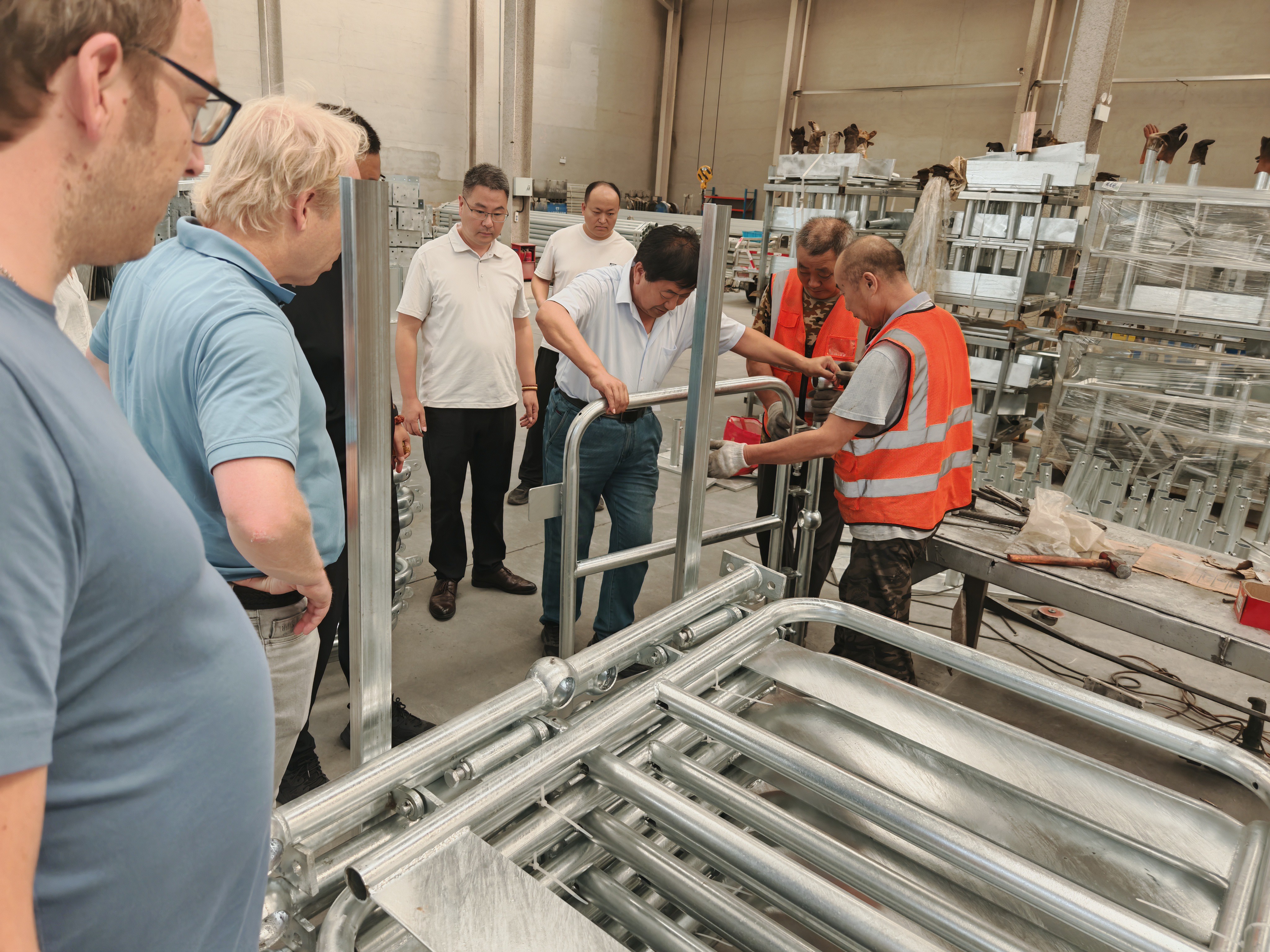
In practice, a good production run begins with drawing review. If a factory offers quotation, design support, manufacturing, and installation coordination, that can reduce handoff mistakes, especially on projects with custom post sizes, unusual road geometry, or mixed section requirements. Some clients provide complete drawings. Others only have a plan and need the manufacturer to translate it into workable fabrication details. The difference matters, because errors introduced at this stage tend to multiply later.
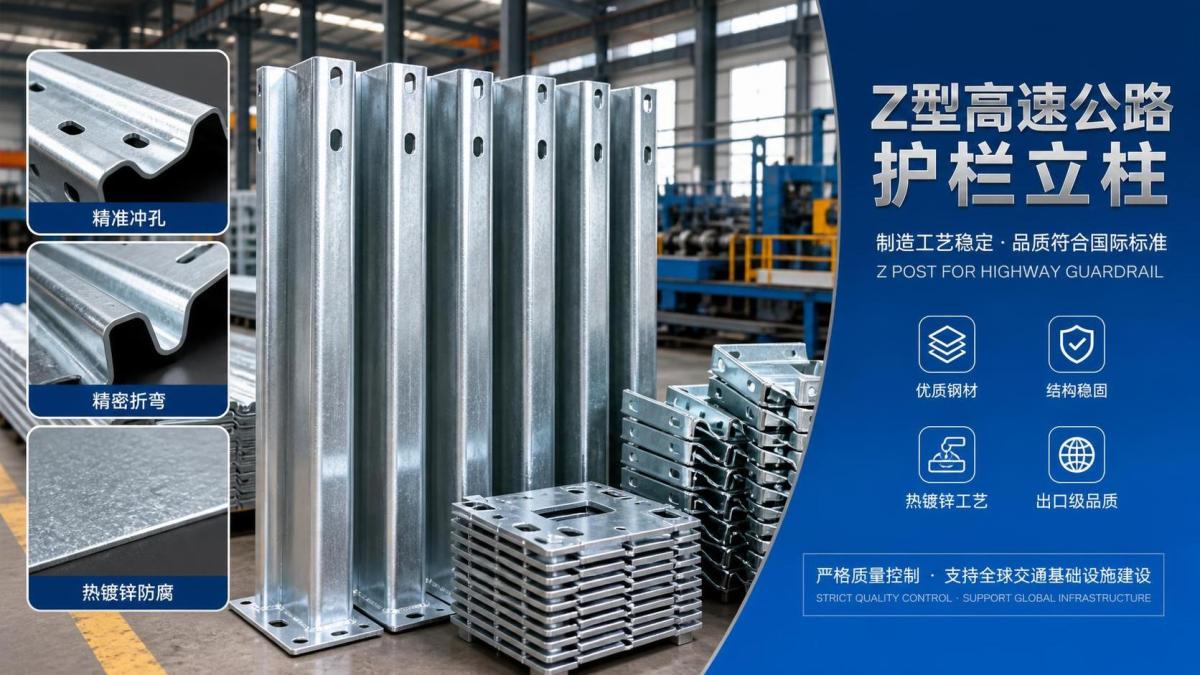
For Z posts and related highway steel components, engineers usually pay close attention to hole positions, section profile consistency, steel thickness, and connection compatibility. On paper those details look small. On site, even slight deviation can affect bolt alignment, post verticality, or the way the barrier line follows the road.
The Process Flow Tells You a Lot About the Factory
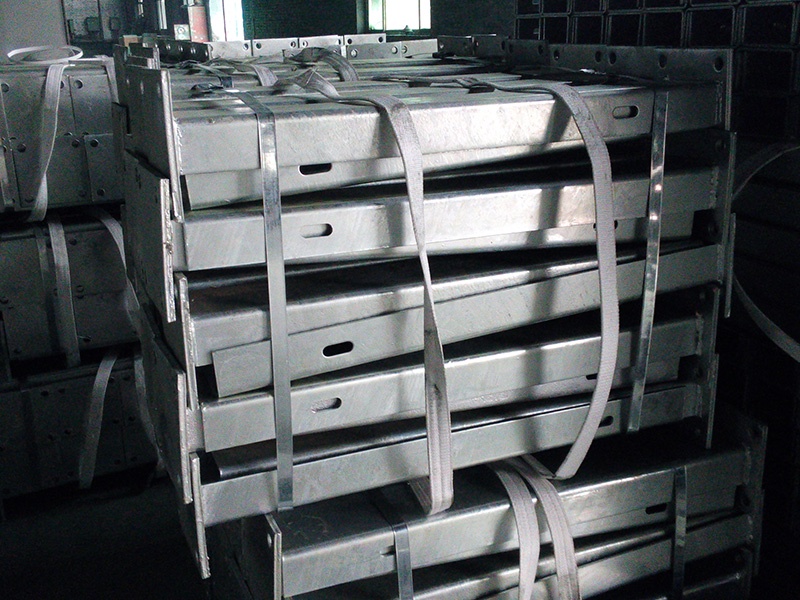
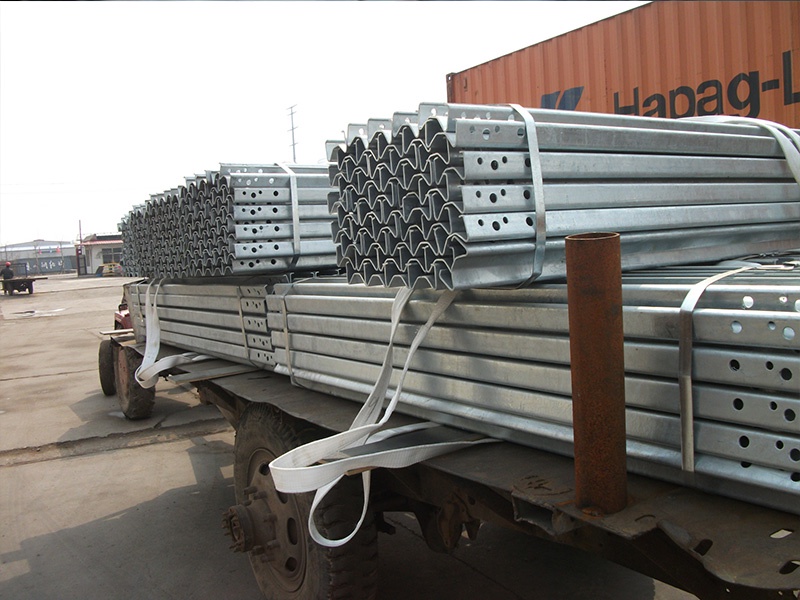
A capable guardrail manufacturer will usually have a process route that is clear and repeatable: drilling, bending or forming, rust removal, shot peening where required, non-destructive testing for applicable parts, galvanizing, painting when specified, and final inspection before packing. That sequence is more than a checklist. It determines whether the finished product is merely fabricated or genuinely controlled.
Drilling is a good example. In highway barriers, hole spacing and edge distance must match the connection system exactly. If the drilling process is rushed or measured inconsistently, installers may compensate on site, but that often slows the job and weakens assembly quality. The same goes for bending. Z-profile posts need consistent geometry, otherwise adjacent sections do not sit properly and the installed line can look uneven even if every part is technically “close enough.”
Surface preparation is another point people sometimes underestimate. Rust removal and shot peening are not decorative steps. They influence coating adhesion and long-term corrosion behavior. In transport infrastructure, where components may face rain, salt, dust, and temperature swings, poor preparation usually shows up much later, which makes it expensive to fix.
Why Galvanizing and Coating Quality Deserve Extra Scrutiny
For steel guardrail systems, hot-dip galvanizing is often one of the most critical protections against long-term corrosion. But buyers should be careful not to reduce the discussion to “galvanized or not.” The more useful questions are whether the pretreatment was done properly, whether the coating is uniform, whether corners and drilled areas are well protected, and whether the finish remains suitable for transport and installation handling.
Painting may be added for visibility, project specification, or additional environmental protection. When both galvanizing and paint are required, process control becomes even more important, because one bad surface step can compromise the whole finish system. A factory with real experience in highway guardrails usually knows that visual appearance alone is not enough; the coating has to survive storage, shipping, and field assembly without becoming the weak link.
Quality Control Is Mostly About Consistency
The strongest signal of a serious factory is not a polished brochure but a disciplined inspection routine. That includes checking raw material conformity against the drawing, monitoring forming accuracy during production, verifying drilled locations, reviewing weld or connection areas where relevant, and carrying out non-destructive testing on components that require it.
In this industry, consistency often matters more than isolated perfection. One excellent batch does not help much if the next shipment has dimensional drift or coating variation. This is why traceability, inspection records, and practical communication between the production floor and quality staff matter. If a drawing changes, or if the road section has special loading or spacing requirements, the factory needs a system that catches those changes before production is already underway.
That same logic applies to support components. In highway guardrail systems, the base connection is easy to overlook until there is settlement risk or higher local load demand. A component such as H Post Base Plate is not just a steel plate under a post. Its job is to provide vertical support and transfer force into the foundation so the guardrail line does not shift or overturn significantly. On standard sections, post spacing may be 4 meters, while critical locations may tighten to 2 meters, so the support detail has to match the actual site condition, not just the general drawing set.
Customization Is Useful, but It Raises the Need for Control
Many projects do not use one universal detail. Roadside constraints, bridge transitions, soil conditions, and local technical requirements often force adjustments. A factory that can manufacture according to customer drawings or help refine a design is valuable, especially when different post types such as C-type, U-type, Z-type, and H-type have to be coordinated in one system.
Still, customization is not automatically an advantage if the factory lacks a stable review process. Every non-standard hole pattern, base plate size, or connector arrangement increases the chance of mismatch. That is why experienced buyers usually ask not only “Can you make this?” but also “How will you verify it before shipment?” The second question is often the more important one.
This is also where matching accessories become relevant. Energy-absorbing blocks, bolts, and post base details should be treated as part of one assembled system. A well-made support item such as a galvanized base plate may still create trouble if the connector set or adjacent components are not checked together.
What to Look for Before You Place an Order
If you are evaluating a Z post guardrail factory, a few practical checks can save a lot of back-and-forth later:
- Ask how the factory reviews drawings before production starts.
- Confirm whether drilling, bending, galvanizing, and testing are controlled in-house or coordinated through outside partners.
- Check how dimensional inspections are recorded, especially for hole locations and profile tolerances.
- Clarify which surface treatment is included and what project conditions it is intended to suit.
- Make sure support parts, connectors, and spacing details are aligned with the actual installation plan.
None of these points are complicated, but ignoring them is how routine highway steel packages turn into site problems.
A Factory Choice That Shows Up on the Road
Good guardrail manufacturing is usually invisible once the road opens, and that is exactly the point. Posts align, bolts fit, coatings hold, and installation crews do not waste time correcting avoidable errors. A reliable factory earns trust not by saying it can produce to drawing, but by proving that every process step supports the final performance of the barrier system.
If a project includes custom geometry, mixed post types, or foundation-sensitive sections, spend more time on process review than on unit price alone. In highway guardrail work, small production details tend to become very visible once the materials arrive on site.
Leave A Reply
Need More Details?
Contact me for details on creating and managing design projects, project features, and services and prices
consult
Our company was established in 1998. It‘s a Chinese pioneer enterprise integrating production and sales, committed to providing high-quality steel products to customers at home and abroad.

First class quality service and professional after-sales team.
Get in Touch
*We respect your confidentiality and all information are protected.