






Categories List
Recent Posts
 Netherlands Client Delegation Visits Our Factory to Advance European Highway Guardrail CooperationOct 10, 2026
 AASHTO M180 Guardrail Requirements: A Practical Guide to Material ComplianceOct 10, 2026
 Port Safety Barriers: Selecting Protection for Vehicle Lanes and Loading AreasOct 10, 2026
Why Guardrail Systems Fail Inspection and How to Correct Common Compliance Issues
Most Guardrail inspection failures do not begin at the final site walk. They begin much earlier, usually when design intent, fabrication tolerances, surface treatment, and field installation stop lining up. By the time an inspector notices inconsistent rail height, coating damage, weak post embedment, or missing splice hardware, the real problem is often that the system was treated as a collection of steel parts instead of a tested roadside safety assembly.
That distinction matters. A compliant roadside barrier is not judged only by whether the steel looks substantial or whether the line appears straight from a distance. Inspectors are looking for conformance in dimensions, material quality, protective finish, and installation details that affect crash behavior. A rail can look acceptable and still fail because the offset is wrong at a bridge transition, the bolt orientation is inconsistent, or galvanizing loss occurred after uncontrolled site cutting and drilling.
Dimensional deviations are usually a fabrication and layout problem, not just a field problem
One of the most common reasons a Guardrail system fails inspection is simple geometry. Rail height, post spacing, blockout positioning, lap direction, and terminal alignment all have to match the approved drawings and the applicable project requirements. On long highway runs, small deviations accumulate. A post line set out from an inaccurate control point can push the rail off profile. A bending operation that was not checked against the intended radius can create stress points or leave the rail misaligned at splices. Holes drilled slightly out of position may still allow assembly, but they can introduce connection eccentricity and visible mismatch that inspectors will flag.
The correction is rarely just tightening a few bolts. Good shops control this upstream: verify drawings before production, use repeatable drilling and forming processes, and check representative sections before shipping a full batch. On site, crews need reference elevations and control lines, especially near ramps, median openings, and bridge approaches where roadway geometry changes quickly. These are the places where “close enough” usually turns into rework.
Coating failures often show up after installation, but the cause may be earlier in the process
Surface protection is another frequent inspection issue, particularly in coastal corridors, de-icing salt regions, and humid industrial zones. The visible failures are familiar: thin or uneven galvanizing, coating runs, bare spots around edges, transport damage, and field scratches that were never repaired correctly. What gets missed is that many of these defects are linked to process discipline. Inadequate rust removal before galvanizing or painting, poor handling after shot peening, and uncontrolled storage at the project yard can all shorten service life before the barrier ever takes a vehicle impact.
For projects exposed to salt fog or recurring moisture, coating selection should be treated as a service-environment decision, not a cosmetic one. Zinc-aluminum-magnesium systems or properly specified powder coatings may be more suitable in some applications, but only if the rest of the production route supports them. If the substrate preparation and edge treatment are weak, a better top finish will not rescue the assembly. Inspectors tend to focus on what they can observe directly, so coating continuity at cut edges, bolt interfaces, and welded zones deserves particular attention during pre-delivery checks.
Material quality problems are less visible and more serious
A rail that passes visual inspection can still be compromised by material substitution, inconsistent thickness, poor weld quality, or uncontrolled forming. This is where manufacturing discipline matters more than site appearance. Highway barriers are expected to absorb and redirect impact energy in a predictable way. If the steel properties vary too far from the design basis, or if welding introduces defects that were never checked, the system may no longer behave as intended even though installation crews assembled it correctly.
In practice, the correction path is straightforward but not optional: maintain traceability from raw steel to finished component, control forming and drilling, and use appropriate non-destructive testing where the design or fabrication method calls for it. That matters even more for higher-rigidity components used in severe exposure or high-risk sections. In some median openings, bridge sections, ramp divergences, or pier protection zones, engineers may specify a box-profile barrier element instead of a traditional corrugated beam because greater section stiffness and impact resistance are needed. A component such as Open Box Connector, manufactured from hot-rolled steel plates through cold-forming and welding, fits those applications when the project requires a hollow rectangular beam with high bending stiffness and strong crash performance. But the same rule applies: the more demanding the performance expectation, the less tolerance there is for shortcuts in fabrication control.
Installation errors are often concentrated in transition zones
Straight roadside runs are usually the easiest part of the job. Inspection trouble tends to concentrate where one system changes into another: approaching bridge parapets, around lighting poles, at culvert edges, near terminals, and where widening or superelevation affects the post line. These locations force crews to make small decisions under field pressure, and that is where missing washers, wrong bolt lengths, improper anchorage, or unsuitable post depth begin to appear.
Weak post embedment deserves special mention. In rocky ground, filled shoulders, or areas with buried utilities, installers sometimes adjust depth or position to keep moving. That may solve the day’s production problem and create the inspection failure later. A barrier’s performance depends on post behavior as much as on the rail itself. If embedment, soil support, or anchor condition does not match the design assumptions, the system should be re-evaluated rather than informally adapted in the field.
What experienced teams check before the inspector arrives
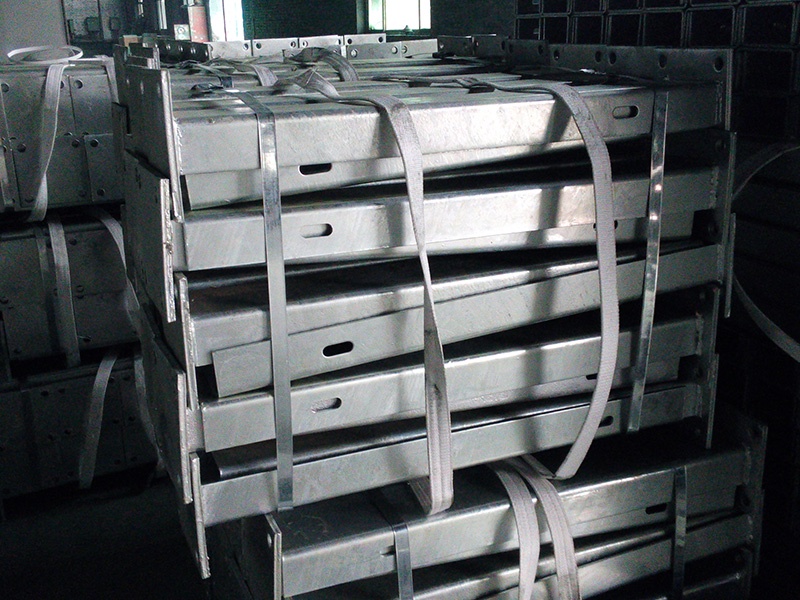
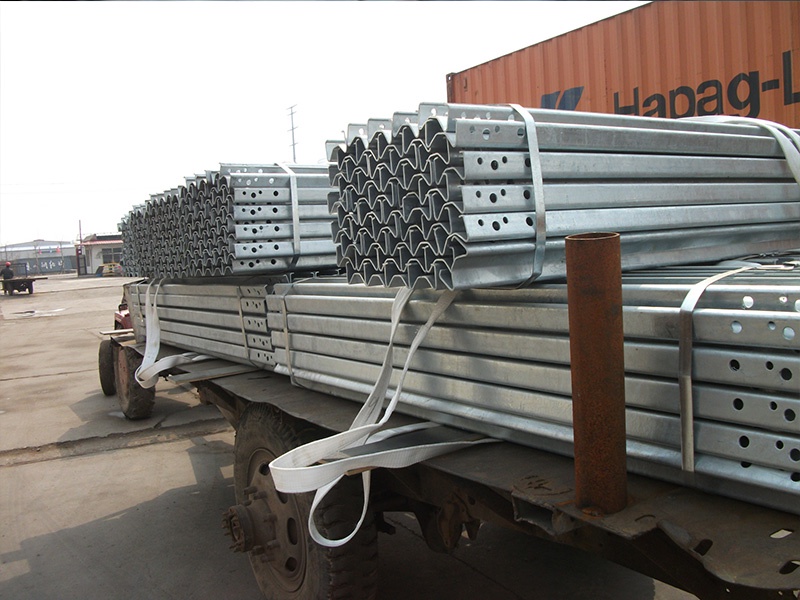
One useful habit is to inspect the job in the same sequence a failure will propagate: start with drawings and material records, move to fabrication consistency, then review transport handling, and only after that walk the installation. When teams reverse that order, they often treat a system issue as a local defect. A visibly damaged rail panel might not be the root problem; the root problem may be a packaging method that damaged twenty panels the same way.
This is also where product selection has to stay tied to site conditions. A high-rigidity barrier element may be appropriate for high-risk expressway sections or openings in a median strip, especially where stronger resistance to bending deformation is needed after vehicle collision. Yet using a stiffer component without checking transition compatibility, anchorage details, and surrounding geometry can create another inspection issue. Even a well-made Open Box Connector needs to be part of a coherent system, not a standalone upgrade inserted into a mismatched assembly.
When a Guardrail installation fails inspection, the fastest fix is not always the cheapest fix, and the cheapest fix is often not accepted. The better approach is to identify whether the nonconformance came from design interpretation, manufacturing control, protective treatment, or field execution. Once that is clear, the remedy becomes much more precise. On most projects, that is the difference between replacing a few components with confidence and reopening an entire line of barrier work that should have been controlled much earlier.
Leave A Reply
Need More Details?
Contact me for details on creating and managing design projects, project features, and services and prices
consult
Our company was established in 1998. It‘s a Chinese pioneer enterprise integrating production and sales, committed to providing high-quality steel products to customers at home and abroad.

First class quality service and professional after-sales team.
Get in Touch
*We respect your confidentiality and all information are protected.