






NEWS
Categories List
Recent Posts
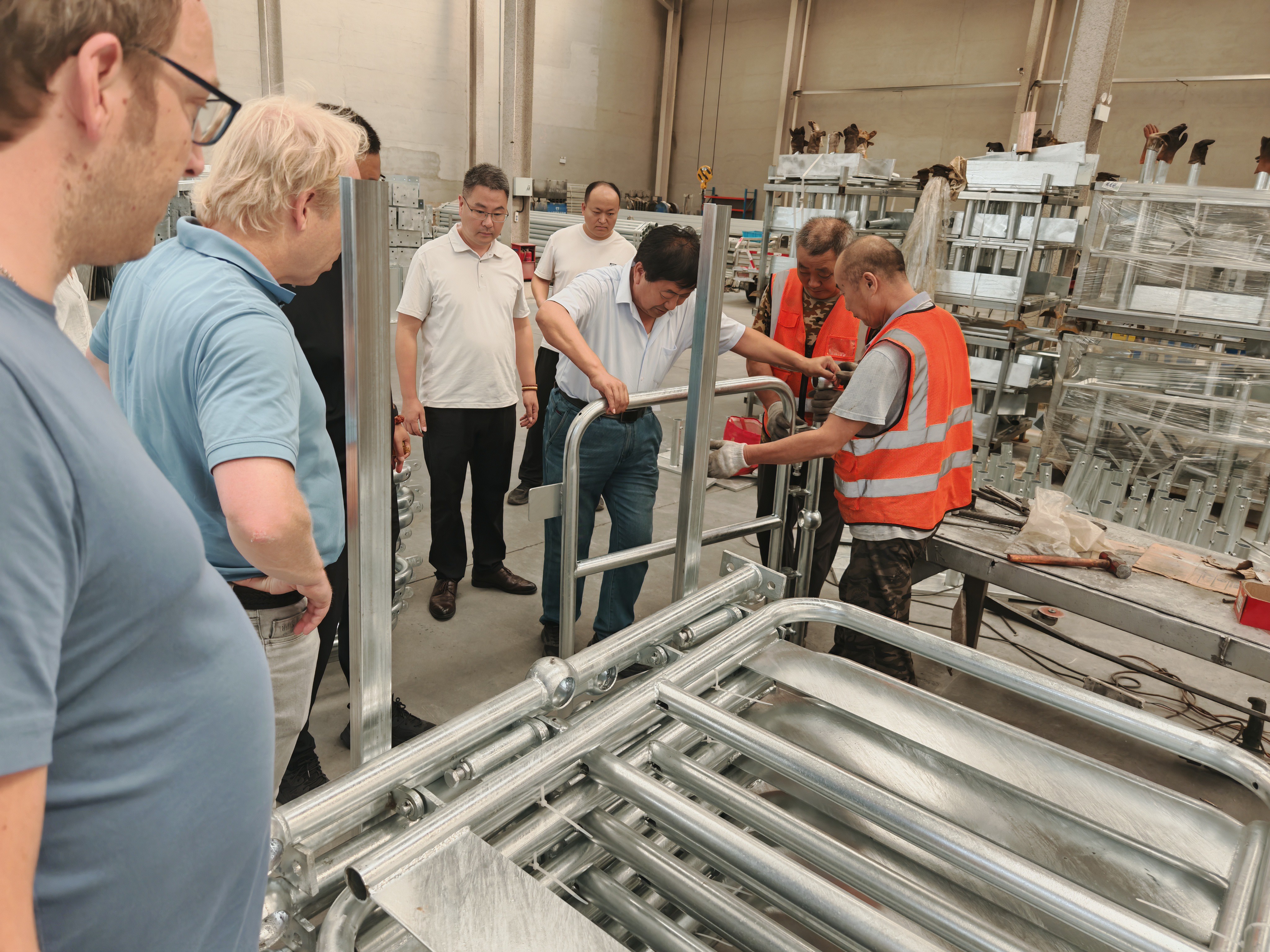
 Netherlands Client Delegation Visits Our Factory to Advance European Highway Guardrail CooperationOct 10, 2026
 AASHTO M180 Guardrail Requirements: A Practical Guide to Material ComplianceOct 10, 2026
 Port Safety Barriers: Selecting Protection for Vehicle Lanes and Loading AreasOct 10, 2026
Meta Title: When Should Z Posts Be Used in Rural Roads, Highways, and Bridge Approaches?
If you are deciding whether a Z Post is the right choice for a roadside barrier system, the practical answer is this: use it where you need reliable guardrail support, efficient installation, and good performance under typical roadside conditions, especially on rural roads, long highway runs, and transition areas leading to bridges. The decision should not be based on habit or lowest unit price alone. It should come from road geometry, soil condition, impact exposure, maintenance access, and how the full guardrail line is expected to behave over time.
Many teams get stuck on the same point. They ask whether a Z Post is simply a cheaper post option or whether it has a real application advantage. In practice, it can be a very sensible solution, but only when the project conditions match its strengths.
Where Z Post works best
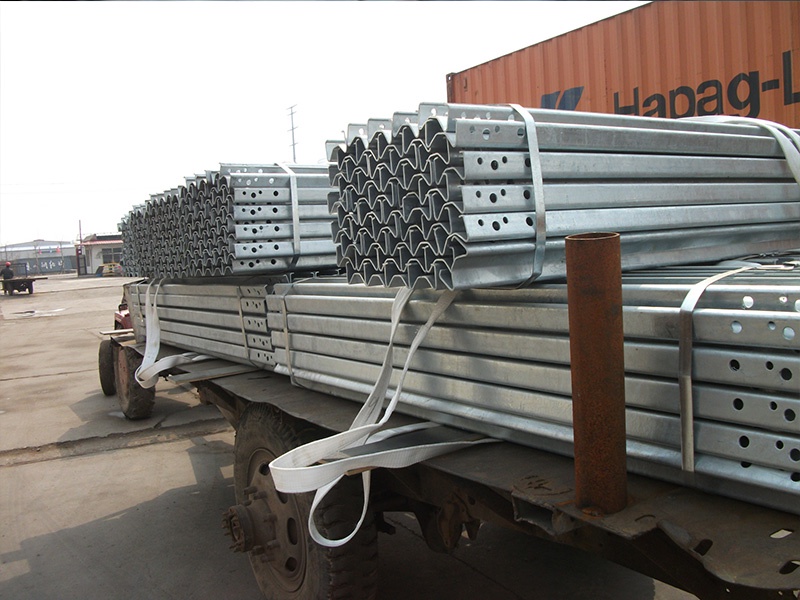
Z Post is commonly used in highway guardrail systems because its section shape can provide a useful balance between structural performance, material efficiency, and installation practicality. On rural roads, this matters more than many people expect. These roads often have narrower shoulders, variable embankments, and less forgiving roadside recovery space. A post that supports consistent guardrail alignment without creating unnecessary fabrication complexity can help keep the project under control.
On long highway sections, Z Posts are often considered when the priority is repeatable installation across large distances. Project managers usually care about that for one reason: consistency reduces trouble later. When the post type is easy to produce accurately and easy to install according to the specified spacing and depth, field crews make fewer adjustments, and inspection disputes are easier to resolve.
Bridge approaches are another place where the discussion becomes more specific. The approach zone is not just another length of roadside barrier. It is a transition area, and transition areas are where weak design decisions show up quickly. Vehicle redirection, stiffness change, post spacing, and connection details all need to be considered together. A Z Post may be appropriate in the approach section if it fits the approved guardrail system design and the transition detail has been properly engineered. It should not be selected in isolation.
In short, Z Posts are a good fit when the barrier line needs dependable support along standard sections, and when the design team wants a post profile that is practical to manufacture, galvanize, transport, and install.
When a Z Post is the right call, and when it is not
A useful rule is to think in terms of system behavior, not just component selection.
Z Post is usually worth considering when:
- the road section uses a standard guardrail layout with proven post spacing and embedment details;
- the project includes long runs where manufacturing consistency and installation speed matter;
- the roadside environment calls for durable steel components with corrosion protection suited to local exposure;
- the contractor wants fabrication based on project drawings rather than forcing a site team to adapt off-the-shelf parts.
It may be a poor choice, or at least a choice that needs extra checking, when:
- the soil is unusually weak, rocky, or inconsistent and may not support the intended post performance;
- the section includes unusual impact risk, tight curvature, or highly customized transition geometry;
- the bridge approach requires a tested transition assembly with specific stiffness and connection requirements;
- local standards or client specifications call for another post type in that exact application.
That last point is easy to overlook. A Z Post may make engineering sense, but if the owner specification, national standard, or approved roadside safety detail says otherwise, that governs the decision. This always needs to be checked against the actual project documents.
Z Post in rural roads: practical value beyond cost
Rural road projects often face a different set of pressures than expressway work. Budgets are tighter, logistics are harder, and maintenance access may be limited after installation. In these settings, Z Post can make sense because the barrier system needs to be straightforward to deploy and durable enough to avoid frequent replacement cycles.
Another point that matters on rural roads is variation. Shoulder widths change. Drainage edges appear unexpectedly. Side slopes are not always uniform. A post solution that can be produced to drawing, with stable quality control, helps reduce field improvisation. That is not a small benefit. Most installation problems on lower-volume roads do not come from the post alone; they come from mismatch between design assumptions and site reality.
If your team is managing a rural package, ask a simple question early: are we selecting Z Post because it matches the barrier system and terrain, or because it is merely available? Those are not the same thing.
Highways and long runs: why manufacturing quality matters more than people think
On highways, the conversation shifts from “will this work” to “will this stay consistent across thousands of meters.” That is where manufacturing discipline starts to matter. Hole positioning, section accuracy, bending control, surface preparation, galvanizing quality, and coating performance all affect installation fit and service life.
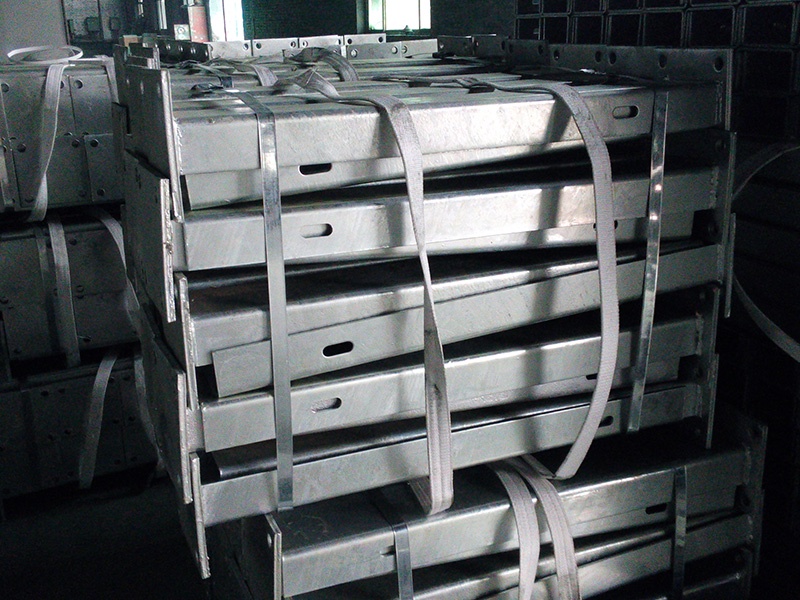
For that reason, many project teams prefer suppliers that can handle more than fabrication alone. When guardrail and steel products are manufactured against project drawings, with processes such as drilling, bending, rust removal, shot peening, non-destructive testing, galvanizing, and painting managed in sequence, the finished Z Post is more likely to match the intended installation detail. That reduces rework on site and lowers the risk of mixed tolerances across batches.
This is also where engineering support helps. If the supplier can quote, design, manufacture, and support installation according to the project requirement, coordination tends to improve. For a project manager, that means fewer gaps between design intent and delivered material.
Bridge approaches need extra caution
One of the most common mistakes is treating the bridge approach like a normal roadside run with a few adjusted parts near the end. It is not. The barrier approaching a bridge has to manage stiffness transition and connection behavior in a controlled way. If the post selection is wrong, or if the transition is assembled from mismatched components, the whole line can perform poorly even when each individual part looks acceptable on paper.
That is why approach sections should be reviewed as assemblies. Posts, rail beams, spacers, terminals, anchors, and corner or transition fittings all need to be compatible. In some layouts, components such as Int & Ext Corners may become relevant where alignment changes or special connections are involved, but they should be selected as part of the overall barrier detail, not as a standalone add-on.
A short answer many managers appreciate is this: use Z Post on bridge approaches only when it is part of a properly designed and approved transition system. If the system detail is unclear, stop and verify before procurement.
Common misunderstandings that slow projects down
The first misunderstanding is thinking that all steel posts are interchangeable if the height looks similar. They are not. Section shape, thickness, hole pattern, installation depth, and compatibility with the guardrail system all matter.
The second is treating corrosion protection as a finishing issue rather than a service-life issue. In exposed road environments, galvanizing and coating quality can strongly affect long-term maintenance demand. A lower upfront price may not stay lower once replacement cycles and traffic management costs are added.
The third is assuming that “custom manufacturing” means long delays. In many cases, manufacturing to drawings is exactly what prevents delay, because the parts arrive aligned with the actual project detail instead of forcing site modification.
What to confirm before you approve Z Post for a project
- Check the governing standard, owner requirement, and approved roadside safety detail.
- Review soil and installation conditions, especially in variable rural terrain and bridge approach zones.
- Confirm compatibility with the full guardrail system, not just the post itself.
- Verify fabrication details such as dimensions, hole layout, finish, and corrosion protection.
- Make sure the supplier can deliver consistent production quality and support drawing-based manufacturing.
That last step often decides whether the project runs smoothly. A capable manufacturer should be able to work from your plan or your drawings and provide the production steps needed to meet the required finish and quality level, rather than pushing a generic part that only partly fits the design.
Final judgment
Z Post should be used where the barrier system calls for a durable, repeatable steel post solution that fits the road condition, the installation method, and the approved guardrail design. It is especially useful on rural roads and long highway sections, and it can be suitable at bridge approaches when it is part of a verified transition assembly. If the site has unusual geometry, difficult soil, or a heavily constrained bridge-end detail, the right move is to verify the full system before ordering.
For project delivery, that is the real decision point. Choosing a Z Post is not about picking a shape. It is about making sure the post, the guardrail, the transition, and the manufacturing quality all work together in the field.
FAQ
Is Z Post mainly used for cost savings?
Not necessarily. Cost matters, but the better reason is system suitability. If it fits the guardrail design and installation conditions, it can improve consistency and reduce rework.
Can Z Post be used on every bridge approach?
No. Bridge approaches need a checked transition design. Use Z Post there only if it is part of the approved assembly.
What is the biggest risk when specifying Z Post?
Treating it as a standalone item. The real risk is mismatch with rail elements, soil condition, spacing, or transition details.
Should project teams prefer standard stock or drawing-based manufacturing?
If the project has standard geometry, stock may work. If the design has specific details, drawing-based manufacturing is usually the safer choice.
Internal Link Anchor Text Suggestions
- Guardrail post types comparison: link to a page comparing steel post profiles and applications
- Bridge approach guardrail transition design: link to a technical solution page
- Galvanized highway guardrail manufacturing: link to a manufacturing capabilities page
- Rural road safety barrier installation guide: link to an application guide page
- Int & Ext Corners: link to the related product page
External Authority Source Suggestions
- National or regional highway authority roadside safety design manuals
- Transportation research institute or university studies on guardrail performance
- Recognized industry association guidance for steel barrier systems and bridge approach transitions
Leave A Reply
Need More Details?
Contact me for details on creating and managing design projects, project features, and services and prices
consult
Our company was established in 1998. It‘s a Chinese pioneer enterprise integrating production and sales, committed to providing high-quality steel products to customers at home and abroad.

First class quality service and professional after-sales team.
Get in Touch
*We respect your confidentiality and all information are protected.