






NEWS
Categories List
Recent Posts
 Netherlands Client Delegation Visits Our Factory to Advance European Highway Guardrail CooperationOct 10, 2026
 AASHTO M180 Guardrail Requirements: A Practical Guide to Material ComplianceOct 10, 2026
 Port Safety Barriers: Selecting Protection for Vehicle Lanes and Loading AreasOct 10, 2026
What Quality Checks Are Required Before Accepting a Batch of C Posts?
Before a batch of C Posts is signed off for highway use, a quick dimensional check is not enough. For guardrail systems, posts carry impact loads into the soil and help the barrier behave as designed during a crash event. If the post geometry is off, if the steel grade does not match the drawing, or if galvanizing is thin or poorly bonded, the problem usually appears later—during installation, after exposure, or in the worst case, during service.
That is why quality control and safety teams usually treat C Post acceptance as a combination of drawing verification, process review, coating inspection, and sampling-based physical checks. The exact acceptance criteria depend on the project specification and local transport requirements, but the inspection logic is fairly consistent across most highway steelwork.
Start with the documents, not the caliper
A surprising number of field problems can be traced back to paperwork gaps rather than fabrication defects. Before unpacking too much material, confirm that the batch can be tied to the approved drawings, purchase specification, steel material records, and coating requirements. Heat numbers, batch numbers, mill certificates, galvanizing records, and inspection reports should match what the project asked for.
This is especially important where posts are manufactured to customer drawings rather than a universal stock design. In custom road restraint projects, small changes in section size, hole pattern, or length can affect compatibility with spacers, rail panels, and connectors. Even a component like Third Wave Connector only fits correctly when the surrounding posts and hole locations are produced to the same system geometry.
Check the base material and section integrity
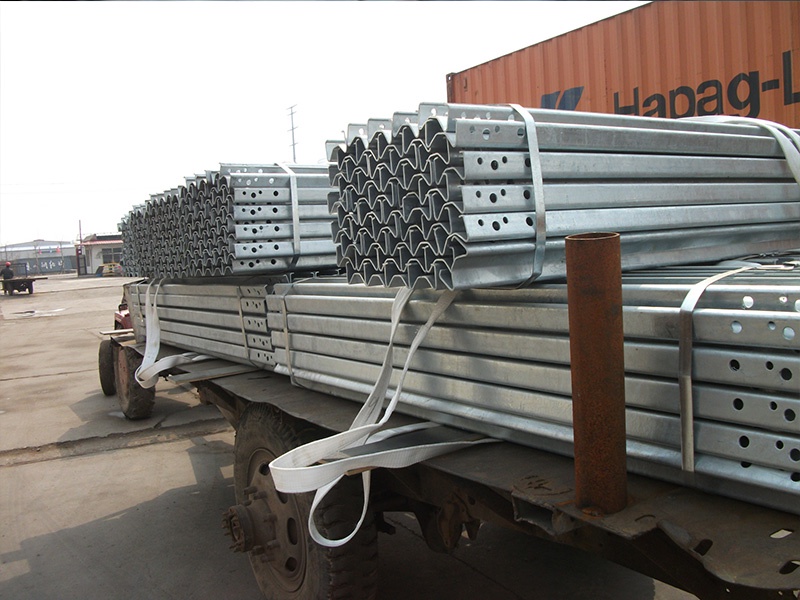
For C Posts, the first physical concern is whether the formed section actually matches the specified profile. Inspectors typically verify overall width, flange dimensions, web depth, wall thickness, and length against the approved drawing. Thickness matters twice: it affects structural capacity, and it also influences galvanizing behavior and post-driving performance.
Material strength should also be traceable. If the project requires a specific steel grade, the batch should be supported by mill documentation or equivalent production records. When there is doubt about substitution, QC teams should not assume equivalent performance. A post can look correct and still fail compliance if the steel chemistry or mechanical properties are outside the project requirement.
At this stage, visual inspection should also look for rolling defects, lamination signs, edge cracks from forming, excessive burrs, and local deformation. C-shaped sections can hide forming stress around bends, so bent corners and punched zones deserve a closer look.
Hole position accuracy is not a minor detail
If installers complain that “the posts are fine but nothing lines up,” hole accuracy is often the real issue. On highway guardrail work, the distance between holes, hole diameter, offset from edges, and orientation relative to the post section all affect fit-up. A few millimeters of error repeated across a run can slow installation dramatically or force site rework.
Acceptance should therefore include sampled measurement of critical hole patterns, not just one post from the top of the bundle. It is also worth checking whether the holes are cleanly formed. Elongation, tearing, sharp burrs, or distortion around the opening may indicate tool wear or poor process control during drilling or punching.
Straightness, twist, and forming consistency
A C Post does not have to look dramatically bent to create trouble. Slight bowing, twist, or end distortion can make driving harder and affect rail alignment after installation. This is why straightness checks are a practical acceptance item, particularly for long posts or heavily galvanized sections where heat and handling can introduce distortion.
Teams normally compare measured straightness and twist against the drawing or the applicable fabrication tolerance. If no clear project tolerance is stated, the safe approach is to clarify before acceptance rather than rely on shop habit. Posts that are technically usable in a warehouse may still be rejected at site if they cannot be installed plumb within the guardrail system tolerance.
Surface condition and corrosion protection need close attention
For transportation steel products, corrosion protection is not cosmetic. Before galvanizing or painting, the steel should have gone through suitable preparation such as rust removal and shot peening where specified by the process route. If surface preparation is poor, the final coating may look acceptable at first but perform poorly in service.
After galvanizing, inspect for uncoated areas, excessive runs, bare spots, ash inclusions, rough lumps that interfere with assembly, and signs of poor adhesion. Coating thickness measurement is usually part of acceptance when the project specification calls for it. The exact minimum values must come from the applicable standard or contract documents, so inspectors should compare readings to those requirements rather than to a general impression of “heavy enough.”
If the posts are painted, check the paint system against the approved specification, including surface cleanliness before coating, film continuity, and damage from bundling or transport. Touch-up rules also need confirmation, because not every project accepts the same repair method for damaged zinc or paint.
Process evidence matters when defects are not visible
Some quality risks will not be obvious during receipt inspection. This is where process records become useful. If the manufacturer’s route includes drilling, bending, non-destructive testing, galvanizing, and painting, acceptance can be strengthened by checking that those steps were completed and recorded in sequence. For safety-critical steelwork, traceability is not paperwork for its own sake; it helps explain whether a clean-looking batch was actually produced under controlled conditions.
Manufacturers that handle quotation, design, fabrication, and installation support under one system often have an advantage here, because the post geometry, accessory fit, and surface treatment can be checked against the same project file rather than passed between unrelated suppliers. That does not remove the need for incoming inspection, but it does make nonconformance easier to isolate.
Use a practical acceptance checklist
A workable batch acceptance review for C Posts usually covers these points:
- Drawing revision, item code, and batch traceability
- Steel grade documentation and production records
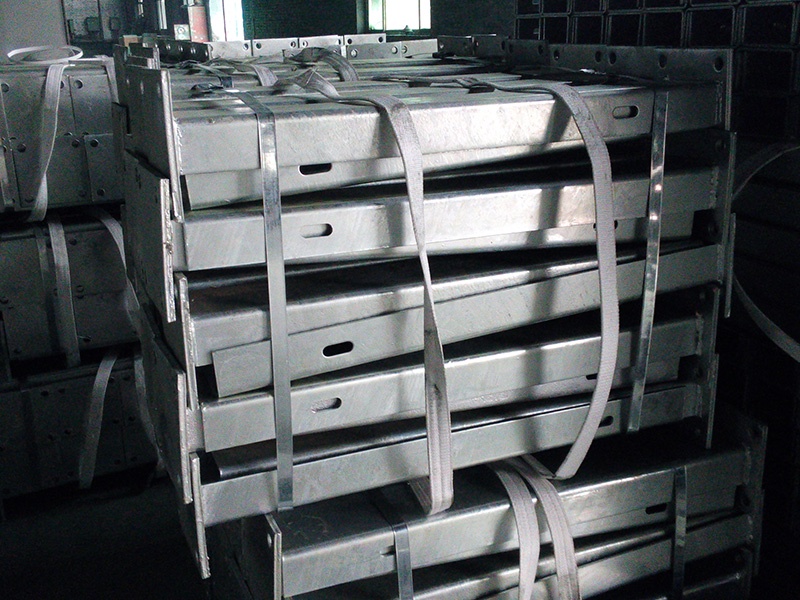
- Section dimensions, thickness, and post length
- Hole diameter, spacing, position, and edge condition
- Straightness, twist, end squareness, and visible deformation
- Surface defects from rolling, forming, drilling, or handling
- Galvanizing or paint quality, including damage in transit
- Compatibility with associated components and system layout
That last point is easy to underestimate. Posts do not work alone. They need to match the rail profile, blockout arrangement, fasteners, and connection hardware specified for the barrier system. If the project uses wave-beam or three-wave assemblies, it is worth confirming fit with the relevant joining parts before full release, including items such as the Third Wave Connector where applicable.
When should a batch be held instead of accepted?
A batch should be placed on hold if there is missing traceability, repeated dimensional drift, coating defects beyond project repair limits, or evidence that the posts do not match the approved drawing. The same applies when only a small sample passes but variation across the bundle is high. In highway work, inconsistency is often as risky as outright failure because it creates unpredictable installation time and uneven field performance.
Acceptance of C Posts is really a decision about system reliability. If the posts meet the drawing, coating, and fabrication requirements, installation tends to be straightforward. If they do not, the cost shows up later—misaligned rails, rejected site work, corrosion claims, or safety concerns that are harder to fix once the material is already on the road. For that reason, the best inspection routine is the one that connects the batch in front of you to the exact standard, drawing, and service conditions it is supposed to meet.
Leave A Reply
Need More Details?
Contact me for details on creating and managing design projects, project features, and services and prices
consult
Our company was established in 1998. It‘s a Chinese pioneer enterprise integrating production and sales, committed to providing high-quality steel products to customers at home and abroad.

First class quality service and professional after-sales team.
Get in Touch
*We respect your confidentiality and all information are protected.