






NEWS
Categories List
Recent Posts
 Netherlands Client Delegation Visits Our Factory to Advance European Highway Guardrail CooperationOct 10, 2026
 AASHTO M180 Guardrail Requirements: A Practical Guide to Material ComplianceOct 10, 2026
 Port Safety Barriers: Selecting Protection for Vehicle Lanes and Loading AreasOct 10, 2026
For most buyers, the real question behind this topic is not whether a supplier can make steel posts. It is whether that supplier can deliver a guardrail component that performs consistently in the field, fits the project design, arrives on schedule, and does not create hidden risk later through poor coating quality, dimensional errors, or weak documentation. In transportation projects, a Z post guardrail is a small part of a larger roadside safety system, but supplier reliability has a direct effect on installation efficiency, maintenance cycles, and, ultimately, crash performance.
The market makes this harder than it looks. Many suppliers can provide a quotation quickly. Fewer can support the full chain from design review and drawing-based production to inspection, surface treatment, logistics coordination, and installation guidance. That distinction matters because roadside barrier projects rarely fail at the quotation stage. Problems usually appear later: hole positions do not match, galvanizing quality is inconsistent, delivery batches vary, or site conditions expose a mismatch between the drawing and the actual foundation or spacing requirements.
Reliability starts with engineering, not sales language
A reliable Z post guardrail supplier should first be able to discuss the application in engineering terms. That means understanding how the post works within the entire guardrail system: supporting the rail vertically, transferring impact loads, and helping prevent excessive system displacement or overturning. If a supplier only talks about tonnage, unit price, or lead time, that is a weak signal. A transportation buyer usually needs a manufacturer that can read project drawings carefully, identify practical manufacturing constraints, and flag issues before production begins.
This is especially important when projects involve non-standard sections, special hole patterns, variable wall thicknesses, or site-specific spacing. On paper, these may look like minor modifications. In production, they affect tooling, tolerance control, galvanizing consistency, and installation accuracy. A dependable supplier should be able to manufacture according to customer drawings or, when needed, help optimize the design without changing the performance intent.
What buyers should check before placing an order
In this category, reliability is usually visible through process control. Buyers should look beyond certificates alone and ask how the product is actually made.
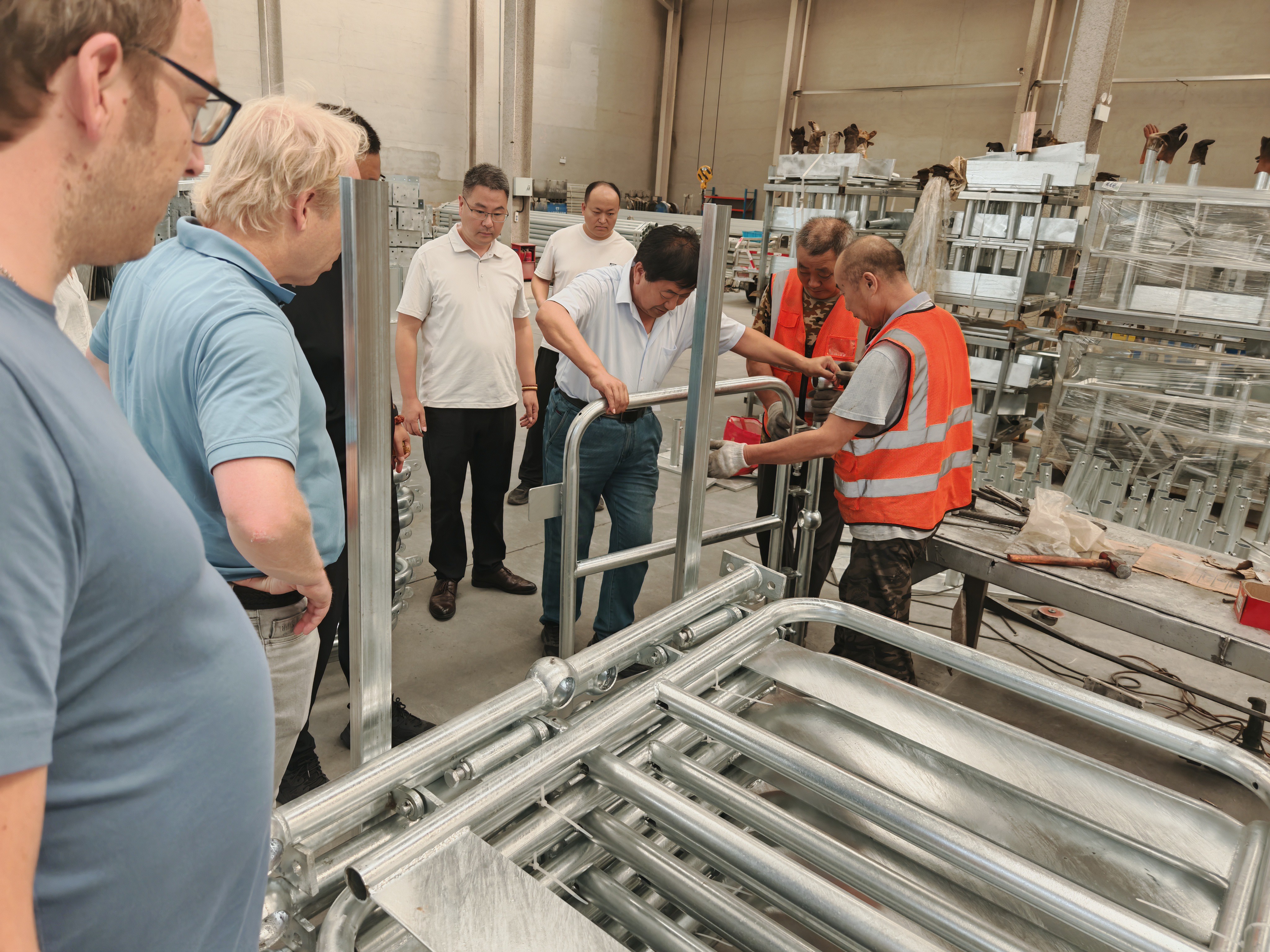
- Fabrication capability: Can the supplier handle drilling, bending, rust removal, shot peening, non-destructive testing, galvanizing, and painting in a controlled sequence?
- Drawing compliance: How does the factory verify dimensions, hole locations, length tolerances, and post geometry before shipment?
- Coating quality: For outdoor roadside use, corrosion protection is not optional. Ask what hot-dip galvanizing standard is followed and how coating consistency is checked. If a painted finish is added, ask how surface preparation is managed first.
- Batch traceability: Can the supplier trace production lots, inspection records, and material origins if a field issue appears later?
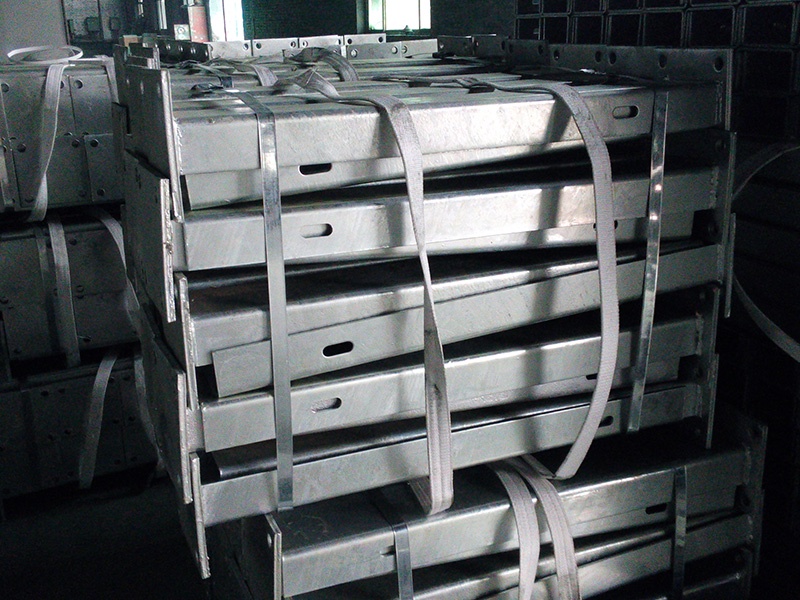
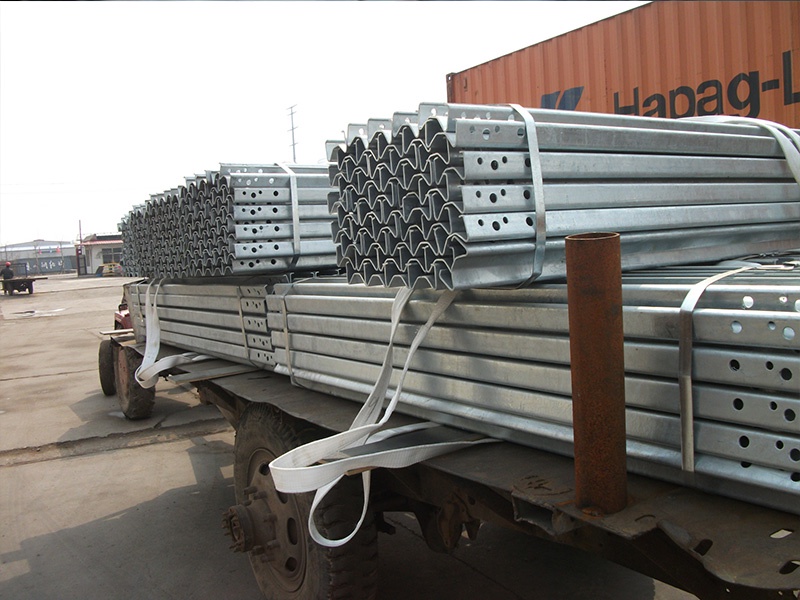
- Packaging and transport: Posts can be damaged or coating layers compromised in loading and transit. Good suppliers plan for this, especially on export shipments.
None of these points are glamorous, but they separate a supplier that can support transportation infrastructure from one that is only equipped for basic steel processing.
The most common sourcing mistake: evaluating posts in isolation
Guardrail buyers sometimes focus narrowly on the post profile and price per piece. In practice, system compatibility matters more. A Z post has to work with the rail beam, spacers or blocks, bolts, and the installation pattern specified for the road section. Reliability is therefore partly about whether the supplier thinks in terms of the complete system rather than a single component.
For example, in highway guardrail systems, post spacing may be standard in many sections but reduced at critical locations such as curves, bridge approaches, or higher-risk zones. A supplier that understands these scenarios will ask better questions about spacing logic, load paths, and connection details. Some projects also need custom posts because of soil conditions, embankment geometry, or retrofit constraints. That is where suppliers with flexible manufacturing and drawing-based customization become more valuable than low-cost, fixed-catalog vendors.
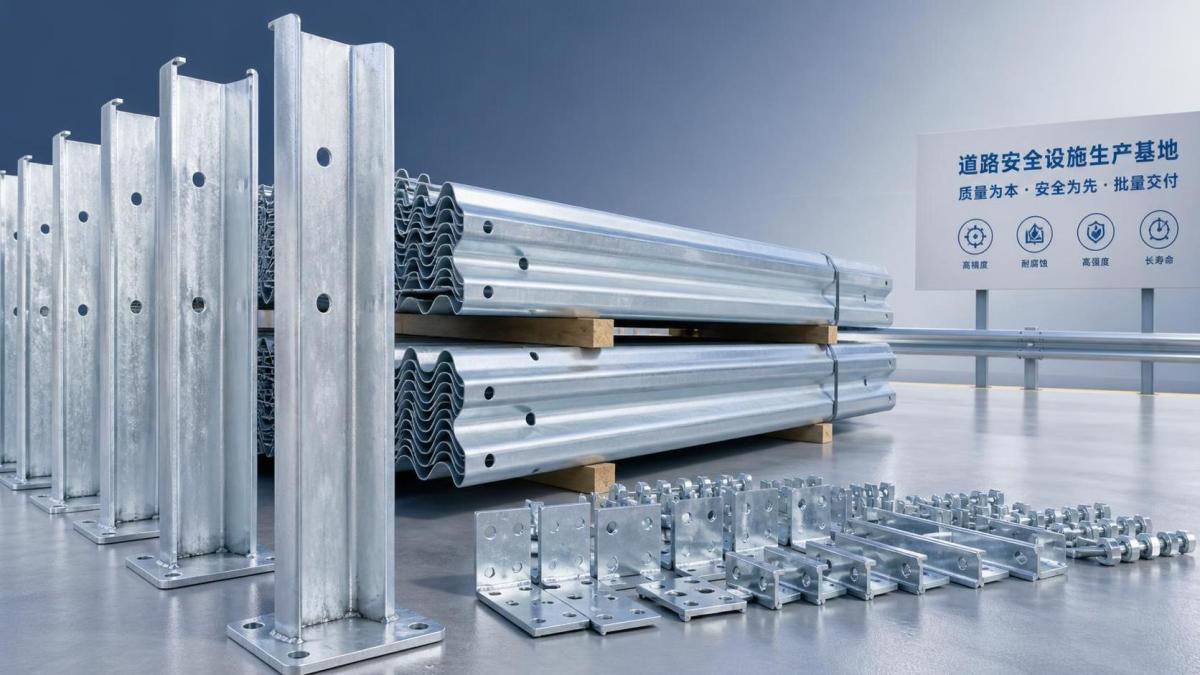
One useful reference point in the market is Sigma Posts, which are used in highway guardrail systems with multiple profile options such as C-type, U-type, Z-type, and H-type. The reason this is relevant is not the model variety itself, but what it indicates: the supplier is prepared to work within system-level requirements, including different diameters, wall thicknesses, lengths, and non-standard posts when site conditions require adaptation.
Quality control is where “reliable” becomes measurable
Transport infrastructure buyers should be careful with vague claims like “high quality” or “strict inspection.” Those phrases only matter if the supplier can explain what is being inspected and when. For Z posts, inspection should cover raw material conformity, dimensional control after forming and drilling, weld quality where applicable, surface treatment quality, and final appearance after galvanizing or painting.
Non-destructive testing is worth noting when the manufacturing route or project specification requires it, but buyers should not assume every mention of testing means the same scope. It is reasonable to ask for inspection records, sampling plans, and examples of non-conformance handling. A reliable supplier should also be comfortable discussing rejection criteria instead of only showing ideal samples.
In corrosion-sensitive environments, coating performance deserves extra attention. Hot-dip galvanizing is a common choice because it supports long-term rust resistance in outdoor use, but actual field durability depends on coating quality, handling, and local exposure conditions. Where project life-cycle cost matters more than initial procurement price, this can become one of the most important evaluation points.
Delivery reliability is not just a logistics issue
Transportation projects often run on narrow installation windows. A delayed shipment can affect lane closures, labor scheduling, equipment use, and the sequence of adjacent civil works. But delivery risk is not only about shipping dates. It also includes incomplete batches, mismatched hardware, undocumented substitutions, and products that arrive on time but cannot be installed efficiently.
That is why experienced buyers look for suppliers that can coordinate quotation, design confirmation, production, and installation support as one chain. If the supplier can provide feedback early on manufacturability, packaging needs, and site installation considerations, it reduces the chance of friction later. This is especially useful for export projects or mixed-scope jobs where the buyer is managing multiple subcontractors at once.
What a serious supplier should be able to answer clearly
Before committing, buyers should expect direct answers to a few practical questions:
- Can you manufacture strictly to our drawings, and how do you manage revision control?
- What are your normal tolerances for hole positioning, length, and section geometry?
- How do you verify galvanizing quality and surface condition before shipment?
- Can you provide non-standard posts if field conditions change after the initial design?
- What matching connectors, blocks, or related components are available to maintain system integrity?
- What parts of production are done in-house, and what parts are outsourced?
The last question is often overlooked. Outsourcing is not automatically a problem, but hidden outsourcing can create inconsistency in coating, drilling accuracy, or lead time. Buyers need visibility into who controls each step.
Price still matters, but it is rarely the decisive signal
In a competitive tender, price is unavoidable. Still, the cheapest guardrail post can become the most expensive option if it increases installation time, creates rework, or shortens service life. That is particularly true when the supplier cannot support documentation, replacement planning, or technical clarification after delivery.
In many cases, a more reliable supplier is one that can show stable manufacturing discipline and accommodate real project conditions, even if the quote is not the lowest. For instance, a supplier offering hot-dip galvanized posts, matching energy-absorbing blocks, bolted connectors, and customization based on drawings or site constraints may reduce system-level risk more effectively than a seller competing only on steel weight and unit cost. This is the practical value behind solutions such as Sigma Posts: not simply the post shape, but the ability to fit into a complete, durable, and installable barrier system.
The better question to ask
When evaluating a Z post guardrail supplier, the better question is not “Who can make this post?” It is “Who can deliver a post that fits the road safety system, survives the environment, installs without surprises, and remains defensible if the project is audited later?” In transportation procurement, that is what reliability usually means.
Suppliers that can combine design understanding, disciplined manufacturing, inspection control, corrosion protection, and project coordination tend to stand out quickly. Buyers do not need perfect certainty before ordering, but they do need enough evidence to believe the supplier can handle what happens after the purchase order is issued. That is usually where the real test begins.
Leave A Reply
Need More Details?
Contact me for details on creating and managing design projects, project features, and services and prices
consult
Our company was established in 1998. It‘s a Chinese pioneer enterprise integrating production and sales, committed to providing high-quality steel products to customers at home and abroad.

First class quality service and professional after-sales team.
Get in Touch
*We respect your confidentiality and all information are protected.