






NEWS
Categories List
Recent Posts
 Netherlands Client Delegation Visits Our Factory to Advance European Highway Guardrail CooperationOct 10, 2026
 AASHTO M180 Guardrail Requirements: A Practical Guide to Material ComplianceOct 10, 2026
 Port Safety Barriers: Selecting Protection for Vehicle Lanes and Loading AreasOct 10, 2026
Understanding the role of C Posts
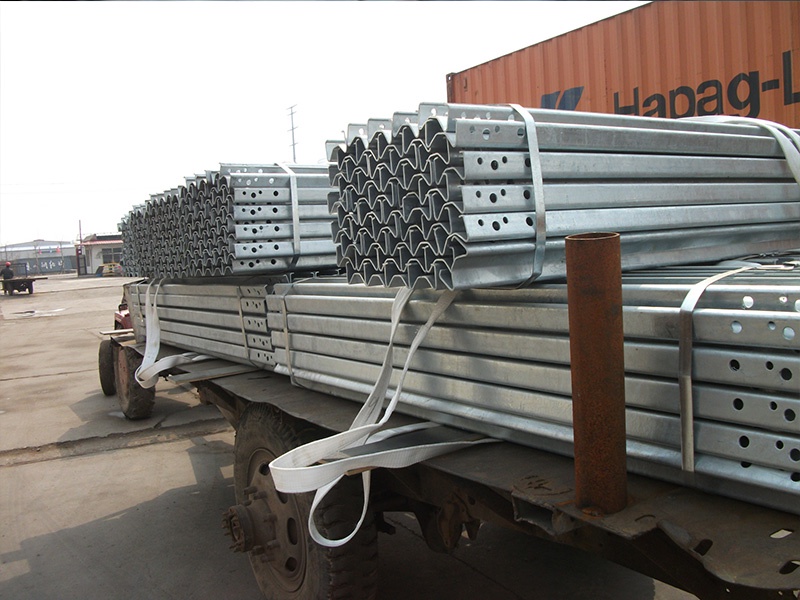
C Posts are steel support members used to hold roadside safety systems in place. In a typical guardrail assembly, the rail is the visible part that redirects a vehicle, but the post is the element that transfers load into the ground and helps the system deform in a controlled way during impact. A C Post gets its name from its cross-section, which resembles the letter C. That shape gives it a practical balance of strength, weight, and manufacturability, which is one reason it appears so often in road safety installations.
They are common along highways, ramps, bridges approaches, medians, embankments, and other roadside sections where a barrier needs dependable support without excessive material use. The profile is open rather than fully closed, so it is usually easier to punch, drill, connect, galvanize, and inspect than many heavier structural members. In road work, that matters because posts are handled in large quantities, often across long project lengths, and consistency from one unit to the next affects installation speed and field fit-up.
Why the C shape is widely used
The C-shaped section is not arbitrary. It offers directional stiffness while keeping the member relatively efficient in steel consumption. When a barrier is struck, the post should not behave like a rigid column in every condition. In many systems, some controlled yielding, rotation, or soil interaction is expected. A C Post can provide enough resistance to support the rail under normal service conditions while still participating in the intended energy management of the barrier system.
Its geometry also simplifies fabrication. Steel coil or plate can be roll-formed or bent into the profile, then processed through drilling or punching for bolt holes, blockout connections, splice points, or mounting hardware. Surface preparation and corrosion protection, such as rust removal, shot peening where specified, galvanizing, or paint systems, can be applied with less hidden internal area than a closed tube section. That does not automatically make it the right choice for every roadside environment, but it explains why it is a practical standard in many layouts.
Another reason is compatibility. Road safety assemblies are rarely just one isolated component. Rails, blockouts, fasteners, base details, soil embedment depths, and terminal transitions all have to work together. C Posts are often selected because they match the connection details already used in established guardrail configurations. Where adjacent structural steel is involved, related fabricated members such as Steel Frames may also be used in support or transition zones, although they serve a different structural purpose from standard roadside posts.
Material and manufacturing details that matter
Most C Posts for transportation use are made from structural steel suitable for outdoor exposure and repeated loading conditions. The exact grade, thickness, and section dimensions depend on the barrier design, expected loading, and project specifications. A post that works in a shallow shoulder with compacted soil may not be appropriate in rocky ground, soft fill, or a location with drainage constraints. Section width, flange depth, web thickness, hole spacing, and total length all affect installation behavior.
Manufacturing quality has a direct effect on field performance. Hole alignment must be accurate enough that rails and blockouts can be bolted without forcing parts into position. Bending tolerances matter because even slight profile distortion can accumulate over long runs. Galvanized coating quality is also important. If edges, holes, or formed corners are poorly protected, corrosion may begin at the most vulnerable points. In aggressive environments, a project may call for additional coating treatment beyond standard galvanizing, especially near coastal areas, industrial zones, or locations where de-icing chemicals are common.
Non-destructive testing is not always applied in the same way across every post type, but where welds, attachments, or special fabricated features are present, inspection methods may be specified to confirm integrity. Straightness, dimensional tolerance, and surface finish are often just as important as raw steel strength because posts must fit the system as designed, not merely satisfy a nominal material description.
How C Posts behave in roadside systems
A frequent misunderstanding is that stronger always means safer. In road restraint systems, the post should match the behavior expected by the full assembly. If it is too stiff for the rail, blockout, and foundation condition, impact forces may transfer in unintended ways. If it is too light or poorly embedded, the rail height can change under load or the barrier may not redirect a vehicle as intended. The usefulness of C Posts comes from their ability to be specified within a system where rail element, post spacing, embedment, and connection hardware are coordinated.
Soil interaction is especially important. Many posts are driven directly into the ground, and the surrounding soil becomes part of the resisting mechanism. Dense granular soil, cohesive soil, reclaimed fill, and wet shoulder conditions can all produce different results. In some locations, sleeve arrangements, base plates, or cast-in details may be considered, but those alternatives change the way the post transfers load. A C Post is common partly because it suits direct-driving methods in many standard roadside conditions, reducing the need for more complex foundations.
Common installation conditions and field considerations
On site, the value of a C Post often becomes clear during installation. The profile is easier to orient visually, easier to align with rail mounting points, and usually less cumbersome to handle than heavier closed sections of similar length. Crews still need to control plumbness, driving depth, offset from the edge line, and post spacing. Small errors can create a chain reaction, leading to rail misalignment, bolt-hole mismatch, and inconsistent barrier height.
Drainage is one field issue that is sometimes underestimated. If water collects around embedded steel, corrosion risk can increase over time, especially where protective coatings are damaged during driving. Areas near culverts, ditch returns, and low shoulders may require closer attention to post length, embedment condition, and surface treatment. Frozen ground, buried obstructions, and existing utilities can also affect whether direct driving is feasible or whether local adjustments are required.
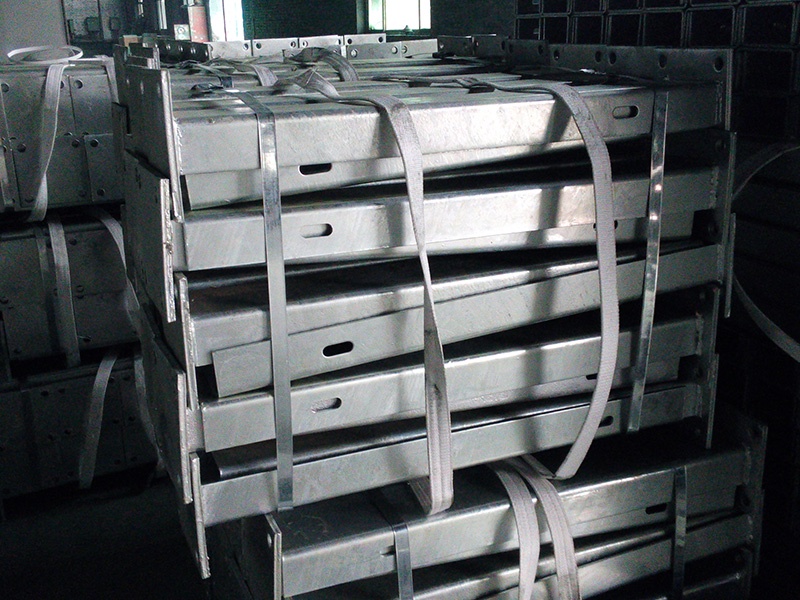
Transport and storage matter as well. Posts stacked without separation can suffer coating abrasion. If bundles are dropped or twisted in handling, flange deformation may complicate later assembly. These are routine issues rather than unusual failures, but they influence how smoothly a project moves from fabrication yard to roadside installation.
Where C Posts are preferred, and where they may not be
C Posts are often preferred where a standard guardrail system needs a proven, repeatable support member with straightforward fabrication and installation. They fit many shoulder and median applications, and they are commonly associated with steel beam barrier layouts. Their open profile also makes them practical where regular inspection is needed, since visual access to formed surfaces and connection points is relatively good.
They may be less suitable where environmental exposure, impact demand, foundation condition, or geometric constraints point toward another section type. In some projects, heavier posts, sigma sections, Z posts, round sections, or other structural arrangements may be selected. Bridge barriers and rigid concrete systems, for example, follow different structural logic and do not rely on C Posts in the same way. That is why asking whether C Posts are good or bad in general is the wrong question. The relevant issue is whether they match the tested or specified barrier configuration and the actual site conditions.
Selection details that are easy to overlook
- Hole pattern compatibility with the exact rail and blockout arrangement. Similar-looking posts can still be incompatible if spacing or slot details differ.
- Required post length relative to shoulder build-up, resurfacing layers, or changes in finished grade.
- Coating system choice in locations exposed to salts, standing moisture, or frequent abrasion during maintenance operations.
- Whether the design assumes driven installation, sleeved installation, or attachment to another fabricated steel element.
There is also a tendency to focus only on the post itself and ignore transitions. The area where a flexible barrier ties into a bridge rail, terminal, anchor assembly, or another support structure is often more demanding than the long straight run. In those locations, fabricated components such as Steel Frames may appear as part of the broader structural arrangement, but they should not be treated as interchangeable with ordinary C Posts. Each component has its own load path and detailing requirements.
In practical terms, C Posts remain common because they fit the way many roadside steel barrier systems are designed, manufactured, transported, and installed. Their shape supports efficient fabrication, reliable connection detailing, and predictable behavior when used in the right assembly. The important point is not the letter in the profile name. It is whether the post geometry, steel thickness, coating, embedment, and hardware all correspond to the barrier system and the site where it will be used.
Leave A Reply
Need More Details?
Contact me for details on creating and managing design projects, project features, and services and prices
consult
Our company was established in 1998. It‘s a Chinese pioneer enterprise integrating production and sales, committed to providing high-quality steel products to customers at home and abroad.

First class quality service and professional after-sales team.
Get in Touch
*We respect your confidentiality and all information are protected.