






Categories List
Recent Posts
 Netherlands Client Delegation Visits Our Factory to Advance European Highway Guardrail CooperationOct 10, 2026
 AASHTO M180 Guardrail Requirements: A Practical Guide to Material ComplianceOct 10, 2026
 Port Safety Barriers: Selecting Protection for Vehicle Lanes and Loading AreasOct 10, 2026
Why does the total cost go far beyond the guardrail unit price?
In large projects, the quoted price per meter is only the visible part of the budget. A Bend Highway Guardrail system is a combination of steel beam sections, posts, connectors, surface treatment, transport, site handling, and installation work. Once the project moves from a basic inquiry to a real procurement package, cost usually shifts because the drawings, road geometry, and performance requirements start driving the specification.
For business evaluators, the useful question is not “What is the cheapest rate?” but “What is included, what is excluded, and what could change after award?” That is where most budget overruns begin.
Which technical specifications have the biggest impact on cost?
Material grade, steel thickness, beam profile, post type, and corrosion protection usually have the strongest effect. If the project requires heavier sections, tighter tolerances, or more demanding fabrication steps such as drilling, bending, non-destructive testing, or additional coating layers, the cost rises quickly.
You should check the procurement documents for the exact bill of materials, drawing references, coating requirements, and any testing or inspection scope. If those items are vague, suppliers may price on different assumptions, and the comparison becomes misleading.
Does road alignment or bend design really change the price that much?
Yes. Curved or bent sections often cost more than straight runs because they can require extra forming work, more precise fabrication, and closer dimensional control. In a large highway project, even a small increase per section becomes significant when repeated across ramps, median transitions, bridge approaches, or sharp curves.
This is one of the common pricing traps. A supplier may quote based on standard straight components while the issued drawings contain a high proportion of bends, transitions, and non-standard details. If the evaluator does not separate standard and custom quantities, the original offer may look competitive but turn expensive during execution.
How do posts and spacing affect the overall budget?
Posts are a major cost driver because they influence both material consumption and installation labor. In many highway guardrail systems, spacing changes the total quantity more than buyers expect. For example, a post arrangement at 4 meters will produce a different budget from critical locations that require 2-meter spacing, simply because the project needs more steel, more drilling or anchoring work, and more field time.
Where the design calls for vertical support that can transfer impact load into the foundation and help keep the system from shifting or overturning, the post selection matters as much as the rail itself. A component such as Z Post may be specified depending on the system layout, spacing plan, and site conditions. Evaluators should review whether the quote covers the required type, matching blocks, and bolted connectors instead of treating posts as a minor accessory.
What should be reviewed in the manufacturing scope before comparing suppliers?
Look closely at what happens between raw steel and packed shipment. Manufacturing steps such as rust removal, shot peening, precision drilling, bending, galvanizing, painting, and inspection all affect price, lead time, and consistency.
A lower quote may exclude steps that another supplier has already included. That does not automatically make the lower number better. It may just mean the scope is thinner.
- Check whether fabrication follows project drawings or a standard catalog item.
- Confirm whether inspection is routine dimensional checking only, or also includes non-destructive testing where required.
- Review whether galvanizing and painting are both included, or only one surface treatment.
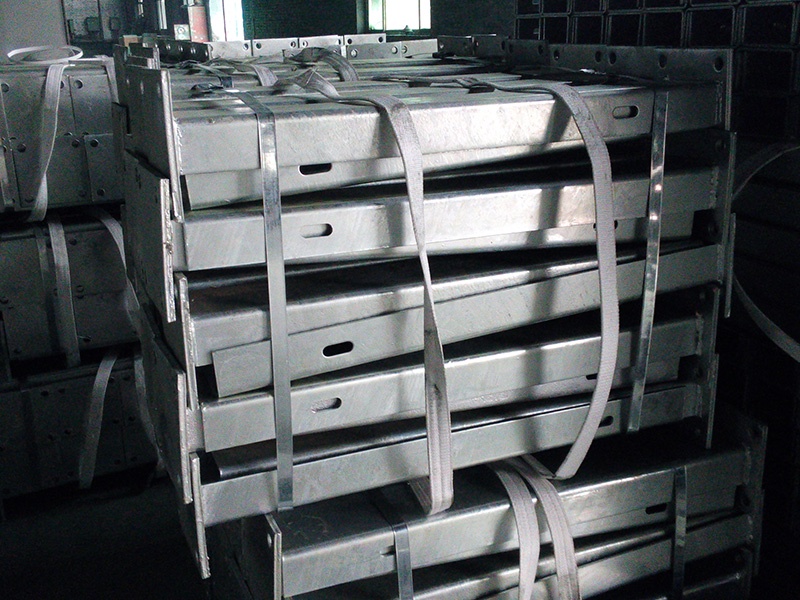
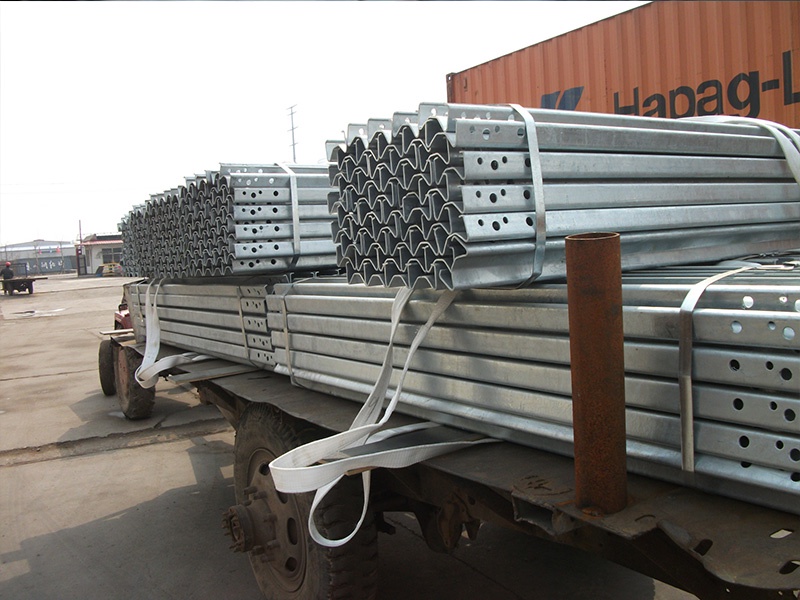
- Ask for the packing method if long-distance transport is involved, because damage in transit becomes a real replacement cost.
Is surface treatment just a durability issue, or a cost issue too?
It is both. Hot-dip galvanizing, painting, or a combined system changes the direct manufacturing cost, but it also affects lifecycle value. In aggressive environments, a cheaper finish can create earlier maintenance needs, patch repairs, or replacement planning. That means the lowest procurement price can become the highest ownership cost.
For a commercial evaluation, compare the specified coating system against the project environment and contract duration. If the tender only says “anti-corrosion treatment” without defining the process, thickness standard, or finish scope, price gaps between suppliers are hard to interpret.
When does customization start adding risk as well as cost?
Customization is reasonable when the road geometry, local foundation conditions, or connection details cannot be solved with standard parts. The problem starts when custom elements are introduced without stable drawings or approved interfaces. Every revision can affect tooling, production scheduling, and installation sequencing.
If non-standard posts or connection parts are needed, ask for the exact drawing list and revision status used for pricing. A supplier can manufacture to customer drawings or adapt components to site conditions, but your cost review should track whether the quoted price is based on frozen design data or on assumptions that may later change.
How much do transportation and installation influence the final number?
In large projects, they can be substantial. Guardrail systems are heavy, long, and awkward to handle. Freight cost depends on shipment volume, packing density, route distance, loading restrictions, and whether the project site is easy to access. Installation cost then depends on terrain, equipment availability, traffic control requirements, and foundation conditions.
A useful check is to separate the total package into three buckets:
What documents should a procurement team ask for before approving a budget?
At minimum, request the quotation breakdown, drawings or drawing references, material list, surface treatment scope, inspection scope, and delivery terms. If the system includes posts manufactured and inspected to international standards, that should be reflected in the supporting documents rather than left as a sales statement.
A good evaluation file lets you answer three practical questions: what exactly is being supplied, how it will be made, and who carries the cost if the site conditions or drawings change.
What are the most common mistakes when comparing Bend Highway Guardrail offers?
The biggest one is treating all quotes as if they describe the same system. They often do not. One supplier may include galvanizing, connectors, and custom bending, while another prices a simpler scope. Another common mistake is ignoring critical-location spacing, transition details, or installation constraints until after the contract is placed.
A more reliable approach is to compare on an equal basis: same drawings, same coating scope, same accessories, same freight basis, same installation assumptions. Without that alignment, the cheapest quote is often just the least complete one.
So what is the right way to judge total cost?
Start with the engineering definition, not the sales total. Break the Bend Highway Guardrail package into material, custom fabrication, surface treatment, logistics, and installation. Then test each offer against the actual road layout, spacing rules, drawing revisions, and site responsibilities. That is usually enough to expose where a “low price” is only a partial price.
For large projects, the best commercial decision is rarely the lowest initial number. It is the offer with the clearest technical scope, the fewest hidden assumptions, and the lowest chance of costly changes after procurement moves into production and field installation.
Leave A Reply
Need More Details?
Contact me for details on creating and managing design projects, project features, and services and prices
consult
Our company was established in 1998. It‘s a Chinese pioneer enterprise integrating production and sales, committed to providing high-quality steel products to customers at home and abroad.

First class quality service and professional after-sales team.
Get in Touch
*We respect your confidentiality and all information are protected.