






Categories List
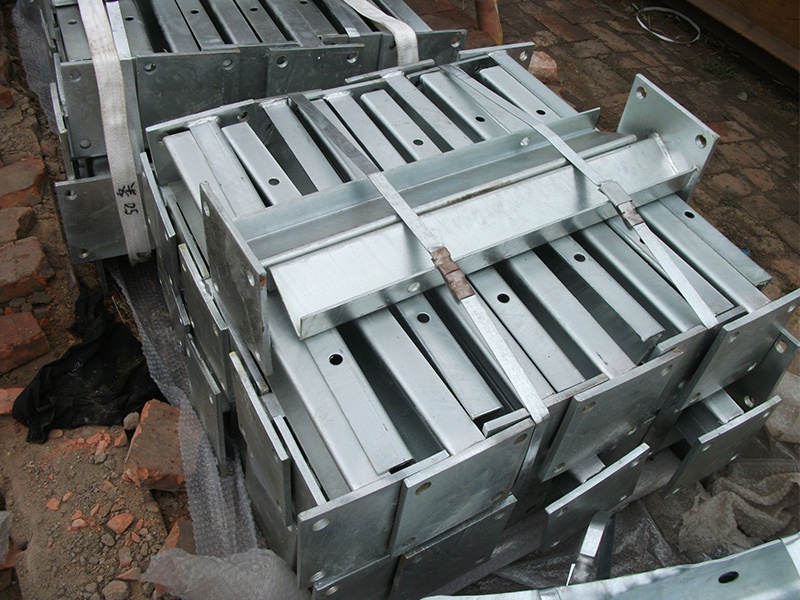

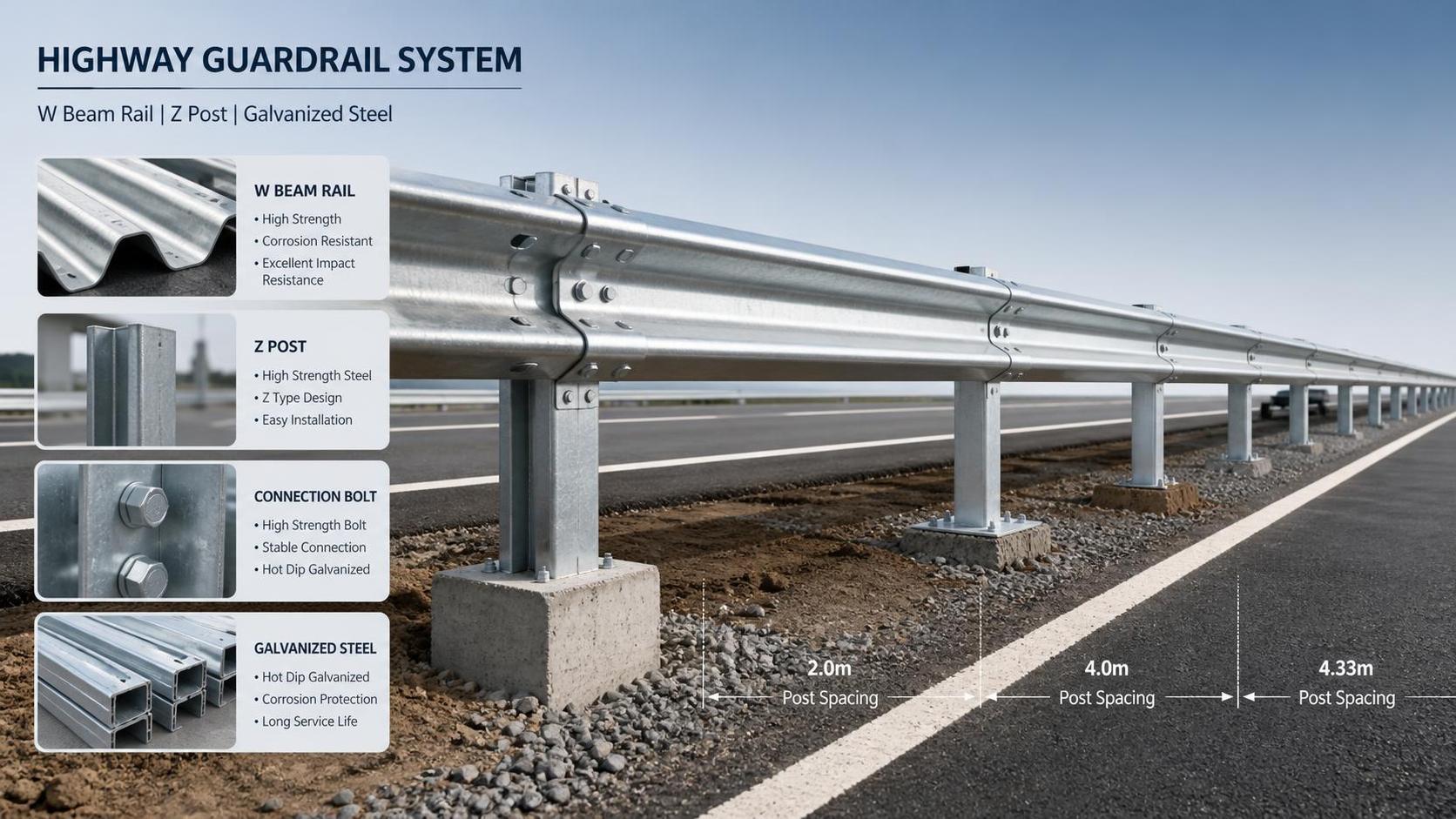
What should be checked before a Bend Highway Guardrail leaves the factory?
Before delivery, the goal is simple: confirm that the Bend Highway Guardrail matches the project drawings, is fabricated correctly, and can be installed without field rework. For quality control and safety teams, that means looking beyond appearance. A guardrail can look acceptable on the truck and still create alignment problems, weak connections, or coating failures after installation.
A practical pre-delivery inspection usually covers five areas: base material, dimensions, hole location, forming accuracy, and corrosion protection. If any one of those is off, the problem tends to show up later as difficult assembly, poor line continuity, or shortened service life.
How do you verify that the steel itself is acceptable?
Start with the material documents tied to the batch, then compare them with the purchase specification and drawings. The inspection should confirm that the steel grade, thickness, and plate or coil source are consistent with the order requirements. If the job requires traceability, the heat number or batch identification should remain linked to the finished parts.
After paperwork, move to the parts themselves. Check for lamination, edge cracking, severe pitting, or surface defects that could worsen during bending or galvanizing. In fabricated traffic safety products, these issues are easy to miss when production volume is high. They matter because bending concentrates stress, and weak material often shows itself first at curved sections, punched holes, or transitions near connections.
Which dimensional checks matter most on a bent guardrail section?
The most critical dimensions are the ones that control fit-up in the field. Overall length matters, but it is rarely the only issue. Hole spacing, hole diameter, end-to-end alignment, bend radius, angle, and profile symmetry usually cause more installation trouble than a small variation in nominal length.
A useful way to inspect is to compare random samples directly against the approved drawing and, where possible, use a template or fixture for repeated bends. For QC teams, the key question is not “Does this part look close?” but “Will this part bolt to the next section and maintain the intended rail line?” Misplaced holes or inconsistent bend geometry can force slot enlargement, torch correction, or site drilling, all of which should be treated as warning signs rather than normal adjustments.
How can you tell whether the bending process has damaged the guardrail?
Look carefully at the curved areas and at the zones beside holes or notches. The common red flags are visible cracking, wrinkling, flattening of the section, local thinning, and twist. Even when no crack is visible, an uneven bend can reduce assembly accuracy and change how impact loads transfer through the system.
This is also where fabrication discipline matters. If the product has gone through drilling, bending, rust removal, shot peening, non-destructive testing, galvanizing, or painting, the sequence should leave the part structurally sound and dimensionally stable. A good inspection does not isolate one process from the others. It checks whether the final part still reflects the approved geometry after all manufacturing steps are complete.
What should be reviewed on galvanizing and surface finish?
For highway guardrails, coating quality is not a cosmetic issue. It directly affects corrosion resistance and service life. Inspectors should look for bare spots, excessive runs, sharp zinc buildup at edges, peeling, blistering, dross inclusions, and damage caused by handling after coating.
The finish also needs to be consistent with the specified protection system. If a project uses galvanized-only parts, the coating should be continuous and intact after fabrication. If the specification includes a painted or powder-coated finish over a protected substrate, adhesion and coverage become part of the release check. One frequent mistake is accepting a good-looking top surface while ignoring hidden contact areas, bolt zones, and cut edges where corrosion often starts first.
Do connection points need a separate inspection?
Yes. Connections deserve their own review because many field failures begin there. Check that bolt holes are clean, correctly located, and free from burrs or distortion. Mating ends should sit properly without forcing. If the rail uses splices, terminals, or transition components, verify that the connection geometry matches the intended assembly direction and hardware arrangement.
This point becomes even more important in high-risk locations. For example, accessories such as End Cover are typically used in highway safety systems, bridge sections, median openings, ramp divergences, and other impact-sensitive areas. Where a component is expected to deliver higher stiffness, strong impact resistance, and minimal deformation, poor fit at the connection can undermine the performance of the whole assembly, no matter how good the individual part looks in storage.
What documents should QC or safety managers ask for before approving shipment?
The release file should be enough to connect the delivered parts to the approved technical requirement. In practice, that usually includes:
- approved drawings or fabrication details;
- material certificates or batch records;
- dimensional inspection records;
- coating or surface treatment records;
- non-destructive testing records if required by the specification;
- packing list and part identification details.
What matters is consistency between documents and physical goods. If the drawing revision on the record does not match the actual production lot, or if coating records cannot be tied to the shipped pieces, hold the shipment until traceability is restored.
What problems are often missed until the guardrail reaches the site?
Three issues show up again and again: mixed batches, transport damage, and geometry drift that was not obvious in the factory stack. Mixed batches create confusion when similar parts have different bend angles or hole layouts. Transport damage often affects coating edges, corners, and protruding connection areas. Geometry drift becomes visible only when several sections are placed in sequence and the rail line no longer runs smoothly.
That is why a receiving inspection at site should not be skipped. Even if the factory release is complete, the site team should sample-check labeling, count, visible damage, and trial alignment of representative pieces before full installation starts.
Is a visual inspection enough for acceptance?
No. Visual inspection is necessary, but it only catches part of the risk. A Bend Highway Guardrail may have acceptable appearance and still fail on dimensions, hole pattern, coating continuity, or traceability. Visual checks work best as the first screen, followed by measurement and document review.
For critical locations, especially where parts are expected to maintain high rigidity and structural stability over long service periods, visual acceptance alone is too weak. This applies to specialized components made from high-quality hot-rolled steel plates and used in aggressive environments, including coastal or high-salt-fog areas, where the protective system and fabrication quality both affect long-term behavior.
What is the right action if a nonconformity is found before installation?
Separate the affected batch immediately and define the nonconformity in measurable terms. “Poor quality” is not enough; “hole spacing does not match drawing,” “bend angle inconsistent,” or “coating damaged at multiple edges” gives the team something actionable. Then decide whether the issue affects fit, corrosion protection, crash performance, or traceability. That determines whether the part can be reworked, re-inspected, or rejected.
The most reliable rule is this: if the defect changes structural behavior, installation geometry, or the integrity of the protective coating, do not push it to site and hope the field crew will solve it. Catching the problem before unloading is cheaper than correcting it beside a live roadway.
Leave A Reply
Need More Details?
Contact me for details on creating and managing design projects, project features, and services and prices
consult
Our company was established in 1998. It‘s a Chinese pioneer enterprise integrating production and sales, committed to providing high-quality steel products to customers at home and abroad.

First class quality service and professional after-sales team.
Get in Touch
*We respect your confidentiality and all information are protected.