






NEWS
Categories List
Recent Posts
 Netherlands Client Delegation Visits Our Factory to Advance European Highway Guardrail CooperationOct 10, 2026
 AASHTO M180 Guardrail Requirements: A Practical Guide to Material ComplianceOct 10, 2026
 Port Safety Barriers: Selecting Protection for Vehicle Lanes and Loading AreasOct 10, 2026
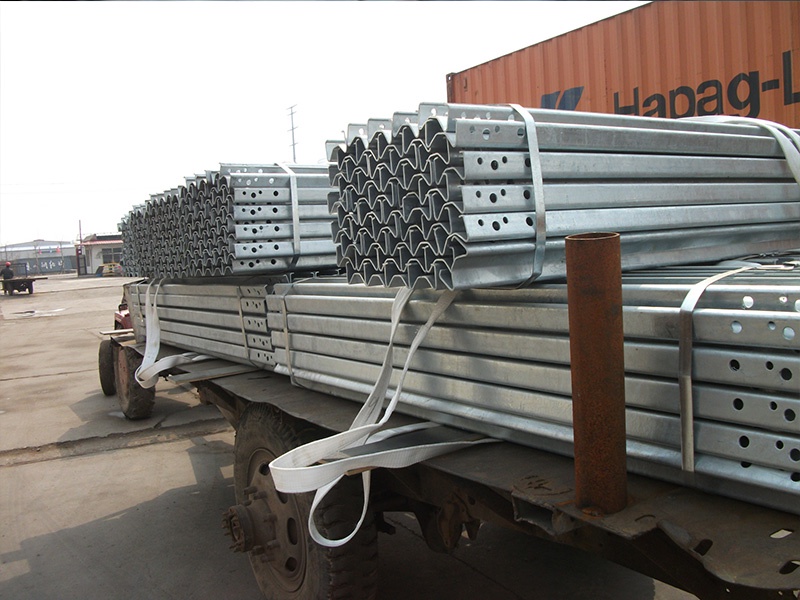
In coastal corridors, port access roads, estuary bridges, and tropical inland routes, Z Post durability is rarely determined by nominal steel strength alone. For quality control and safety managers, the real question is whether the post can preserve structural function after years of chloride exposure, wet-dry cycling, trapped moisture, coating damage, and repeated maintenance activity. A post that looks compliant at delivery can still become a weak point in the guardrail line if corrosion protection, fabrication quality, or installation details are not evaluated with the actual environment in mind.
That is why durability assessment needs to move beyond a checklist mentality. In corrosive and high-humidity areas, a Z Post should be judged as a system component with a defined exposure profile, expected maintenance interval, and safety consequence if section loss or connection deterioration develops earlier than planned.
Why coastal and humid environments are harder on a Z Post
The failure mechanisms are well known in transport infrastructure, but they are often underestimated during purchasing and incoming inspection. Coastal exposure introduces airborne chlorides that deposit on steel surfaces and accelerate corrosion, especially where moisture remains for long periods. High-humidity areas create another problem: surfaces do not fully dry, so protective coatings spend more time under active electrochemical attack.
For a Z Post, the risk is concentrated in a few predictable locations:
- the ground line or embedment transition zone;
- drilled holes, edges, and bends where coating thickness may vary;
- bolted connections where crevice corrosion can begin;
- areas exposed to standing water, soil salts, or splash contamination;
- locations where transport or installation has already damaged the coating.
Safety managers should care about these details because durability loss in posts is not only an appearance issue. Section reduction, local perforation, or degraded connection performance can change impact behavior long before complete visual failure is obvious.
Start with the right durability question: design life under what exposure class?
A common mistake is to ask whether a post is “galvanized” and treat that as sufficient. The more useful question is whether the corrosion protection system is suitable for the project’s exposure severity and design service expectations. A mild inland humidity environment and a marine highway with salt-laden wind should not be evaluated by the same practical threshold.
Before approving supply, QC teams should define at least four project-specific inputs:
- distance from coastline or tidal influence;
- whether there is direct salt spray, sea fog, or de-icing salt exposure;
- average humidity and wetness duration;
- required maintenance-free interval or target service life under owner specifications.
If the project documents reference ASTM, AASHTO, EN, ISO, or local highway authority requirements, those references should be checked directly rather than inferred from supplier declarations. Exact coating and testing requirements can differ by market, and where project specifications are unclear, the controlling standard should be marked as 【待核实】 rather than assumed.
Material and section quality still matter, but not in isolation
Base steel quality remains important because corrosion resistance is only one side of durability. The Z Post must retain enough residual capacity after years of exposure to perform during vehicle impact. That means verifying steel grade, dimensional tolerance, wall or section thickness, and fabrication consistency.
In practice, QC problems often emerge from variation rather than from declared material class. If thickness is already close to the lower tolerance limit before galvanizing, the post has less corrosion allowance from day one. If hole placement or profile geometry is inconsistent, local stress concentration and installation mismatch can increase the chance of coating damage or water retention.
For humid and coastal projects, dimensional inspection should therefore be tied to durability review, not handled as a separate formality. A precisely formed profile drains better, fits correctly, and is less likely to suffer avoidable abrasion at assembly points.
Galvanizing quality is usually the decisive factor
For exposed steel guardrail posts, hot-dip galvanizing is the primary protection method in many markets. But not all galvanized surfaces offer the same field performance. What matters is not only the presence of zinc coating, but its continuity, adhesion, thickness distribution, and suitability for formed features.
When evaluating a Z Post for corrosive areas, inspection should focus on:
- measured coating thickness, especially at edges, corners, bends, and hole perimeters;
- surface continuity, with no bare spots, ash inclusions, flaking, excessive runs, or uncoated recesses;
- coating adhesion after fabrication and handling;
- evidence that the galvanizing process was compatible with the post geometry and drainage design;
- repair treatment for any damaged areas, if permitted by project specification.
A visually bright finish is not proof of long-term corrosion resistance. Some of the most important defects are local and easy to miss during rapid receiving checks. In coastal work, even a small exposed steel area near a bolt hole or ground-line transition can become the starting point for accelerated attack.
Pay attention to fabrication steps that often reduce durability
Many premature corrosion issues originate before installation. Drilling, bending, surface preparation, shot peening, and handling all influence coating performance. If fabrication sequence is poorly controlled, the finished post may meet drawing dimensions but still carry hidden durability risk.
QC managers should ask practical process questions:
- Were holes produced cleanly, without burrs that interfere with coating coverage?
- Did bending create microcracking or excessive thinning at corners?
- Was rust removal completed to a controlled standard before galvanizing?
- Were posts protected from impact and stacking abrasion after coating?
- Was non-destructive testing used where project or weld details require it?
These are not minor workshop details. In aggressive environments, small process weaknesses often decide whether the post remains stable for years or starts corroding early at fabricated stress points.
The ground line is where durability assumptions are most often wrong
Above-ground surfaces are easy to inspect, so they tend to receive more attention than the buried or splash-zone portion of the post. Yet in many highway applications, the ground-line region is one of the highest-risk areas. Moisture, oxygen variation, dissolved salts, and trapped fines can create especially active corrosion conditions right where structural demand is important.
If the project uses supporting components such as base plates or alternative post assemblies, the load path and water management details should be checked together. In some highway guardrail systems, components such as the U Post Base Plate are selected not only for vertical support and load transfer, but also because coating quality, connection integrity, and installation spacing influence how the system behaves at critical locations. Standard spacing such as 4 meters may be acceptable in general runs, while 2 meters may be required in higher-risk sections depending on design conditions.
For safety review, this means durability is not just about the isolated post specimen. It is about whether the installed geometry allows drainage, resists overturning, limits movement after impact, and avoids moisture traps at the connection and foundation interface.
Laboratory evidence helps, but field relevance matters more
Test reports are useful, but they can be misunderstood. Salt spray results, coating thickness certificates, and factory inspection records provide supporting evidence, not a complete prediction of service life. A post may perform well in a laboratory exposure but still deteriorate quickly if installed in a site with persistent wet deposits, poor drainage, or coating damage during erection.
For that reason, experienced QC teams usually combine three evidence layers:
- factory compliance records for steel, galvanizing, and dimensions;
- site-specific inspection of delivered posts and coating condition;
- reference performance from similar installed environments, if available.
Where suppliers claim long-term rust resistance in outdoor conditions, ask what comparable exposure that claim is based on. “Outdoor” is too broad to be meaningful for a coastal transport corridor.
What to inspect during receiving and installation
Incoming inspection should not be limited to counting pieces and checking labels. For corrosive-region projects, receiving inspection is often the last efficient opportunity to identify durability issues before they are built into the roadside system.
Focus on these points:
- coating damage from bundling, forklift handling, or transport chains;
- wet storage staining or early white rust on galvanized surfaces;
- dimensional deviations affecting fit-up and bolt alignment;
- mixed batches with inconsistent coating appearance or thickness records;
- missing traceability linking each batch to inspection and galvanizing documents.
During installation, monitor whether contractors cut, drill, or modify posts on site. Uncontrolled field modification can negate factory corrosion protection. If non-standard posts are needed because of terrain, wall thickness, diameter, or length changes, the revised configuration should be reviewed as an engineered solution rather than treated as a casual site adjustment.
Common purchasing and compliance mistakes
One recurring mistake is assuming that the lowest-cost compliant post and the lowest-life-cycle-cost post are the same. In marine and high-humidity zones, they are often not. Another is relying on generic supplier wording such as “manufactured to international standards” without checking which standard governs coating mass, dimensional tolerance, and acceptance criteria for the project.
There is also a compliance gap that affects many cross-border purchases: the documentation package may look complete, but if the test basis, inspection lot definition, or traceability chain is weak, the buyer has limited protection when field durability problems appear later.
For safety managers, the most useful approach is to define rejection and escalation triggers before supply begins. For example: below-threshold coating thickness, recurring edge defects, visible bare areas, or unexplained batch variation should trigger hold points rather than post-installation debate.
What a sound durability evaluation should lead to
A good durability assessment does not end with “pass” or “fail.” It should support a practical decision: approve, approve with corrective action, or require a different protection strategy for the exposure conditions. In severe coastal and high-humidity settings, that decision should reflect expected service life, inspection interval, repair feasibility, and crash-safety consequences of section loss.
The strongest Z Post evaluation is therefore evidence-based and site-specific. It verifies steel and geometry, examines galvanizing as a performance system, checks fabrication quality where corrosion often starts, and treats installation details as part of durability rather than an afterthought. For transport infrastructure exposed to salt and persistent moisture, that level of scrutiny is not excessive. It is the minimum needed to avoid hidden deterioration becoming a roadside safety problem years earlier than planned.
Leave A Reply
Need More Details?
Contact me for details on creating and managing design projects, project features, and services and prices
consult
Our company was established in 1998. It‘s a Chinese pioneer enterprise integrating production and sales, committed to providing high-quality steel products to customers at home and abroad.

First class quality service and professional after-sales team.
Get in Touch
*We respect your confidentiality and all information are protected.