






NEWS
Categories List
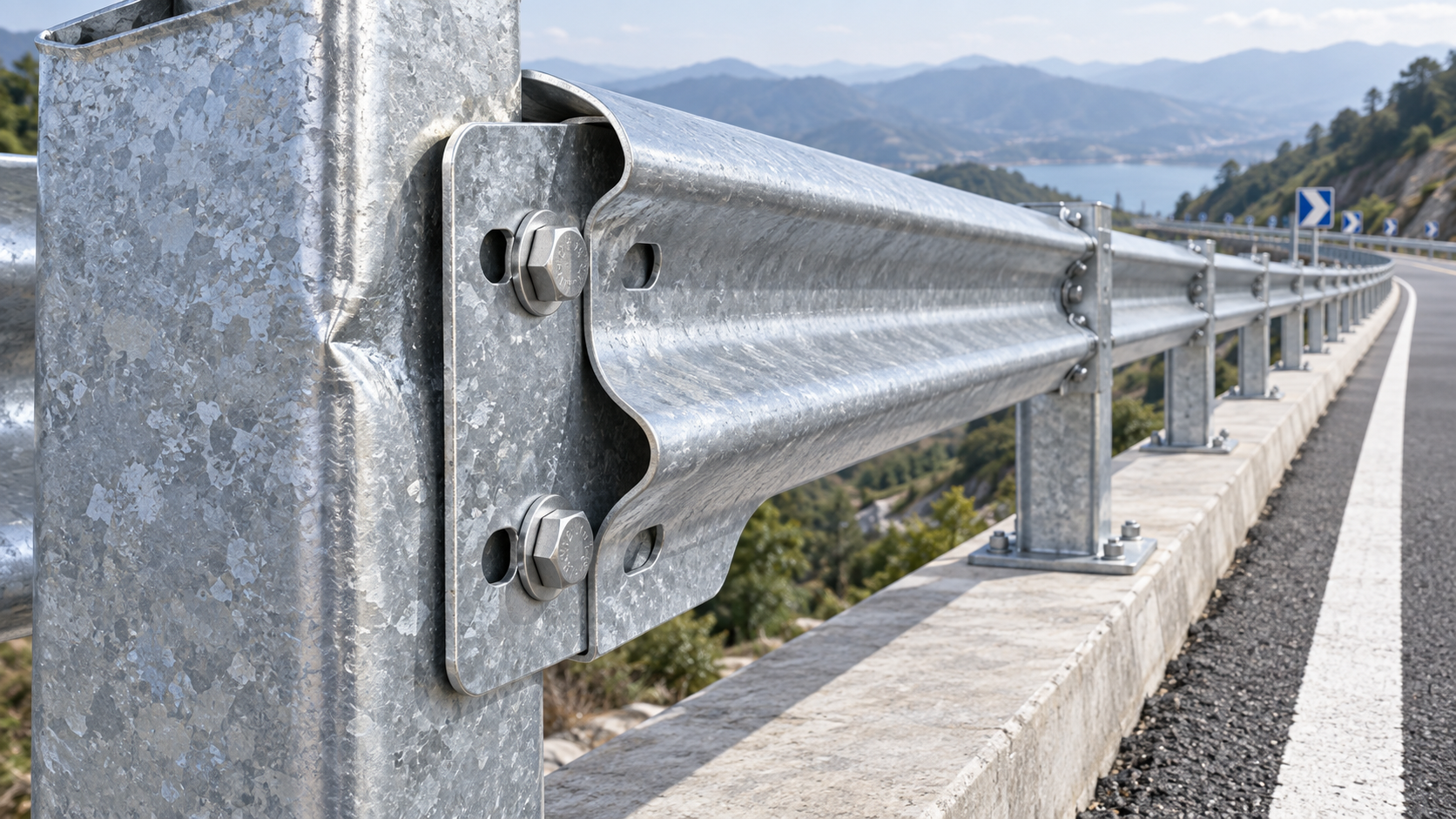
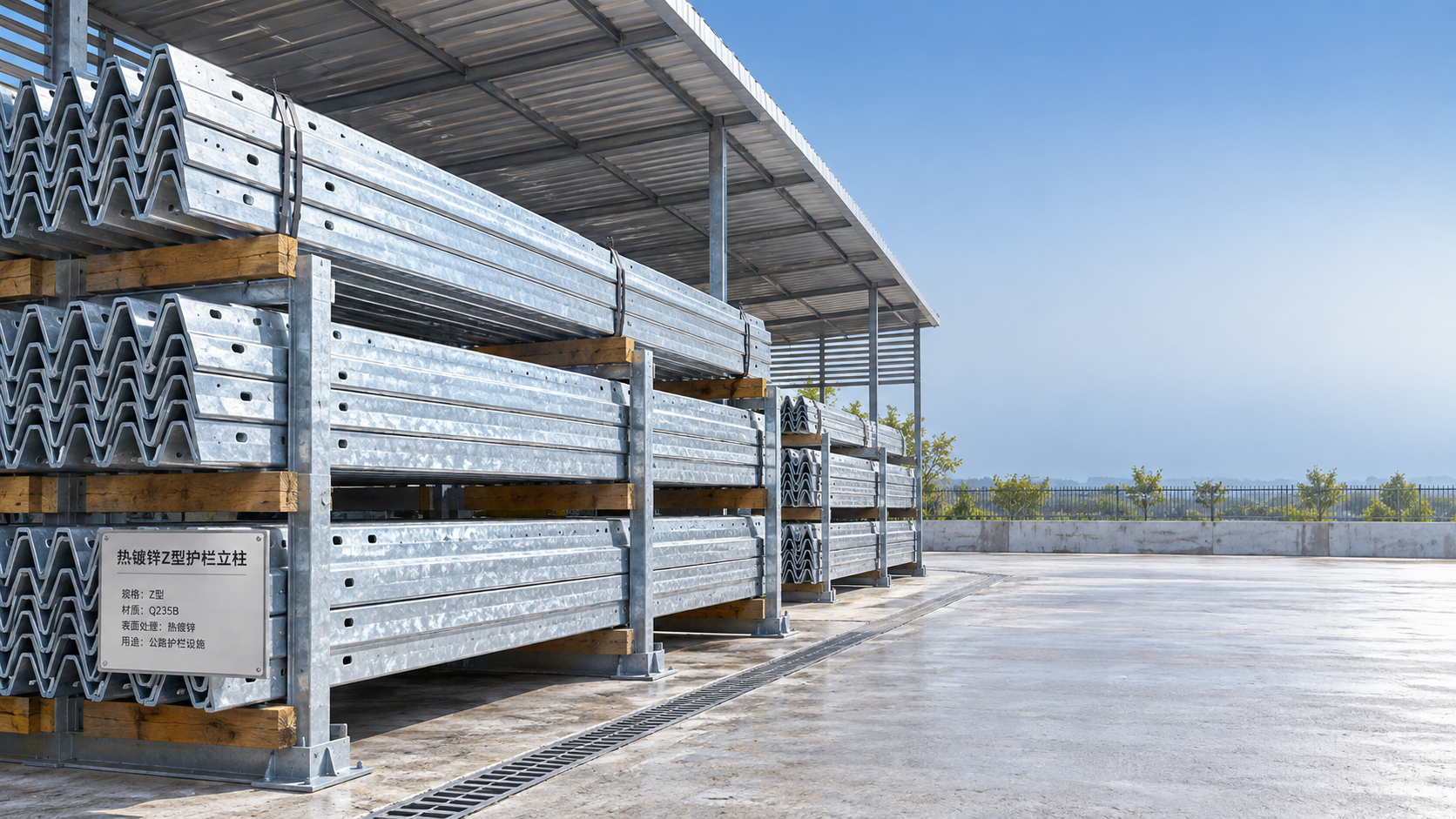
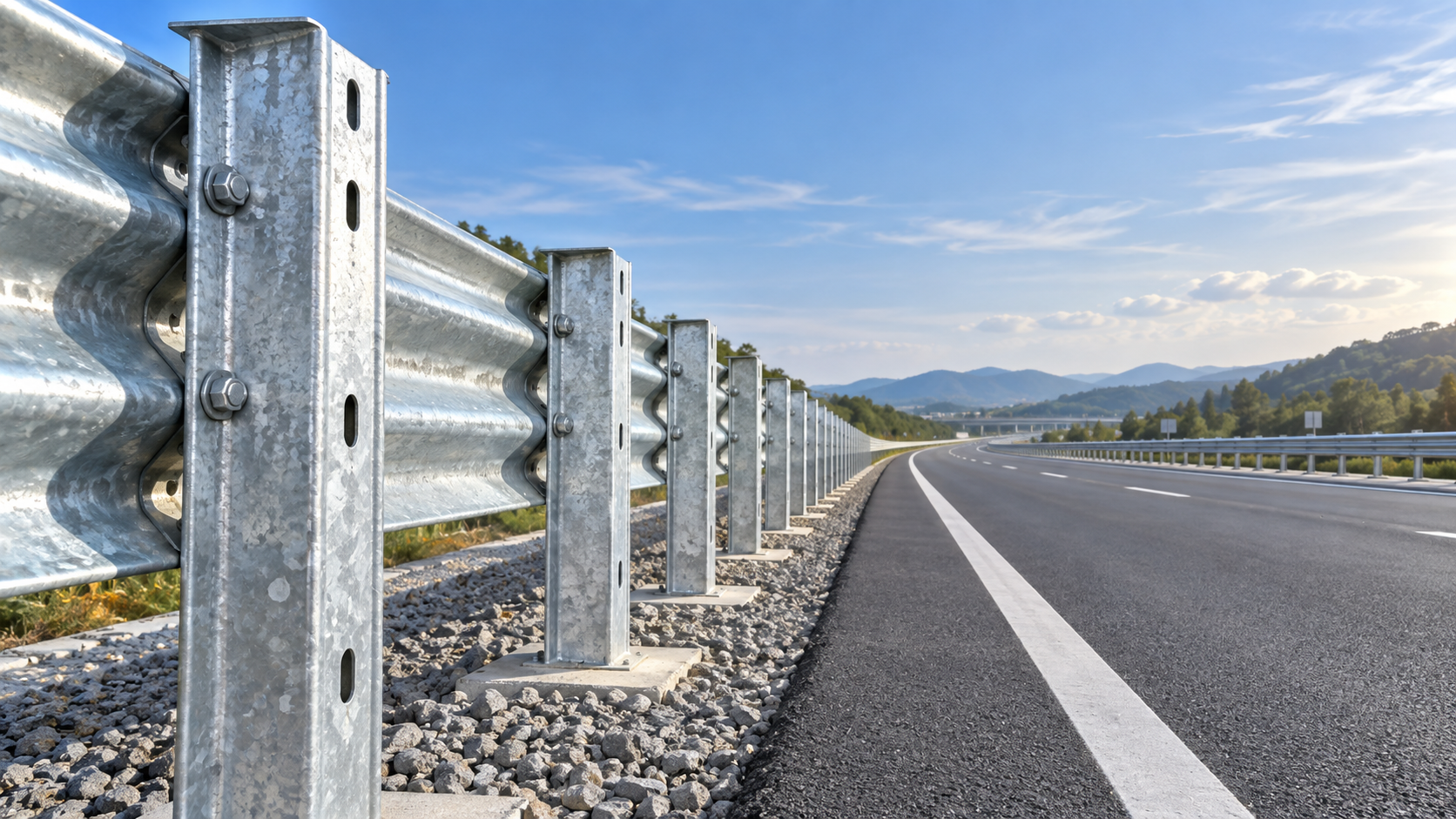
A bent flange on a galvanized Z post should be treated as a potential structural and installation defect, not merely a handling mark. The flange helps establish the post's section geometry, connection alignment, and resistance to rotation under guardrail loading. Once it is bent beyond the permitted tolerance, the post may no longer transfer rail forces into the ground as intended, even when the web of the post appears intact.
For quality and safety teams, the practical question is not whether every visible bend requires rejection. It is whether the deformation changes fit-up, reduces section performance, damages the galvanized coating, or conflicts with the project drawing and acceptance criteria. A shallow local mark with no coating fracture and no effect on bolt alignment may be manageable. A flange that is folded, twisted, creased near a bolt hole, or forced back into shape on site deserves closer scrutiny.
Why flange shape matters in a guardrail post
A Galvanized Z Post provides vertical support for the guardrail assembly and transfers impact-related loads through the post into the foundation. Its Z-shaped section is designed to work as a formed profile: the web and flanges together provide stiffness, guide load paths, and maintain the relative position of rails, blocks, and connectors.
When one flange is bent, several things can change at once. The most obvious issue is reduced geometric accuracy. Bolt holes may no longer sit square to the connected component, and the rail or spacer block can be pulled out of its intended plane during tightening. That can create a connection that looks complete but is carrying preload and distortion before it sees any traffic impact.
A bent flange can also affect local stiffness. A sharp crease is more serious than a broad, smooth deviation because the crease concentrates strain in a small area. If that area is near a hole, a bend line, or the transition between flange and web, the post has less capacity to distribute stress evenly. The concern is not that every bent post will fail under service conditions; it is that the original structural behavior can no longer be assumed.
This matters most where the guardrail system has limited tolerance for misalignment: transitions, terminals, bridge approaches, curves, embankment edges, locations with frequent changes in rail elevation, and other critical areas. Post spacing is commonly adjusted to suit the design condition. A system using wider standard spacing, such as 4 meters, can have different load distribution from a critical location where posts are set at 2 meters. A distorted flange should therefore be assessed in the context of its installed position, not as an isolated warehouse defect.
The first distinction: surface damage or permanent deformation?
Inspection should separate superficial handling damage from permanent section deformation. Paint scuffs, light zinc surface marks, or minor edge abrasion can be visually unattractive without necessarily changing the post's geometry. A flange that remains planar, maintains its angle to the web, and still accepts the specified connection without forced assembly is different from one that has been plastically bent.
Indicators of a more consequential defect include:
- A visible crease, kink, fold, or sharp change in flange angle.
- Twist along the post length that prevents the rail-side connection from sitting flat.
- Distorted, elongated, cracked, or misaligned bolt holes.
- Separation, cracking, flaking, or deep gouging of the galvanized coating around the bend.
- A flange that must be hammered, pried, clamped, or over-tightened to achieve connection alignment.
- Damage located at the flange-web junction, a connection zone, a splice area, or close to the driven end.
The severity of the bend cannot be judged reliably from its visual size alone. A modest-looking crease at a hole can be more important than a broader bend in an unperforated section. Similarly, a post that seems straight when lying on the ground may reveal twist once a rail, energy-absorbing block, and bolted connector are fitted.
How bent flanges create installation problems
Guardrail installation can conceal a defective post if crews compensate for it during assembly. Bolts may be tightened against a tilted flange, washers may bridge an uneven surface, or a rail may be pulled into line by force. These actions can make the finished installation look aligned from a distance while leaving individual connections under unintended stress.
Forced fit-up introduces several risks. Bolt tension may be uneven, contact area between components may be reduced, and the connected rail can be placed in a local offset. Under vehicle impact, the system relies on coordinated movement and load transfer across posts, rails, blocks, and anchors. A connection that begins with poor bearing or an altered angle may not respond in the same way as the qualified configuration.
Quality control should therefore inspect the post before it is buried in the assembly sequence. A simple fit-up check against the specified connector or template is often more useful than a visual judgment alone. Confirm that the flange provides full, stable contact where required; that bolts enter without forcing; and that tightening does not pull the connection out of plane.
Where a post has already been installed, inspection should include rail line, block orientation, bolt seating, and the condition of neighboring posts. One distorted post can shift the assembly enough to create secondary misalignment on adjacent components.
Galvanizing damage is a separate acceptance issue
Hot-dip galvanizing provides long-term corrosion protection, but it does not make a bent flange harmless. When steel is plastically deformed after galvanizing, the zinc layer can crack or detach, particularly along a sharp bend or at an edge. The exposed steel may be small, yet its location matters: flange faces, bolt-bearing areas, and damaged edges can retain moisture or be difficult to inspect after assembly.
There are two questions to answer during inspection. First, has the coating been damaged beyond what the project specification permits? Second, did the deformation happen before or after galvanizing? A post bent before galvanizing may retain continuous coating but still have a geometry problem. A post bent after galvanizing may have both a geometry problem and a corrosion-protection issue.
Touch-up coating can address certain localized zinc damage when permitted by the governing specification and completed using the approved repair method. It does not restore section geometry, remove a crease, or correct distorted holes. Repairing the coating should never be used as the basis for accepting a structurally questionable flange.
Do not assume field straightening restores the post
Field crews may be tempted to straighten a bent flange to avoid delay. That approach is risky unless the governing design, project specification, and responsible engineering authority explicitly allow it. Re-bending can deepen strain at the original damage point, create a second deformation zone, alter bolt-hole geometry, and further crack the galvanized coating.
The method used to straighten the flange matters as well. Impact tools can leave local dents and initiate coating loss. Heating can affect protective coatings and introduces additional uncertainty in the steel section. Even when the flange appears to return to its original position, visual restoration is not proof that it has recovered the required dimensional and structural condition.
A more defensible process is to quarantine visibly damaged posts, document the location and type of deformation, compare dimensions with the approved drawing or inspection tolerance, and make an acceptance decision before installation. For posts already installed, record the connection condition and determine whether replacement is required before the guardrail section is accepted.
What to check during receiving and pre-installation inspection
Receiving inspection is the best time to identify flange damage because the post can be examined without connection forces or surrounding components masking the defect. Damage should be traced back to likely handling stages: bundling, forklift contact, loading, transport restraint, unloading, stockpiling, or driving preparation. This is useful because repeated damage at the same location can indicate a packaging or lifting problem rather than isolated mishandling.
Dimensional checks should be tied to the approved project drawings, system requirements, and inspection plan. A universal visual threshold is not a reliable substitute because allowable variation depends on the post profile, steel thickness, hole pattern, connection design, and the particular guardrail configuration.
Making an acceptance decision
A practical decision framework is to ask whether the post can be installed exactly as designed, with full contact and without corrective force. If the answer is no, the post should not move forward as a routine installation item. The next question is whether the discrepancy is limited to coating damage or includes permanent steel deformation. Coating-only damage may follow an approved repair route; section deformation may require engineering disposition or replacement.
For highway guardrail systems, matching components should be considered together. A post, energy-absorbing block, rail, and bolted connector form an assembly rather than a set of interchangeable steel parts. Where the project calls for a particular profile, including a Z Post , replacement should maintain the approved section, hole arrangement, galvanizing condition, and connection compatibility.
A bent flange becomes a safety concern when it changes how the guardrail system is assembled or how it will carry load. Treating it early as a dimensional, structural, and coating inspection issue gives quality and safety managers a clearer basis for disposition than judging it by appearance alone.
Leave A Reply
Need More Details?
Contact me for details on creating and managing design projects, project features, and services and prices
consult
Our company was established in 1998. It‘s a Chinese pioneer enterprise integrating production and sales, committed to providing high-quality steel products to customers at home and abroad.

First class quality service and professional after-sales team.
Get in Touch
*We respect your confidentiality and all information are protected.