






NEWS
Categories List
Can a Galvanized Z Post Be Stored Outdoors Before Installation?
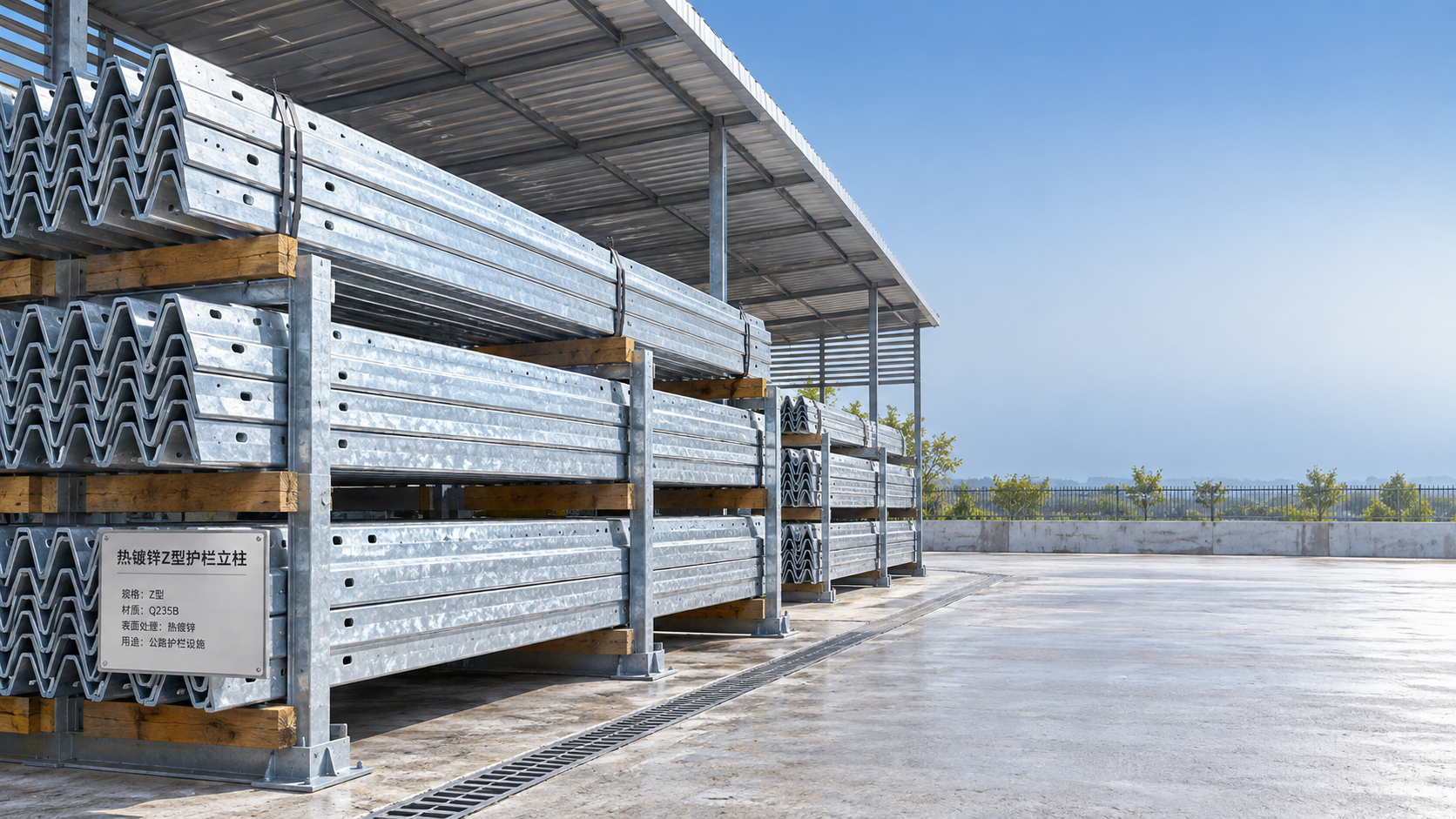
Yes, a Galvanized Z Post can usually be stored outdoors before installation, but “outdoors” should not mean left directly on soil, covered tightly with plastic, or allowed to sit in pooled water for weeks. Hot-dip galvanizing is designed to protect steel in exposed environments, and highway projects routinely stage guardrail posts, beams, terminals, and hardware near the work area. Still, improper storage can create avoidable inspection issues, handling damage, and installation delays.
The practical question is not whether galvanized steel can tolerate rain. It can. The more useful question is whether the posts will remain dry enough, supported well enough, and accessible enough to be installed without rework. For road safety suppliers, a poorly organized laydown area often causes more problems than the weather itself.
Rain Is Usually Not the Main Problem—Trapped Moisture Is
A newly galvanized Z post has a zinc coating that provides a barrier between the steel and the environment. Normal intermittent rain exposure is generally not a reason to reject the material. However, when wet posts are stacked tightly together, moisture can remain between contact surfaces. This can lead to white staining or white rust, a zinc corrosion product that is commonly seen on galvanized steel stored under damp, poorly ventilated conditions.
White staining does not automatically mean the coating has failed. Light surface staining may be mainly cosmetic, but heavy deposits, roughened areas, or signs of coating loss need closer review. It is especially important to inspect tightly packed bundles, lower layers of stock, and areas around drilled holes, bends, and strap contact points. Those are the places where water tends to stay longest.
This is why a completely sealed tarp can be worse than no cover at all. A non-breathable cover traps condensation after temperature changes, particularly overnight. A raised cover that sheds rain while leaving the sides open for airflow is usually the safer option.
Never Store Z Posts Directly on the Ground
Ground contact is the storage mistake that comes up most often on transportation projects. Even galvanized material should be kept off bare soil, standing water, vegetation, and loose aggregate. The issue is not only corrosion. Mud, moisture, road salt residue, and construction debris can contaminate the coating and make final inspection more difficult. Forklift handling also becomes less predictable when bundles sink into soft ground.
Use timber bearers, steel racks, or other stable supports that keep the bundle elevated and allow drainage below it. The support points should be aligned so the posts do not sag. Z-shaped sections can distort if long bundles are supported at only a few uneven locations, especially when several bundles are stacked together. Keep support spacing appropriate to the post length and bundle weight rather than relying on a generic layout.
The laydown surface should also drain away from the stock. If water collects around the bottom layer after rainfall, raising the bundles by a few centimeters may not be enough. A compacted, sloped storage zone is far easier to manage than an improvised pile beside the installation line.
How Long Can Galvanized Posts Stay Outside?
There is no single storage period that applies to every galvanized Z post. Outdoor storage duration depends on the local climate, the condition of the bundles, exposure to salt or industrial pollutants, packaging method, and the coating requirements stated in the project documents. A dry inland site with good airflow presents a very different risk from a humid coastal staging area or a site where de-icing salts are regularly used.
For short-term staging, good elevation, drainage, and ventilation are normally sufficient. For longer storage, regular inspections become part of inventory control. It is sensible to check the material after heavy rain, extended humid weather, flooding near the storage area, or repeated handling. If a project schedule changes and posts may remain stored for an extended period, the storage plan should be reviewed rather than simply extending the original arrangement.
A useful rule is simple: if workers would hesitate to install the post without cleaning, sorting, or explaining its condition to the inspector, the storage method needs attention.
Protect the Coating From Handling Damage
Galvanized coatings are durable, but they are not immune to mechanical damage. Chain slings dragged across bundles, forklift tines pushed too far into a stack, and metal banding pulled under tension can scrape or gouge the zinc surface. Small marks may be manageable under the applicable project requirements, but deep abrasion that exposes base steel should not be ignored.
Handling crews should lift bundles at balanced points and avoid dropping them onto hard surfaces. Separating posts with timber spacers helps prevent abrasion during unloading and restacking. If protective packaging becomes waterlogged, torn, or packed with abrasive dust, it should not be treated as protection anymore.
Where coating repair is needed, the repair method should match the contract specification and relevant galvanizing requirements. Site teams should not apply an unapproved paint simply to make a scratched area look better. Cosmetic appearance and long-term corrosion protection are not always the same thing.
Pay Extra Attention to Posts With Holes, Bends, and Site-Specific Fabrication
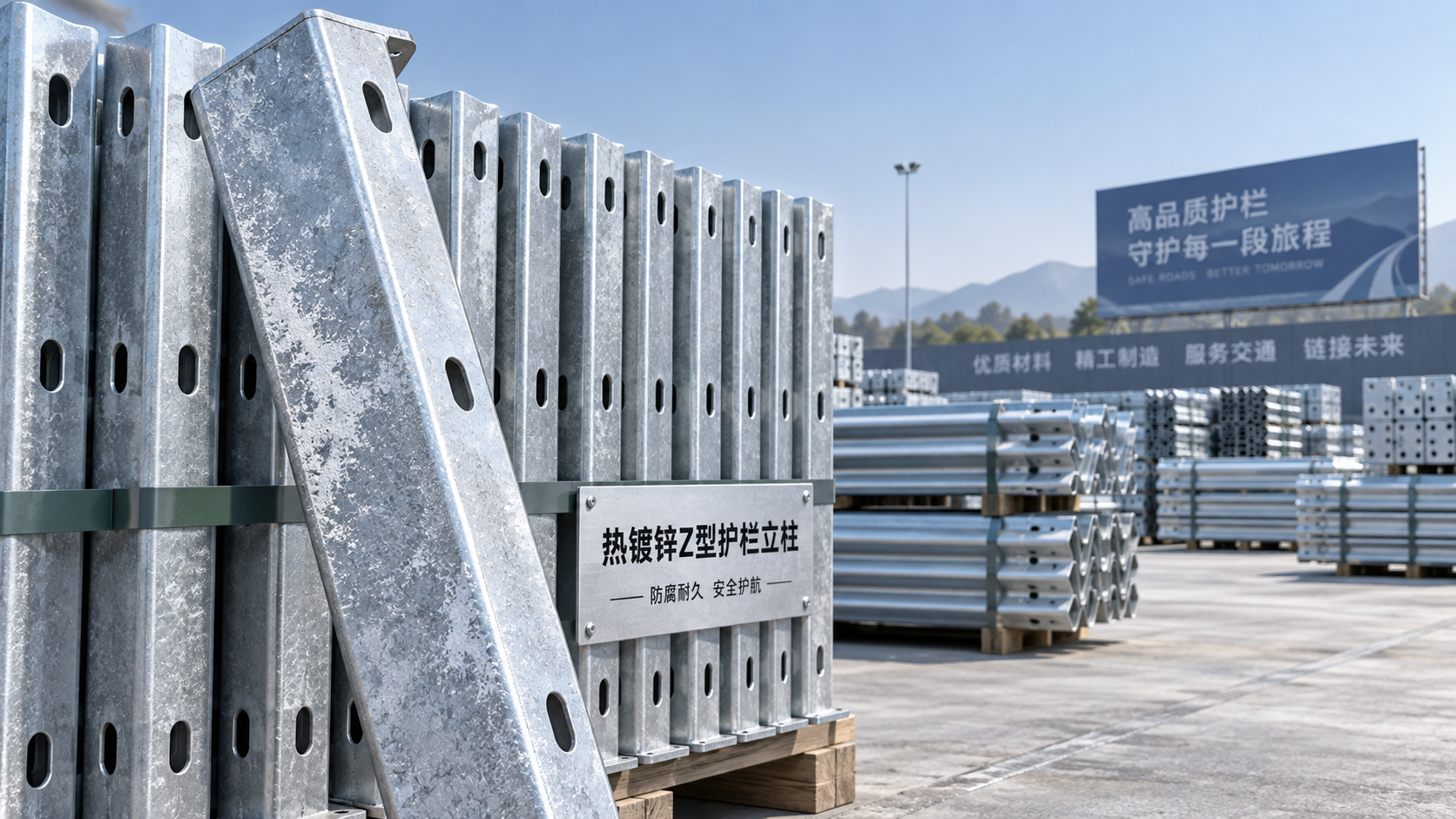
Z posts are rarely just plain steel sections. They may include punched holes for rail connections, bends for a specific barrier geometry, or dimensions tailored to drawings and local installation details. These features make identification and storage discipline more important. A mixed bundle can slow installation considerably when crews must sort posts, bolts, spacers, and related hardware at the roadside.
The best approach is to keep each item type clearly marked and stored by installation sequence. Posts should be separated from fasteners, while bolts and small connection components should remain dry and protected in labeled containers. Do not assume hardware stored inside an open carton will remain usable after repeated wetting and drying cycles.
For custom guardrail packages, fabrication control begins long before delivery. Drilling, bending, surface preparation, galvanizing, and, where specified, painting all need to be coordinated with the approved drawings. Non-destructive testing may also be required for particular steel products or project conditions. Good storage preserves that work; it cannot correct an item that was mixed, damaged, or incorrectly identified after delivery.
A Practical Outdoor Storage Setup
For most highway guardrail staging areas, the following arrangement is practical and easy to inspect:
- Choose firm, well-drained ground away from standing water and vehicle wash areas.
- Place bundles on level bearers or racks, keeping them clear of soil and allowing airflow underneath.
- Stack only to a height that remains stable and safe for the available lifting equipment.
- Use a sloped, ventilated cover when rain protection is needed; do not wrap wet bundles tightly.
- Keep different post lengths, rail sections, terminals, and hardware clearly segregated.
- Inspect bundle straps, coating condition, labels, and lower layers before installation begins.
There is one more point that is easy to miss: rotate stock where possible. Material delivered first should normally be checked and issued first, especially where delivery and installation are separated by several months. This reduces the chance that one bundle stays buried at the back of the yard through an entire wet season.
Storage Should Match the Guardrail System, Not Just the Post
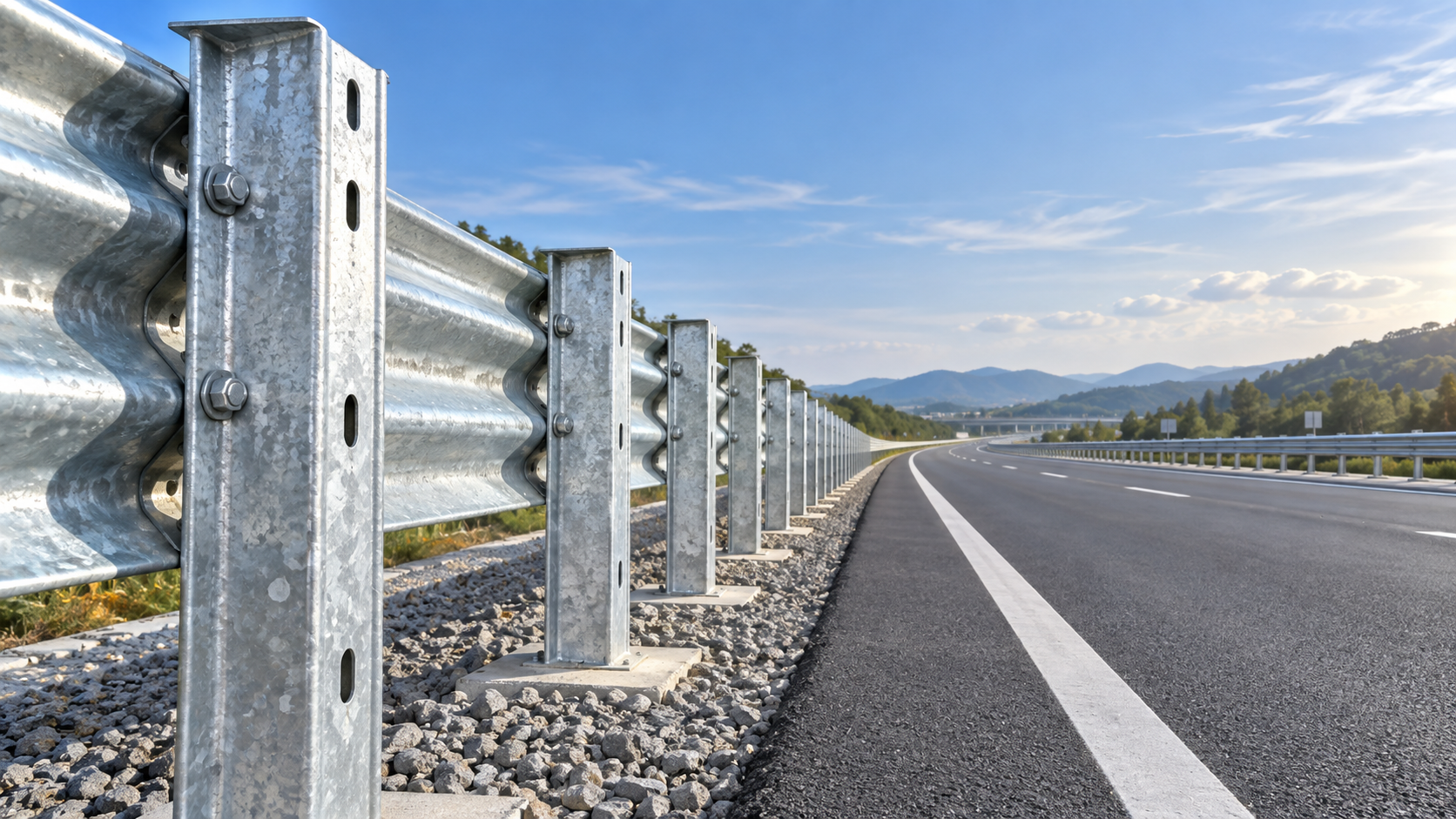
A Z post is only one part of a barrier assembly. Its condition affects alignment, rail connection, and installation pace, but it must also match the system design. On highways and hazardous road sections, guardrails are intended to absorb collision energy and help redirect vehicles toward their normal driving path. That performance depends on correctly matched rails, posts, spacers, terminals, fasteners, and installation geometry.
For projects using standards such as ABNT 6971 or AASHTO M180, the approved drawings and contract documents should determine what is accepted on site. Products such as the Brazil ABNT 6971 Guardrail are supplied for highway barrier applications with hot-dip galvanized protection, but the storage, inspection, and installation process still needs to follow the specific project requirement. A claimed service life is not a substitute for proper staging and correct installation.
The Bottom Line
Outdoor storage of a galvanized Z post is acceptable when the stock is elevated, drained, ventilated, protected from unnecessary contamination, and inspected before use. Rain alone is rarely the deciding factor. Long periods of trapped moisture, ground contact, salt exposure, damaged packaging, and careless handling are the issues that turn a routine storage decision into a coating or compliance problem.
Before releasing posts to the installation crew, check the coating, confirm item identification against the drawings, and make sure the bundle has not been distorted or mixed with incompatible components. That small check is far less expensive than discovering a problem after the guardrail line is already being erected.
Leave A Reply
Need More Details?
Contact me for details on creating and managing design projects, project features, and services and prices
consult
Our company was established in 1998. It‘s a Chinese pioneer enterprise integrating production and sales, committed to providing high-quality steel products to customers at home and abroad.

First class quality service and professional after-sales team.
Get in Touch
*We respect your confidentiality and all information are protected.