






NEWS
Categories List
Recent Posts
 Netherlands Client Delegation Visits Our Factory to Advance European Highway Guardrail CooperationOct 10, 2026
 AASHTO M180 Guardrail Requirements: A Practical Guide to Material ComplianceOct 10, 2026
 Port Safety Barriers: Selecting Protection for Vehicle Lanes and Loading AreasOct 10, 2026
How Z Post Profiles Improve Barrier Support in Roadside Safety Systems
For technical evaluations of roadside safety systems, the post profile is never a secondary detail. It affects stiffness, deflection behavior, load transfer, installation tolerance, and long-term durability. In that context, the Z Post has become a practical option in many highway guardrail assemblies because it balances structural efficiency with manufacturability. It is not simply a shaped steel member; it is part of how the barrier reacts when impact energy has to be redirected rather than allowed to turn into post failure or system instability.
When engineers compare support members, the real question is usually not whether one profile is universally better than another. It is whether the selected post can meet project drawings, local standards, spacing requirements, soil conditions, and corrosion expectations without creating fabrication or installation problems later. That is where Z-shaped sections often stand out.
Why the Z-shaped profile changes barrier behavior
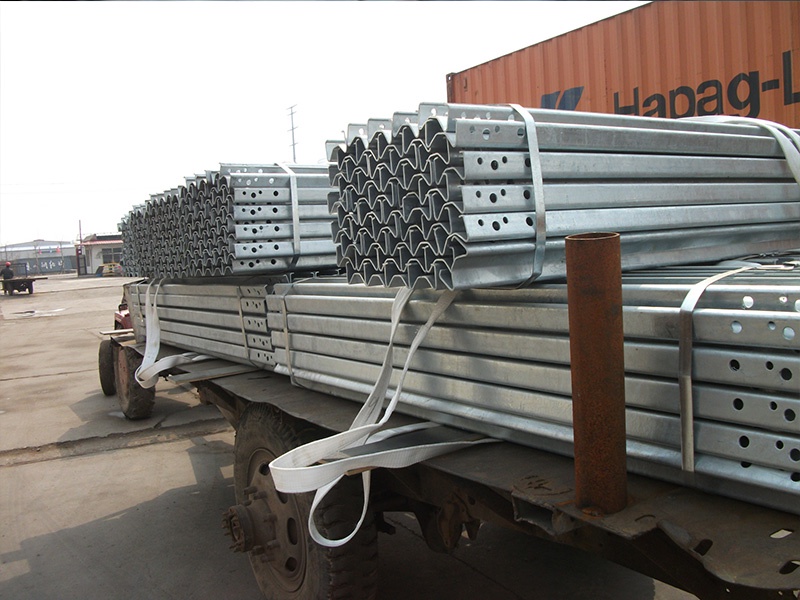
A Z Post improves barrier support mainly through section geometry. The profile creates a useful combination of bending resistance and material efficiency, which matters when the post must hold the rail in position under service loads and still contribute to controlled system behavior during impact. Compared with a simpler flat or less optimized section, a Z profile can distribute stresses more effectively across its flanges and web, especially when paired with the guardrail beam and connection hardware specified in the system design.
This geometry also helps with alignment and connection. In guardrail assemblies, the barrier does not act alone; post, spacer, blockout, bolts, and rail all work together. A support member that maintains predictable geometry under load makes it easier to preserve rail height and reduce the risk of unintended rotation or excessive local deformation. For technical reviewers, that predictability is often more valuable than headline strength values taken out of context.
Another practical benefit is load path clarity. A well-designed Z Post transfers forces from the rail into the foundation or surrounding ground in a more controlled way, helping the system resist overturning or significant lateral shift. This becomes especially relevant near curves, embankments, bridge approaches, and other locations where barrier performance margins may be tighter.
What technical evaluators usually check
In review work, the post profile itself is only one line item. Evaluators normally need to verify how that profile fits into the full system specification. For a Z Post, several checks tend to matter:
- section dimensions and wall thickness against the approved drawing;
- post spacing in standard runs and at critical zones;
- compatibility with rail type, blockouts, and bolted connections;
- base support condition, whether driven, embedded, or plate-based;
- surface protection for the site environment;
- fabrication quality, including hole accuracy, bend consistency, and coating integrity.
Spacing deserves special attention because barrier support performance is strongly tied to it. In some highway guardrail layouts, standard post spacing may be 4 meters, while critical sections may reduce spacing to 2 meters to improve crash resistance and system continuity. That kind of adjustment is not unusual, but it must be coordinated with the approved system details rather than treated as a generic field change.
Manufacturing quality matters as much as the profile
A Z Post that looks correct on paper can still underperform if manufacturing control is weak. Technical assessment should include how the part is actually produced: drilling accuracy affects connection fit; bending quality affects geometry; rust removal and shot peening influence surface condition before coating; non-destructive testing may be relevant where welds or critical checks are part of the design; galvanizing or painting directly affects field life.
For steel barrier components, the value of a capable manufacturer is not just production volume. It is the ability to quote, design, manufacture, and install against real project requirements, whether the starting point is a formal plan or customer drawings. In practice, many projects involve non-standard posts with different diameters, wall thicknesses, or lengths. If the supplier cannot control drilling, forming, coating, and inspection consistently, the theoretical benefit of the Z profile gets diluted very quickly on site.
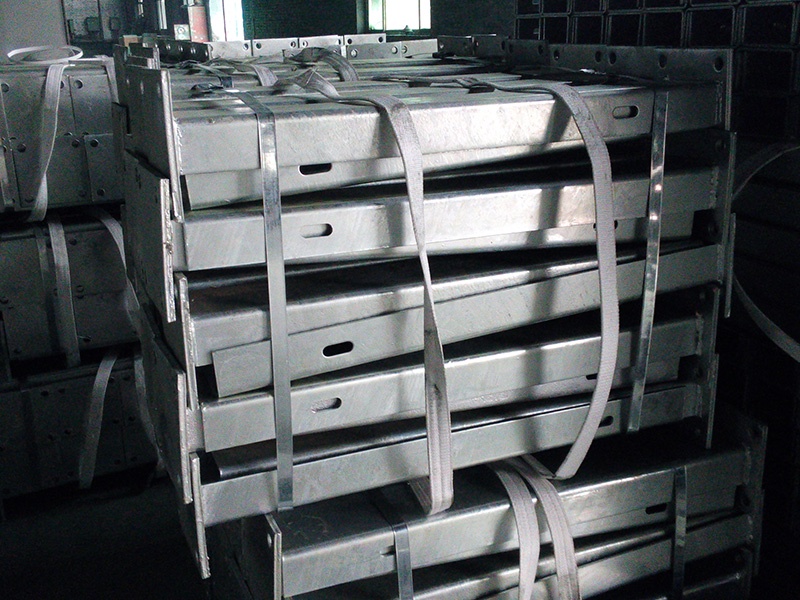
That is also why technical teams often ask about the broader support assembly instead of the post alone. For example, plate-supported configurations used in highway guardrail systems may rely on components such as U Post Base Plate arrangements in C-type, U-type, Z-type, or H-type formats, depending on the design scheme. What matters is not the name of the accessory but whether it provides stable vertical support, transfers impact loads into the foundation, and remains compatible with the post and energy-absorbing elements used in the system.
Corrosion resistance is part of structural performance
In roadside environments, support performance is inseparable from corrosion protection. A Z Post installed in a wet, salted, or temperature-variable location may meet dimensional requirements at delivery and still lose reliability over time if the protective treatment is inadequate. Hot-dip galvanizing is widely used for this reason: it provides durable rust resistance across outdoor exposure conditions and is generally well suited to guardrail steel products.
Evaluators should also look beyond the visible outer surface. Post caps, drainage considerations, and connection details influence whether water collects in critical areas. Preventing rainwater infiltration is not a cosmetic concern. It affects corrosion progression, maintenance intervals, and in some cases the condition of bolted joints or hidden interfaces that are difficult to inspect later.
Where Z Posts make the most sense
Z Post solutions are often a good fit where project teams need a support member that is structurally efficient, practical to fabricate, and adaptable to different guardrail layouts. They are especially relevant when drawings call for tailored dimensions, when barrier lines include transitions or reinforced sections, or when the assembly needs to work with matching blocks and connectors for system integrity.
That does not mean every project should default to the same profile. Soil behavior, foundation type, local test acceptance, and maintenance strategy all influence the decision. A technically sound evaluation should ask whether the post geometry supports the approved barrier behavior, whether the manufacturing route can reproduce that geometry reliably, and whether installation tolerances in the field are realistic.
In some cases, a customized solution is the right answer. Non-standard posts or plate-supported variants may be required due to bridge edges, limited embedment depth, or site-specific constraints. When that happens, the design should still be anchored to project drawings and applicable standard requirements rather than improvised around inventory convenience.
A practical way to evaluate the choice
If a Z Post is being considered, a useful review approach is to treat it as part of a complete roadside safety system, not a standalone steel section. Check the geometry, spacing, connection details, coating method, and support condition together. Confirm whether manufacturing steps such as drilling, bending, rust removal, galvanizing, painting, and inspection are aligned with the specified tolerances and finish requirements. If the assembly includes plate-based support hardware such as a second U Post Base Plate option at critical locations, that should be reviewed for load transfer and compatibility, not just listed on a bill of materials.
The advantage of the Z profile is straightforward: it can improve barrier stability and force distribution without making the system unnecessarily complicated. But that advantage only holds when section design, fabrication quality, corrosion protection, and installation details are all working in the same direction. For technical teams, that is usually the difference between a compliant support member and a dependable roadside barrier system.
Leave A Reply
Need More Details?
Contact me for details on creating and managing design projects, project features, and services and prices
consult
Our company was established in 1998. It‘s a Chinese pioneer enterprise integrating production and sales, committed to providing high-quality steel products to customers at home and abroad.

First class quality service and professional after-sales team.
Get in Touch
*We respect your confidentiality and all information are protected.