






NEWS
Categories List
Recent Posts
 Netherlands Client Delegation Visits Our Factory to Advance European Highway Guardrail CooperationOct 10, 2026
 AASHTO M180 Guardrail Requirements: A Practical Guide to Material ComplianceOct 10, 2026
 Port Safety Barriers: Selecting Protection for Vehicle Lanes and Loading AreasOct 10, 2026
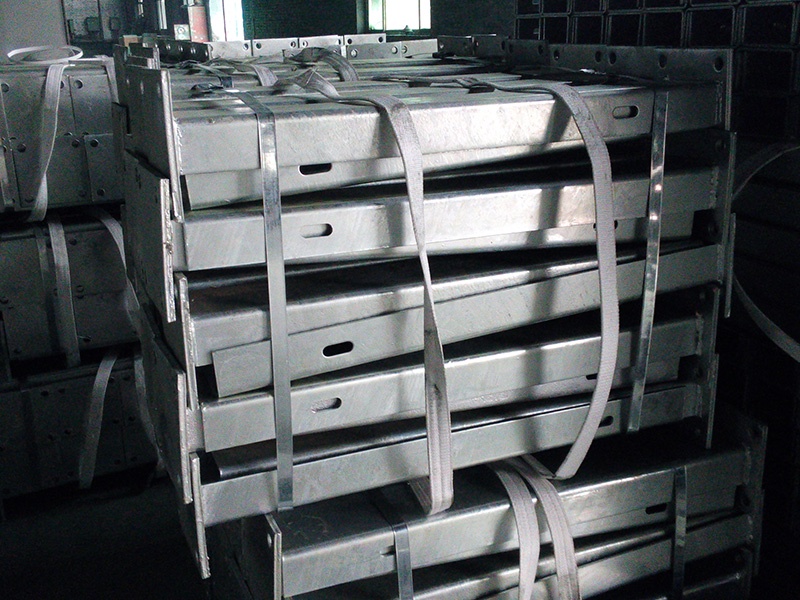
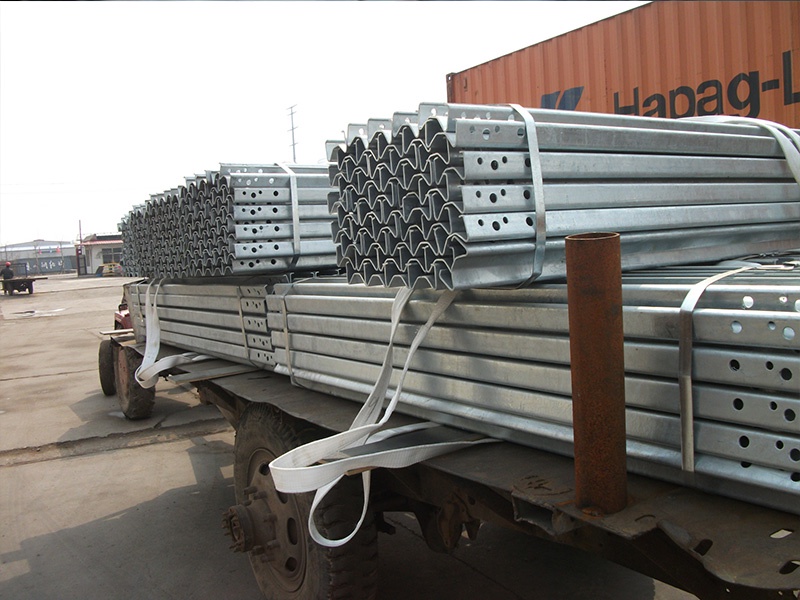
When people ask, “How much does Z Post Guardrail cost?”, they are usually not looking for a single number. They are trying to understand why one quote looks reasonable, another seems unexpectedly high, and what really drives the difference. In transportation projects, guardrail pricing is shaped by engineering detail more than by a simple per-piece estimate. Material selection, post dimensions, corrosion protection, order quantity, project location, and installation conditions all influence the final budget.
That is especially true for Z posts used in highway guardrail systems. A Z post may look straightforward on paper, but once it is tied to road class, impact requirements, soil conditions, coating standards, and fabrication tolerances, the price becomes part of a much bigger technical decision. If you are comparing suppliers, reviewing a tender, or budgeting for an upcoming road safety project, it helps to know what is behind the quote before you judge the number.
Why Z post guardrail pricing varies so much
In the transportation industry, there is rarely a “standard” price that applies to every job. Two Z posts can serve the same broad purpose while being very different in steel grade, wall thickness, hole pattern, length, or coating system. That is why pricing often changes from one project to another even when the product name sounds identical.
The biggest cost factors usually include:
- Steel raw material cost and grade
- Post size, thickness, and length
- Galvanizing or other surface treatment requirements
- Drilling, bending, and custom fabrication complexity
- Testing and inspection standards
- Quantity ordered and production efficiency
- Transportation distance and packaging requirements
- Installation difficulty and site conditions
For buyers, the challenge is that these variables are not always visible in the first line of a quotation. A lower price may reflect thinner steel, lighter coating, fewer processing steps, or less demanding quality control. A higher price may include custom engineering, non-destructive testing, or corrosion protection designed for long-term outdoor exposure.
Material and dimensions: the first place cost begins
The steel itself is one of the largest cost components in any Z post guardrail system. Heavier sections use more material, which naturally raises the price. Posts with larger dimensions, greater wall thickness, or longer lengths are more expensive not only because of steel consumption, but also because they affect handling, galvanizing load, and transport.
Dimensions matter in another way too. A project designed for standard spacing may be more economical than one requiring tighter post spacing at critical sections. In many highway guardrail layouts, standard post spacing may be around 4 meters, while certain high-risk or structurally sensitive locations may require spacing closer to 2 meters. That increases the total number of posts needed and can quickly change the project budget.
Some buyers also require non-standard posts to match existing systems, local regulations, or site-specific drawings. Once a product moves away from standard runs into custom production, the price often rises because tooling, setup, and inspection become more involved.
Surface treatment has a direct effect on long-term value
If you compare quotes without checking the surface treatment, you may not be comparing like for like. For guardrails exposed to rain, road salt, UV, and temperature shifts, corrosion resistance is not a minor detail. It is a major part of lifecycle cost.
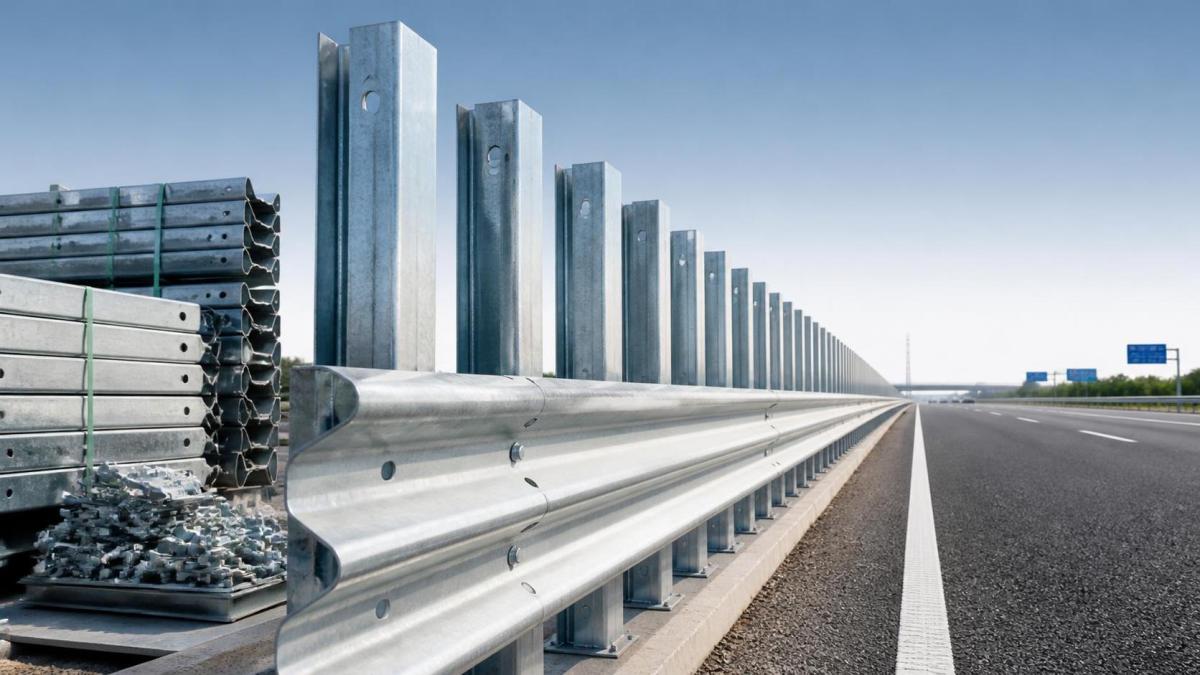
Hot-dip galvanizing treatment is commonly specified for highway guardrail posts because it provides long-term rust resistance in outdoor environments. The coating process adds cost, but it also helps reduce maintenance risk over time. In some projects, additional painting or other finishing may also be required, especially where visual identification or environmental conditions justify it.
A manufacturer’s processing capability also matters here. Rust removal, shot peening, galvanizing, and coating control all affect the consistency of the finished product. A quote that includes these steps under controlled production conditions may look higher initially, but it often reflects better durability and fewer future issues.
Processing detail can change the quotation more than buyers expect
Z post guardrail components are not priced only by weight. Fabrication requirements can add significant cost, especially in custom transportation projects. Drilling patterns, bending accuracy, tolerance control, and compatibility with the rest of the guardrail assembly all require time and equipment.
For example, if the post must match customer drawings exactly, every hole position and connection point matters. If the project also requires non-destructive testing, stricter dimensional inspection, or special packaging for export, the unit cost goes up. These are not hidden extras in a negative sense; they are part of building a product that fits the project safely and efficiently.
This is one reason many contractors prefer working with manufacturers that can quote, design, manufacture, and install as an integrated service. When the same team understands the drawings, fabrication, and field use, there is less chance of mismatch between design intent and delivered product.
Installation conditions are part of the real cost
Some buyers focus entirely on ex-works product price and only later realize that installation conditions can reshape the full budget. A Z post installed along a straightforward roadside section is very different from one going into challenging terrain, bridge transitions, embankments, or constrained work zones.
Foundation conditions are especially important. Posts are expected to provide vertical support and transfer impact loads into the ground. If soil conditions are weak, rocky, or inconsistent, installation may require added labor, special methods, or design adjustments. In that case, a lower product price does not necessarily mean a lower project cost.
Connection hardware also deserves attention. Posts work as part of a system, not as isolated steel pieces. Matching blocks, bolted connectors, and guardrail components all contribute to whether the barrier disperses force properly and avoids major overturning or shifting during impact.
What buyers should ask before requesting a quote
If you want a meaningful answer to “How much does Z Post Guardrail cost?”, give the manufacturer enough information to build a realistic quotation. At minimum, prepare the following:
- Required drawings or reference standards
- Post type, dimensions, and thickness
- Steel grade requirements
- Surface treatment specification
- Order quantity
- Project location and delivery terms
- Whether installation is included
- Any testing, inspection, or documentation requirements
The more complete the project information, the more accurate the quote will be. This helps avoid the common problem of comparing prices that are based on different assumptions.
Looking beyond Z posts: system compatibility matters
In many highway applications, buyers evaluate Z posts alongside other post profiles depending on local standards and structural needs. It is common to compare C-type, U-type, Z-type, or H-type options when selecting a support solution. A product line such as Sigma Posts is often considered in these discussions because guardrail systems are rarely one-size-fits-all. Different diameters, wall thicknesses, lengths, and even non-standard posts may be needed to match drawings or site conditions.
What matters most is not choosing a profile by name alone, but making sure the post works with the rest of the barrier system and complies with the project’s technical expectations. Posts manufactured and inspected according to international standards, with hot-dip galvanizing treatment and compatible energy-absorbing blocks and connectors, usually offer a stronger foundation for long-term system reliability.
How to judge whether a quote is fair
A fair price is not simply the lowest price. It is the price that accurately reflects the required material, processing, corrosion protection, quality control, and delivery scope. If a quotation is much lower than others, ask what has been excluded or simplified. If a quotation is higher, ask whether it includes custom fabrication, tighter tolerances, installation support, or additional inspection that others left out.
For transportation projects, guardrails are safety products first and budget items second. The post must do more than stand upright. It must support the rail, transfer loads, and help the whole system remain stable under impact conditions. Cutting cost in the wrong place can lead to larger problems later in service.
So, how much does Z Post Guardrail cost? The honest answer is that the final figure depends on your specifications, project volume, protective finish, and installation conditions. With clear drawings and defined requirements, an experienced manufacturer can provide a quotation that is practical, transparent, and aligned with both performance needs and budget expectations.
Leave A Reply
Need More Details?
Contact me for details on creating and managing design projects, project features, and services and prices
consult
Our company was established in 1998. It‘s a Chinese pioneer enterprise integrating production and sales, committed to providing high-quality steel products to customers at home and abroad.

First class quality service and professional after-sales team.
Get in Touch
*We respect your confidentiality and all information are protected.