






NEWS
Categories List
Recent Posts
 Netherlands Client Delegation Visits Our Factory to Advance European Highway Guardrail CooperationOct 10, 2026
 AASHTO M180 Guardrail Requirements: A Practical Guide to Material ComplianceOct 10, 2026
 Port Safety Barriers: Selecting Protection for Vehicle Lanes and Loading AreasOct 10, 2026
When does Guardrail Replacement become more than routine maintenance?
Guardrail Replacement usually starts as a repair discussion, but it quickly becomes a risk and asset-life decision.
In transport corridors, damaged barriers do more than look worn. They can weaken crash performance, slow compliance approvals, and increase repeat intervention costs.
The practical question is not simply whether steel can be fixed. It is whether the system can still perform as designed after impact, corrosion, or geometry changes.
That is why Guardrail Replacement decisions often involve engineering review, drawing checks, coating evaluation, and installation planning together.
In real projects, the strongest outcomes come from matching the barrier solution to site drawings, traffic exposure, and long-term maintenance strategy.
Is repair enough, or is a full upgrade the safer choice?
A targeted repair is often reasonable when damage is isolated and the original system still meets current requirements.
This usually applies to a few bent rails, damaged posts, or localized coating loss after a low-severity collision.
A full Guardrail Replacement makes more sense when failure is repeated, corrosion is widespread, or the existing layout no longer matches traffic risk.
Bridge approaches, median openings, ramp divergences, and pier protection areas often deserve a higher standard than simple patchwork repairs.
A useful way to judge the choice is to compare system continuity, structural integrity, compliance status, and expected remaining life, not just repair price.
That table is only a starting point. Site conditions and drawings still need verification before committing to either path.
What signs suggest your current barrier system is underperforming?
The most obvious sign is visible deformation after impact, but that is rarely the whole story.
Less obvious warning signs include misaligned posts, anchor instability, poor transitions, drainage-related corrosion, and coatings breaking down near connections.
In coastal roads or high-salt-fog areas, metal loss can progress faster than surface appearance suggests.
Another common issue is a mismatch between older rail geometry and current high-risk sections.
Where guidance performance and structural stability matter most, stronger profiles may be justified.
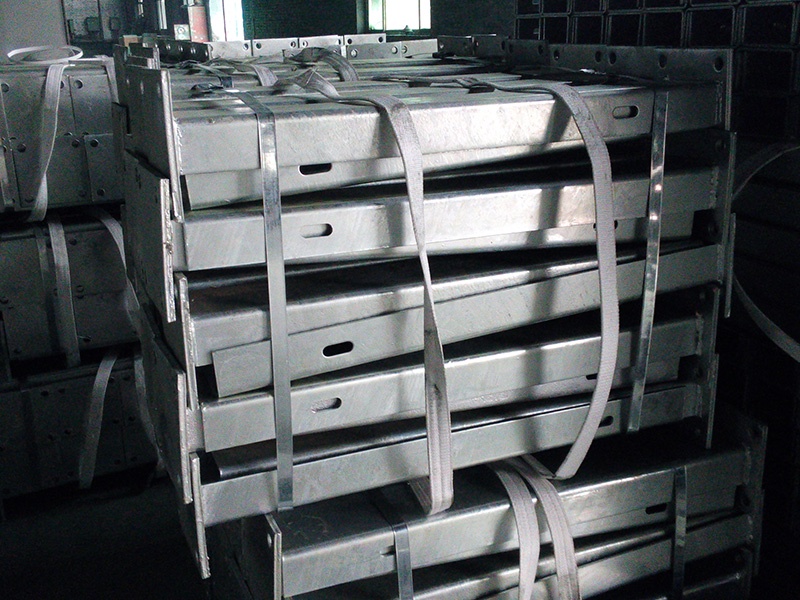
For example, some projects use Open Box Beam 2.4m in critical locations because its rectangular open-box cross-section provides very high stiffness and impact resistance.
That does not mean every damaged section needs that upgrade. It means high-consequence zones should be evaluated differently from standard roadside runs.
How should cost be judged beyond the initial Guardrail Replacement quote?
The cheapest quote can become the most expensive option if it leads to repeated closures, frequent repairs, or another upgrade within a few years.
A better comparison uses lifecycle cost rather than first invoice value.
- How long will the repaired or replaced section remain compliant?
- Will installation require staged traffic control or repeated lane occupation?
- Are coating systems suitable for corrosion exposure at the site?
- Can the supplier manufacture to your drawings and project tolerances?
- Will the barrier reduce future impact deformation and maintenance frequency?
In practical terms, fabrication quality matters here. Drilling accuracy, bending control, rust removal, shot peening, non-destructive testing, galvanizing, and painting all influence field performance.
When a supplier can quote, design, manufacture, and install against project requirements or existing drawings, coordination risk is lower.
What should be confirmed before choosing a replacement system?
This is where many Guardrail Replacement projects succeed or fail. The product itself matters, but project fit matters more.
Before selecting a repair detail or upgraded barrier, confirm these points:
- Crash performance level required for the exact road section.
- Post spacing, transition design, and terminal compatibility.
- Steel grade, coating type, and corrosion class.
- Fabrication capability against supplied plans or drawings.
- Installation access, lane management, and shutdown windows.
In higher-risk applications, a system with extremely high section modulus and bending stiffness may offer stronger long-term value.
That is one reason some designers review Open Box Beam 2.4m for bridge sections, median openings, and expressway zones where minimal deformation is preferred.
Still, the right choice depends on layout, drawings, and the performance target of the full barrier system.
What mistakes lead to poor Guardrail Replacement decisions?
One frequent mistake is treating a barrier as isolated hardware instead of a connected safety system.
Another is replacing visible damaged parts while ignoring adjacent weakened sections, outdated transitions, or failing coatings.
There is also a planning error that appears often in transport work: choosing a component before confirming geometry, standards, and installation constraints.
The better approach is disciplined but straightforward:
- Inspect damage depth, not just appearance.
- Review drawings and traffic risk at the same time.
- Compare repair life with upgrade life.
- Validate manufacturing and installation capability early.
When those steps are handled well, Guardrail Replacement becomes a controlled engineering decision rather than a reactive maintenance expense.
So, repair or full upgrade?
If damage is localized, compliance is intact, and the remaining system is sound, repair can be efficient and defensible.
If the barrier shows repeated impact damage, corrosion progression, outdated performance, or weak behavior in high-risk locations, a full upgrade is often the better investment.
The next step is to review drawings, define performance requirements, and compare lifecycle cost against installation complexity.
A sound Guardrail Replacement plan should connect engineering review, manufacturing quality, coating durability, and field installation into one decision framework.
That is usually what separates a short-term fix from a barrier system that performs reliably for years.
Leave A Reply
Need More Details?
Contact me for details on creating and managing design projects, project features, and services and prices
consult
Our company was established in 1998. It‘s a Chinese pioneer enterprise integrating production and sales, committed to providing high-quality steel products to customers at home and abroad.

First class quality service and professional after-sales team.
Get in Touch
*We respect your confidentiality and all information are protected.