






NEWS
Categories List
Recent Posts
 Netherlands Client Delegation Visits Our Factory to Advance European Highway Guardrail CooperationOct 10, 2026
 AASHTO M180 Guardrail Requirements: A Practical Guide to Material ComplianceOct 10, 2026
 Port Safety Barriers: Selecting Protection for Vehicle Lanes and Loading AreasOct 10, 2026
Guardrail Post Spacing and Soil Conditions: What to Check First
Before checking installation accuracy, start with the ground. Guardrail Post spacing only performs as intended when soil conditions match the design assumptions.
That first review affects impact behavior, post embedment, long-term stability, and acceptance during technical assessment. If the ground is weaker than expected, even correct spacing may still underperform.
In practical road projects, early checking saves time. It helps identify whether the selected system, post interval, and installation method fit the actual site rather than only the drawing.
Why Guardrail Post spacing cannot be reviewed alone
A Guardrail Post works as part of a system. Spacing, rail height, post section, embedment depth, and soil restraint influence each other during a vehicle impact.
Wider spacing may reduce material use, but it increases demand on each post. Softer or saturated soil can then allow larger deflection or early rotation.
Closer spacing usually improves continuity and load sharing. Still, if the subgrade is unstable, tighter layout alone will not solve the core problem.
This is why technical review should begin with the relationship between Guardrail Post spacing and the ground supporting it.
The first soil checks that matter most
Start with bearing capacity. The key question is simple: can the soil resist lateral and vertical loads transferred by the Guardrail Post during impact and service life?
Then review moisture content. Wet soil often loses stiffness, especially in fill zones, shoulders, and drainage transition areas.
Slope stability comes next. On embankments or hazardous road sections, post performance may change if the shoulder edge is too close or erosion is active.
Also confirm whether the road edge contains natural soil, engineered fill, rock, or mixed layers. Variable ground can create inconsistent Guardrail Post behavior across short distances.
- Bearing capacity and compaction level
- Moisture condition and drainage path
- Shoulder width and slope geometry
- Presence of soft pockets or loose fill
- Frost, washout, or seasonal weakening risk
How spacing decisions change with site conditions
Technical assessment should compare design spacing with real field evidence. If soil support is lower than assumed, a standard Guardrail Post interval may require adjustment.
For example, loose shoulder fill may justify closer spacing, deeper embedment, or local ground improvement. Rocky ground may require different drilling or anchoring methods.
Drainage is another common factor. Poor drainage can weaken post support over time, even when initial installation readings look acceptable.
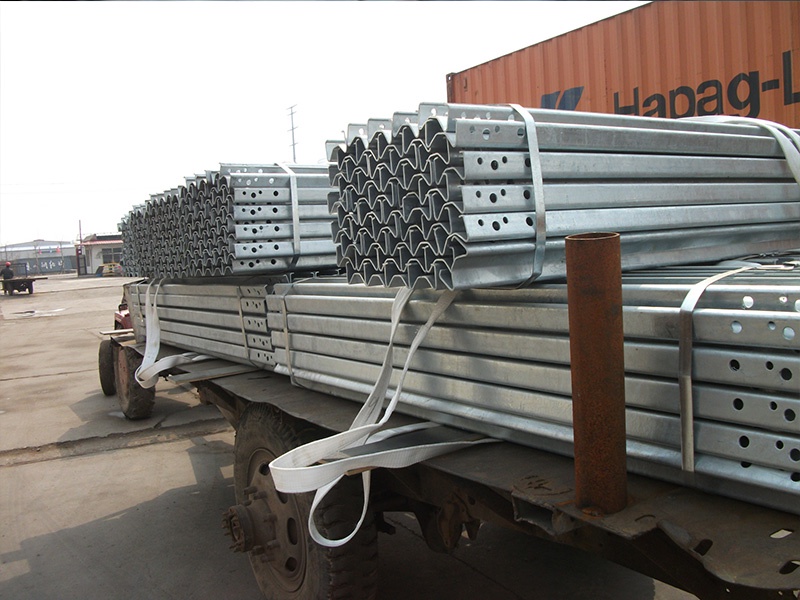
Where long-term corrosion exposure matters, system selection also becomes part of the review. In many highway projects, Armco Barrier systems are considered because the wave-shaped profile helps absorb impact energy and redirect vehicles effectively.
When paired with hot-dip galvanized coating, the system can offer strong corrosion resistance and a service life of over 20 years, which matters in wet or aggressive environments.
Field checklist for early technical verification
A useful review process should be fast, repeatable, and evidence-based. The goal is not only to check dimensions, but to confirm whether the Guardrail Post can achieve intended performance.
- Verify design drawings, specified post interval, and assumed soil category.
- Inspect shoulder condition, edge distance, and visible settlement.
- Check for water accumulation, drainage outlets, and soft zones.
- Review compaction records or perform field density confirmation if required.
- Compare planned Guardrail Post embedment with actual excavated or driven conditions.
- Flag transitions near bridges, culverts, and steep embankments.
- Document any mismatch between standard spacing and local ground behavior.
This kind of checklist is especially valuable before full production and installation begin. It reduces the chance of manufacturing a compliant system that still struggles on site.
Common risk signals during assessment
Some warning signs appear early. Others only become obvious after several posts are installed. Both matter during technical evaluation.
- Posts tilt during driving or show inconsistent penetration resistance
- Shoulder material breaks away near the slope edge
- Water remains around the Guardrail Post after rainfall
- Measured spacing is correct, but line alignment becomes unstable
- Different soil layers appear within the same installation run
These signals usually point to a support problem, not only a workmanship issue. That distinction matters when deciding whether to re-space posts, improve soil, or revise the detail.
Standards, manufacturing, and system compatibility
Technical compliance is not limited to field geometry. The selected barrier system must also align with applicable standards, fabrication quality, and installation conditions.
For projects needing internationally recognized performance, system certification can support specification review. As one example, Armco Barrier products may be produced to U.S. AASHTO M180 and Brazil’s ANBT standards.
Manufacturing quality also shapes field results. Drilling accuracy, bending control, rust removal, shot peening, non-destructive testing, galvanizing, and painting all influence durability and fit-up.
If the Guardrail Post layout must be adjusted after soil review, fabrication flexibility becomes important. Custom production based on drawings or project plans can reduce redesign delays.
What to confirm before approving installation
Before approval, confirm three things together: the specified Guardrail Post spacing, the verified soil condition, and the selected barrier system response under those conditions.
If one of those elements is uncertain, approval is premature. A short early review usually costs far less than rework after installation or nonconformance during inspection.
The most reliable approach is simple. Check the ground first, compare it with the design basis, then confirm the Guardrail Post arrangement can still deliver safety, durability, and compliance on the actual site.
Leave A Reply
Need More Details?
Contact me for details on creating and managing design projects, project features, and services and prices
consult
Our company was established in 1998. It‘s a Chinese pioneer enterprise integrating production and sales, committed to providing high-quality steel products to customers at home and abroad.

First class quality service and professional after-sales team.
Get in Touch
*We respect your confidentiality and all information are protected.