






NEWS
Categories List
Recent Posts
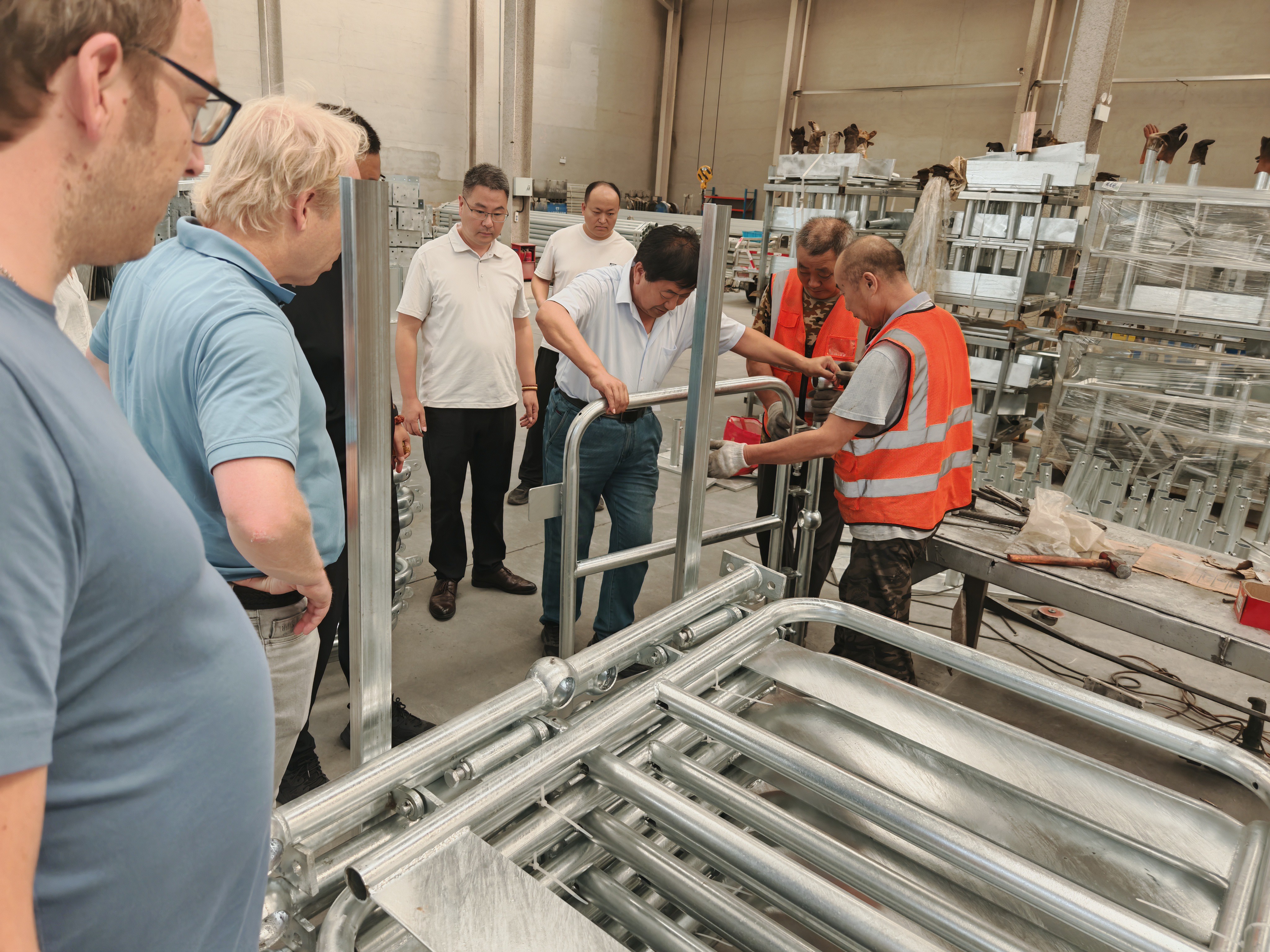
 Netherlands Client Delegation Visits Our Factory to Advance European Highway Guardrail CooperationOct 10, 2026
 AASHTO M180 Guardrail Requirements: A Practical Guide to Material ComplianceOct 10, 2026
 Port Safety Barriers: Selecting Protection for Vehicle Lanes and Loading AreasOct 10, 2026
Beam Guardrail vs Concrete Barrier for Roads with Run-Off Risk
When evaluating roadside protection for sections with high run-off risk, choosing between a Beam Guardrail and a concrete barrier affects safety performance, life-cycle cost, installation conditions, and maintenance strategy.
This article compares both systems from a technical assessment perspective, helping you identify which solution better fits road geometry, impact requirements, project budget, and long-term operational needs.
Why the Choice Matters on Run-Off-Risk Roads
Run-off-road crashes usually involve speed, angle, and limited recovery space.
That changes the selection logic.
The question is not only which barrier is stronger.
The real question is which system controls vehicle redirection more effectively under local conditions.
A Beam Guardrail is a semi-flexible system.
It absorbs impact energy through rail deformation, post deflection, and controlled vehicle redirection.
A concrete barrier is a rigid system.
It relies more on shape and mass to redirect the vehicle, with minimal barrier deflection.
This difference drives nearly every design and cost decision.
Safety Performance: Redirection, Deflection, and Severity
For many roadside applications, Beam Guardrail offers better energy absorption.
That can reduce occupant impact severity in certain crash conditions.
It is often a practical choice for embankments, curves, medians, and bridge approaches.
However, the system needs working width.
If the available offset behind the rail is too small, deflection becomes a major risk.
Concrete barriers perform well where space is tight.
Their low deflection helps protect hazards placed close behind the barrier.
That is useful in narrow shoulders, elevated sections, and urban corridors.
Still, higher vehicle rebound and impact severity can become concerns, especially for lighter vehicles.
- Choose Beam Guardrail when energy absorption and smoother redirection are priorities.
- Choose concrete barrier when low deflection is essential.
- Verify containment level, impact angle, and vehicle mix before final approval.
Site Conditions That Usually Decide the Outcome
In actual projects, geometry often decides faster than theory.
A Beam Guardrail usually fits roads where installation length is long and alignment changes are frequent.
It adapts well to rural highways and mountain roads.
It is also easier to repair after localized impacts.
Concrete barriers are stronger candidates where shoulder width is limited or foundations are already integrated into pavement structures.
They also reduce the chance of vehicles crossing into opposing traffic in some median applications.
If your road has steep side slopes, drainage structures, poles, or retaining edges, deflection analysis becomes critical.
That is where support details matter.
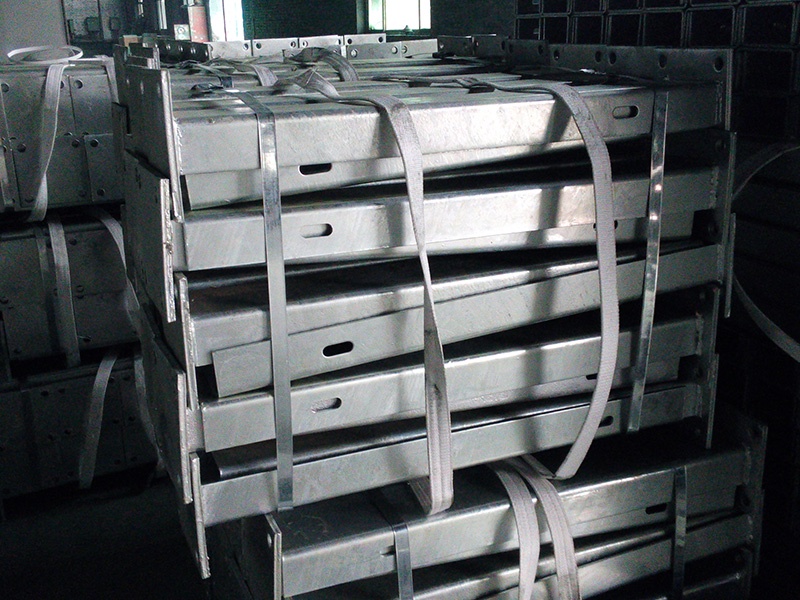
For example, H Post Base Plate is used in highway guardrail systems to provide vertical support and transfer load into the foundation.
This helps the guardrail maintain stability and reduces the chance of overturning or major shifting during impact.
Installation, Maintenance, and Life-Cycle Cost
Initial cost is only part of the decision.
A Beam Guardrail often has lower material and transport cost than cast or precast concrete systems.
Installation can also be faster on long open sections.
From a maintenance view, damaged rails, posts, and blocks can usually be replaced by section.
That limits lane closure time after a crash.
Concrete barriers typically need less routine maintenance.
But repairs can be slower and more disruptive when cracking, spalling, or displacement occurs.
For technical assessment, compare these cost factors:
- foundation and anchorage requirements
- installation equipment and traffic control needs
- repair frequency after typical impacts
- replacement time and lane closure cost
- corrosion protection and service life expectations
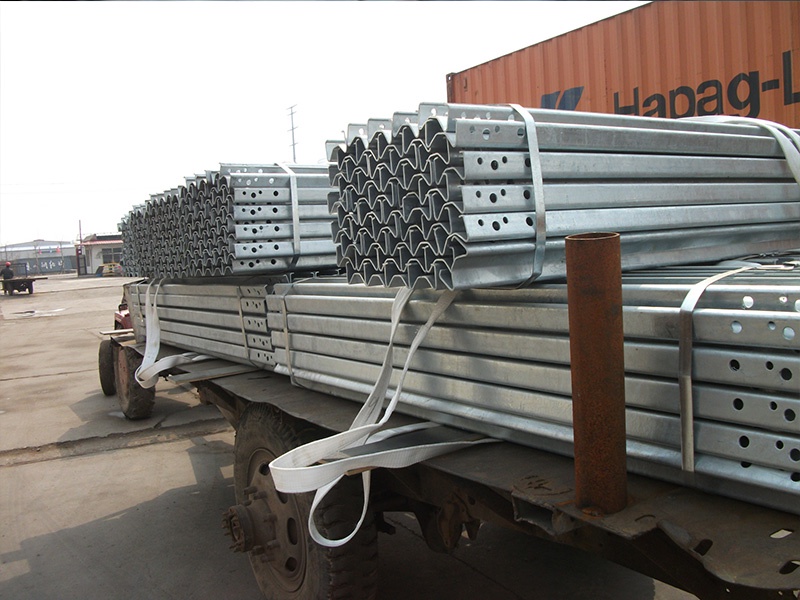
For steel systems, manufacturing quality has a direct effect on service life.
Processes such as drilling, bending, rust removal, shot peening, non-destructive testing, galvanizing, and painting should be tightly controlled.
A Practical Comparison Table
How to Make the Final Selection
If the site allows deflection space, Beam Guardrail is often the more balanced choice.
It offers strong safety performance, flexible installation, and manageable repair cost.
If the roadside hazard is very close, concrete barrier may be the safer answer.
The best decision usually comes from a short technical checklist:
- Confirm containment level and expected vehicle mix.
- Measure available working width and hazard offset.
- Review drainage, slope, pavement, and foundation conditions.
- Compare installation speed and future repair access.
- Check component durability, coatings, and fabrication quality.
For steel barrier projects, customized production also matters.
Post spacing may be 4 meters for standard sections and 2 meters at critical locations, depending on design needs.
Matching parts, including blocks and bolted connectors, should be selected as part of the full system review.
A reliable manufacturing partner can also design to your plan or produce directly from your drawings.
That becomes especially useful when local geometry requires customized C-type, U-type, Z-type, or H-type support details around the H Post Base Plate assembly.
In short, Beam Guardrail is usually preferred where deflection space exists and repair efficiency matters. Concrete barrier is stronger where space is restricted and rigid containment is needed. A sound decision depends on crash behavior, geometry, maintenance strategy, and the quality of the barrier system behind the specification.
Leave A Reply
Need More Details?
Contact me for details on creating and managing design projects, project features, and services and prices
consult
Our company was established in 1998. It‘s a Chinese pioneer enterprise integrating production and sales, committed to providing high-quality steel products to customers at home and abroad.

First class quality service and professional after-sales team.
Get in Touch
*We respect your confidentiality and all information are protected.