






NEWS
Categories List
Start with the impact requirement, not the coating
When technical evaluators compare Guardrail options, the first mistake is treating galvanized steel, Thrie Beam, and W-Beam as if they sit on the same decision layer. They do not. Galvanized steel describes the corrosion-protection method for the steel. Thrie Beam and W-Beam describe the rail profile and, by extension, the way the system behaves under impact. If that distinction is not cleared up at the beginning, the rest of the evaluation usually drifts into bad comparisons.
A practical review starts with three questions: what containment level is required, what service life is expected in the actual environment, and what constraints exist in fabrication and installation. Once those are clear, the material and beam profile choices become much easier to defend.
Check what is really being compared
Before looking at quotations or drawings, separate the decision into two parts:
- Rail form: W-Beam or Thrie Beam.
- Steel protection system: whether the steel is galvanized, painted, or uses a combined finish.
In highway work, galvanized steel is often the baseline because corrosion resistance affects maintenance frequency and replacement cycles. But galvanizing alone does not tell you whether the barrier is appropriate for a median, bridge approach, shoulder edge, or a high-risk curve. That judgment comes from the system design, rail section, post arrangement, and connection details.
Use W-Beam when the project needs a proven general-purpose profile
W-Beam is usually the first option on standard highway sections because it is widely used, familiar to installers, and efficient for many roadside applications. If your project has routine alignment, standard risk exposure, and no special containment demand identified in the design documents, W-Beam is often the practical starting point.
What to check:
- Is the roadside hazard typical, or are there tighter clearances, drops, structures, or higher-severity impact zones?
- Does the design package already call for a specific beam thickness, rail height, and post spacing?
- Will standard drilling, bending, galvanizing, and connector layouts meet the drawing without special fabrication steps?
The usual error here is assuming W-Beam is always the budget option in the full lifecycle sense. It may be lower in initial material cost, but if the location sees frequent impacts or sits in a more aggressive corrosion environment, the replacement and maintenance picture can shift quickly.
Move to Thrie Beam when the risk concentration is higher
Thrie Beam is typically considered where the barrier needs greater stiffness or where the consequences of vehicle penetration are more severe. In real evaluation work, this usually comes up around bridges, ramps, medians with limited recovery space, and sections where structural support and system stability matter more than keeping the rail profile simple.
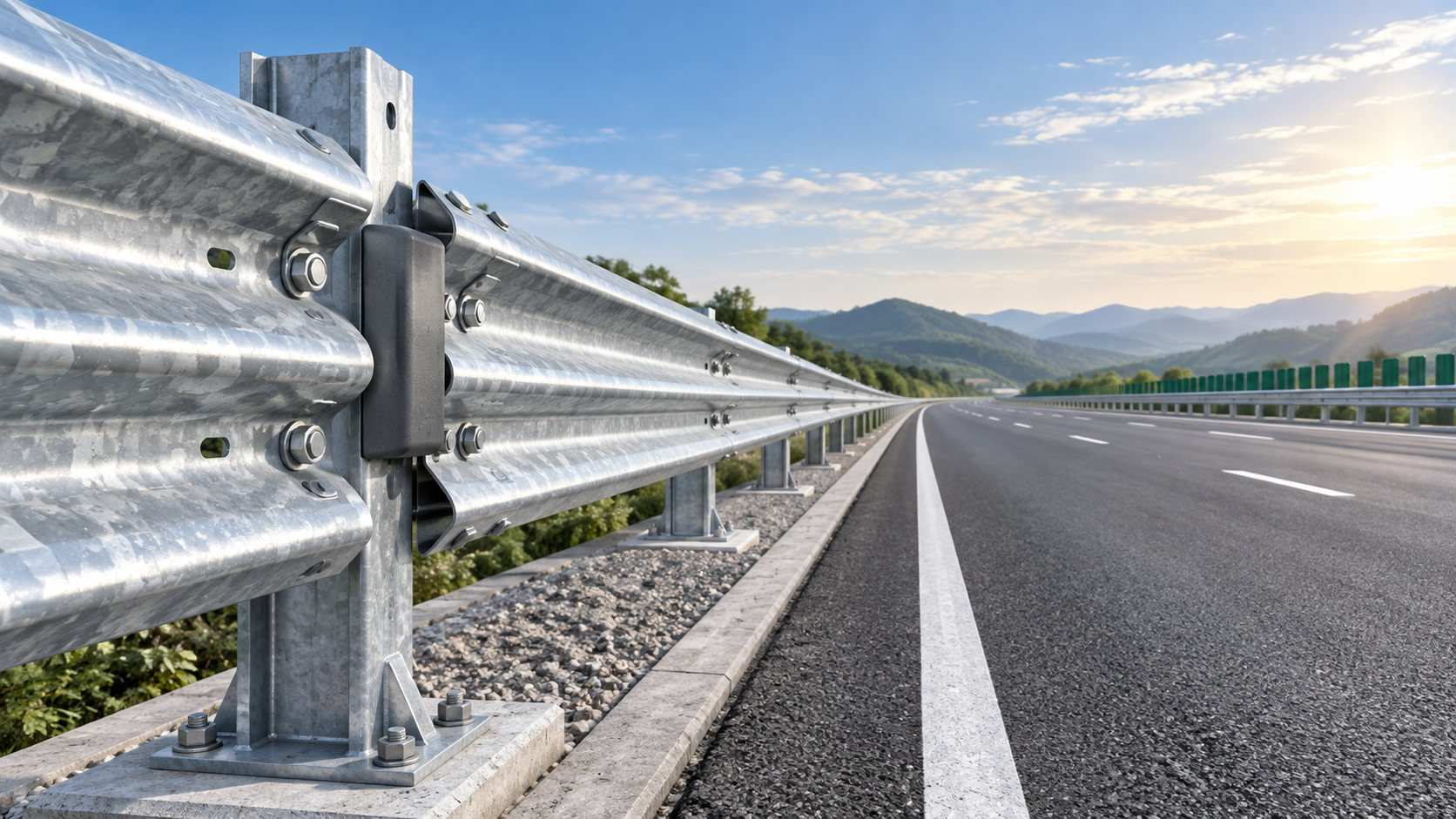
Do not select Thrie Beam just because it looks stronger on paper. Check whether the supporting posts, blockouts, bolts, and foundation conditions are specified to work with that higher-demand setup. A stronger rail section paired with weak supporting details is not a stronger Guardrail system. It is just a mismatched one.
Look closely at corrosion exposure and finish quality
This is where galvanized steel becomes central. If the project is near coastal zones, deicing salt exposure, heavy moisture, or industrial pollutants, corrosion resistance stops being a secondary line item. It becomes part of system reliability. A technically sound review should check not just whether galvanizing is specified, but whether the manufacturing sequence supports a durable finish: surface preparation, rust removal, shot peening where required, proper galvanizing, and any follow-up coating steps called for by the project.
Ask for the manufacturing and inspection scope tied to the drawing package. If the supplier can drill, bend, inspect, galvanize, and finish to drawing requirements, that reduces the chance of field modification, which is where coating damage and fit-up problems often begin.
Do not review the rail without reviewing the post system
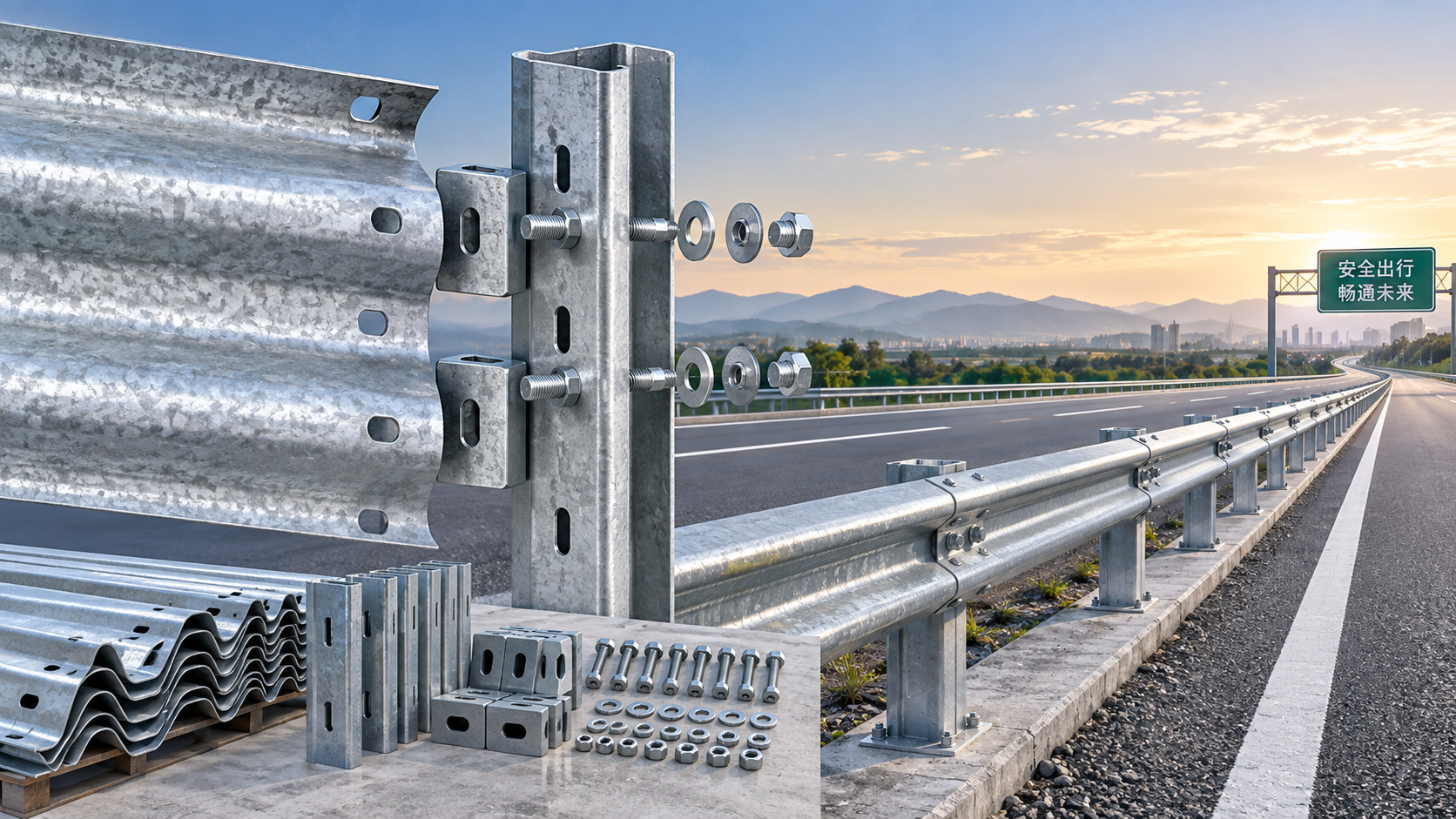
A lot of bad comparisons happen because the rail gets all the attention and the posts are treated as accessories. They are not. The post system carries vertical support, transfers impact load into the foundation, and helps keep the barrier from overturning or shifting too far during an event. For highway guardrail systems, a post such as Z Post may be part of the decision when the project requires specific spacing, compatible connectors, and reliable long-term rust resistance through hot-dip galvanizing.
Here the check is straightforward: verify the post type, spacing, and connection details on the approved drawing. If the standard spacing is 4 meters but critical locations call for 2 meters, that changes material takeoff, foundation behavior, and installation planning. It also affects whether a W-Beam or Thrie Beam arrangement remains economical once the whole system is priced correctly.
Match the option to fabrication reality
Some evaluations fail late because the selected option looked good in theory but created unnecessary manufacturing complexity. If your design includes non-standard lengths, special drilling locations, custom bends, or site-driven adjustments, check that the supplier can produce to your drawings rather than forcing you back into standard parts. This matters more than many teams admit.
For technical evaluators, the useful question is not “Can this be made?” It is “Can this be made consistently, inspected properly, and installed without site improvisation?” A supplier that supports design review, fabrication, non-destructive testing where required, and coordinated installation usually gives you a cleaner outcome than a low quote built around later adjustments.
Verify standards through documents, not assumptions
When a barrier system is said to meet international standards, do not leave that statement at the brochure level. Check the project specification, approved drawings, inspection plan, material certificates, coating records, and dimensional tolerances. Those are the documents that tell you whether the selected Guardrail option actually aligns with the job requirement.
This is especially relevant if custom posts or non-standard support parts are included. A second mention is enough here: if a project uses Z Post in a modified arrangement, the evaluator should confirm that the geometry, spacing, and matching energy-absorbing blocks and bolted connectors still follow the approved system design rather than being treated as field substitutions.
A workable review order
If you need a clean decision path, use this order:
- Confirm the impact and containment requirement from the project documents.
- Choose between W-Beam and Thrie Beam based on application severity and support conditions.
- Review corrosion exposure and confirm whether galvanized steel is sufficient for the service environment.
- Check post type, spacing, connectors, and foundation interface as part of the same system.
- Verify the supplier can manufacture to drawing, inspect properly, and deliver installation-ready parts.
That sequence keeps the evaluation grounded. Pick the barrier profile for the risk, use galvanizing to protect the steel for the required service life, and do not sign off until the posts, connectors, fabrication steps, and inspection documents all point to the same system logic.
Leave A Reply
Need More Details?
Contact me for details on creating and managing design projects, project features, and services and prices
consult
Our company was established in 1998. It‘s a Chinese pioneer enterprise integrating production and sales, committed to providing high-quality steel products to customers at home and abroad.

First class quality service and professional after-sales team.
Get in Touch
*We respect your confidentiality and all information are protected.