






Categories List
What should a maintenance team check first after a guardrail impact?
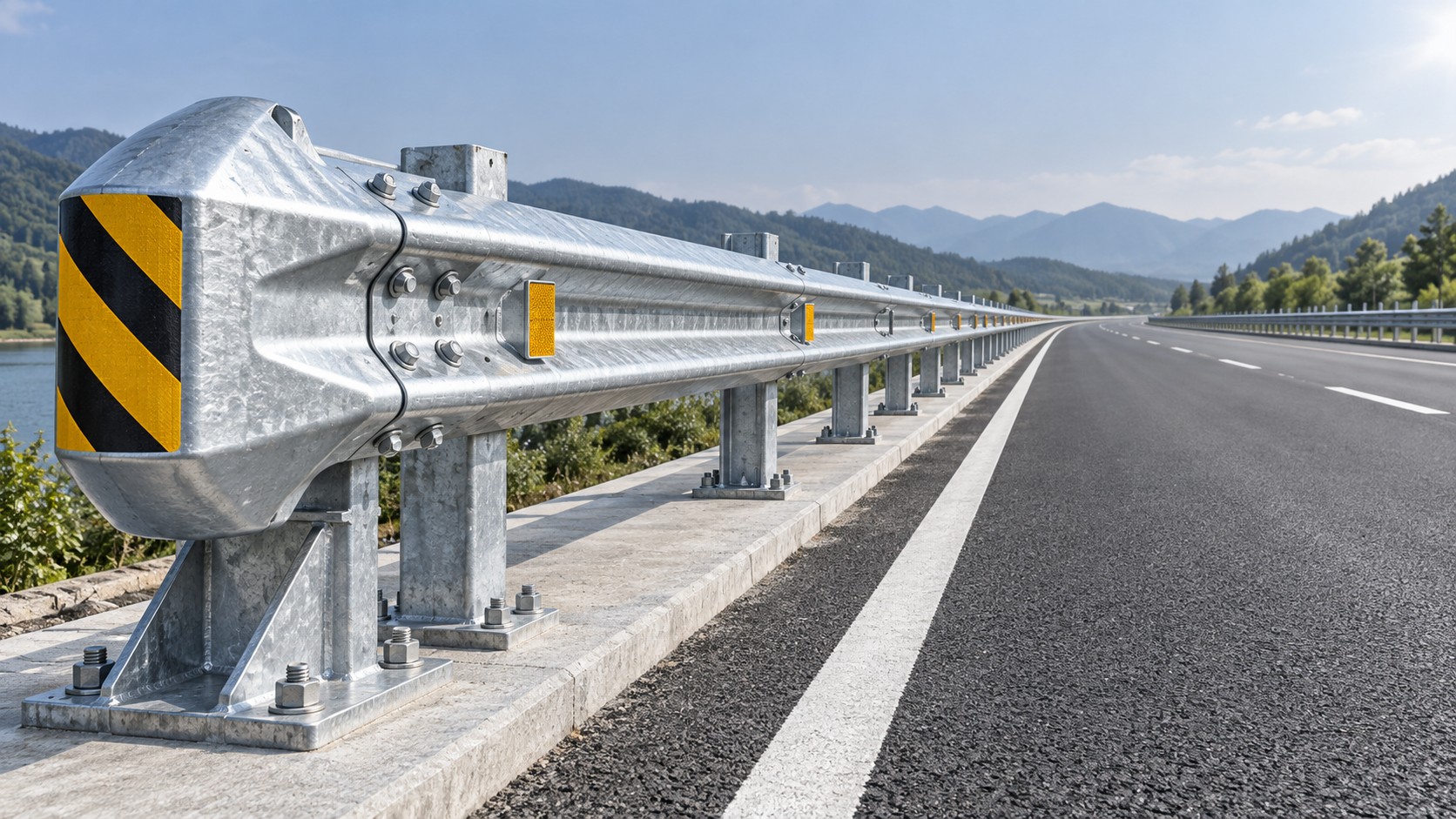
Start with the parts that affect containment, not the paint finish. A damaged Guardrail can look minor from the traffic side while the posts, splice points, or rail height have already shifted enough to weaken the system.
On the first pass, check whether the rail is still aligned, whether posts are leaning or pulled out, and whether the section remains at its intended height relative to the road surface. Then look at the connections, blockouts, end sections, and any visible tearing around bolt holes. If the rail has twisted, folded, or separated at a joint, you are usually past the point of a cosmetic repair.
Also note what happened around the impact area. Soil washout, shoulder drop-off, standing water, or fresh pavement overlays can turn a previously acceptable section into one that no longer performs as designed.
When is repair enough, and when is full replacement the better call?
Repair makes sense when the damage is limited and the original performance can be restored without guessing. That usually means small local deformation, surface coating damage, or isolated hardware issues where the rail shape, post support, and connection geometry are still reliable after work is completed.
Replacement is the better choice when any of these show up:
- Rail sections are kinked, torn, or flattened across a meaningful length.
- Multiple posts are broken, uprooted, or set loose in weak ground.
- Bolted joints are elongated, ripped, or no longer hold correct alignment.
- Corrosion has reduced section integrity, not just appearance.
- The damaged area includes transitions or terminal-related components that depend on exact geometry.
A simple rule in the field: if the damaged pieces cannot be returned to their original line, height, and connection condition with standard parts and documented assembly details, replace them.
Can a bent rail section be straightened and reused?
Usually, no. Once a rail has taken an impact and formed a visible kink or permanent bend, the steel has already yielded. Straightening may improve appearance, but it does not reliably restore the original behavior under a second hit.
This is where crews lose time and money. A rail that looks “good enough” after reshaping may still have hidden stress at the bolt slots, distorted wave profile, or misfit at the splice. If the section is part of an active roadside barrier, reusing a sharply bent member is a poor trade.
What damage signs are easy to miss but matter in service?
Three things get overlooked all the time: height loss, post rotation, and coating failure after abrasion.
Height loss often appears after resurfacing or shoulder erosion. The rail may be intact, but if the running face sits too high or too low relative to vehicle contact, the barrier can stop working as intended. Post rotation is another quiet problem. A post that is not broken can still be turned in the ground enough to change the load path. And when galvanizing or paint is deeply scraped, rust does not always stay local. Once corrosion starts around damaged edges and fastener zones, maintenance becomes more than touch-up work.
When should you upgrade a damaged section instead of replacing it like-for-like?
Upgrade when the impact has exposed a design mismatch, not just damaged hardware. In practice, that means the barrier may be repairable, but the site conditions have changed enough that repeating the old layout will leave the same weak point in place.
Typical triggers include repeated hits at the same location, revised shoulder geometry, drainage changes, widening work, or the need to tie into a different barrier element. If a maintenance team keeps replacing the same section and the alignment, transition, or connection logic is still wrong for the site, that is an upgrade decision disguised as a repair job.
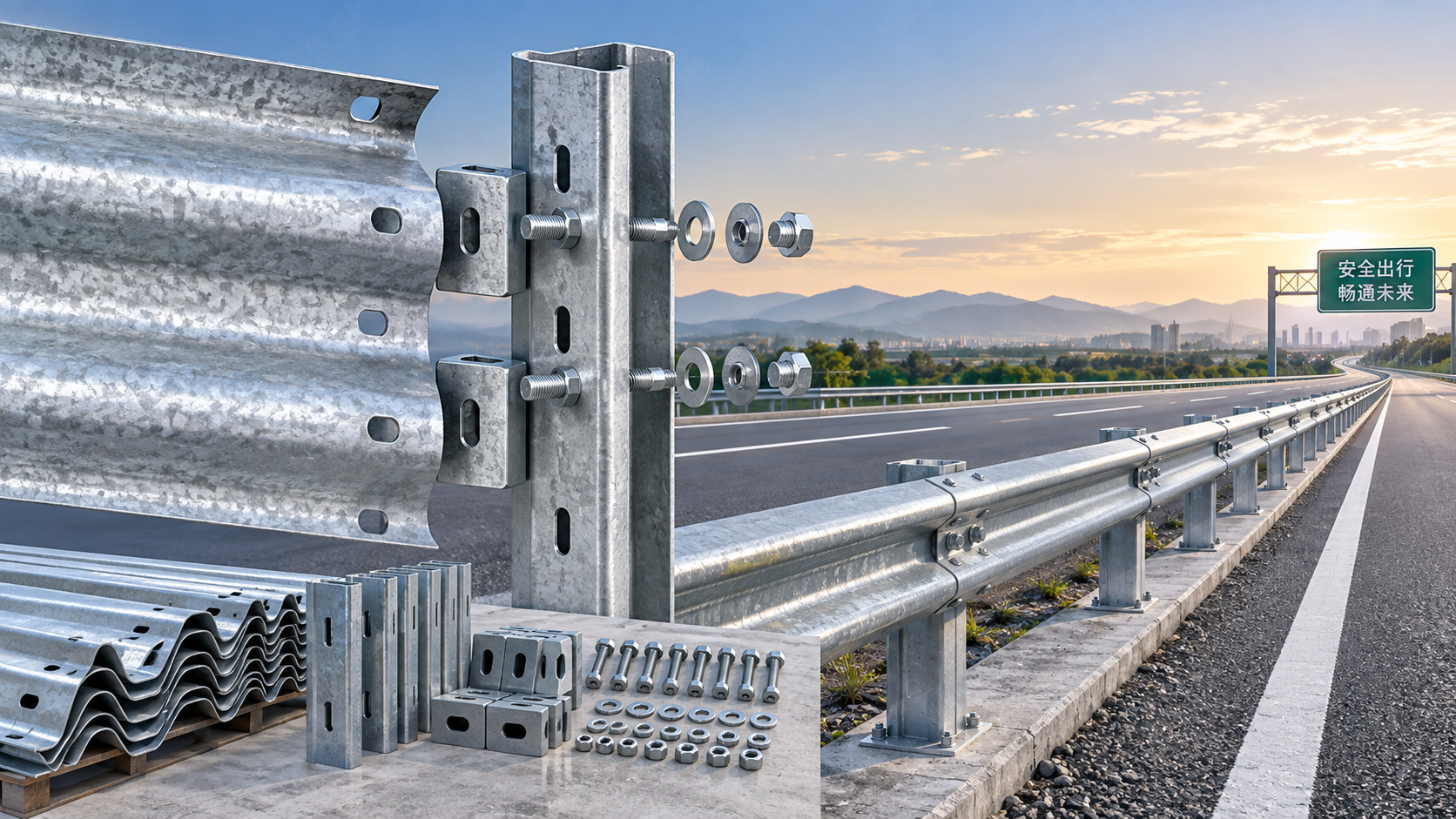
In some layouts, a connector component becomes part of that decision. For example, if the damaged area involves a transition between barrier elements, a properly specified Third Wave Connector may fit the repair strategy when it matches the approved drawings and the field geometry. The key point is not the part itself, but whether the assembled system remains consistent with the intended design.
Which records should be collected before the crew orders parts?
Good ordering starts with the actual installed condition, not assumptions from memory. Before parts are requested, gather:
- Clear photos from both traffic and back sides.
- Length of affected rail and count of damaged posts, blockouts, and bolts.
- Rail profile, thickness if available from drawings or stock records, and connection type.
- Post spacing and whether any foundation or soil repair is needed.
- Nearby transition details, terminals, bridge attachments, or special connectors.
If your company works from customer drawings or site-specific plans, use those as the primary reference. That is especially important where manufactured pieces were drilled, bent, galvanized, or finished to match a nonstandard layout. Ordering by appearance alone creates avoidable delays.
How do you handle corrosion damage differently from impact damage?
Impact damage is usually obvious and localized. Corrosion is slower and can be more deceptive. Light surface rust on exposed coating damage may be treatable if the base steel still holds full shape and thickness. Deep pitting around laps, bolt holes, post bases, or water-trap areas is another story.
A useful field distinction is whether the corrosion only affects finish, or whether it affects section integrity and assembly fit. If fasteners cannot be removed cleanly, if the lap area has packed rust that forces misalignment, or if metal loss is visible at load-bearing points, replacement is usually the practical answer.
What are the most common mistakes during guardrail replacement?
The big mistakes are usually simple:
- Replacing only the visible rail and leaving weakened posts in place.
- Mixing incompatible parts from different layouts without checking drawings.
- Ignoring pavement buildup or shoulder loss that changes rail height.
- Reusing deformed bolts, blockouts, or connector pieces.
- Closing the job before checking line, height, and splice orientation across the full repair length.
One more mistake deserves mention: treating every damaged Guardrail section as a stock replacement. Some jobs are standard. Others depend on exact fabrication details, surface treatment, or drilled patterns taken from plan sets. The closer the repair is to a transition or special connection, the less room there is for improvisation.
What is a practical decision rule for the field?
Use this sequence: inspect the load path, verify geometry, check the connections, then look at site changes. If the section can be restored to the original layout with sound members and correct fit, repair is reasonable. If the steel has yielded, torn, corroded through key areas, or the site no longer matches the old layout, replace or upgrade.
That approach keeps maintenance decisions tied to barrier performance instead of appearance, which is exactly where after-sales teams need to stay focused.
Leave A Reply
Need More Details?
Contact me for details on creating and managing design projects, project features, and services and prices
consult
Our company was established in 1998. It‘s a Chinese pioneer enterprise integrating production and sales, committed to providing high-quality steel products to customers at home and abroad.

First class quality service and professional after-sales team.
Get in Touch
*We respect your confidentiality and all information are protected.