






NEWS
Categories List
Recent Posts
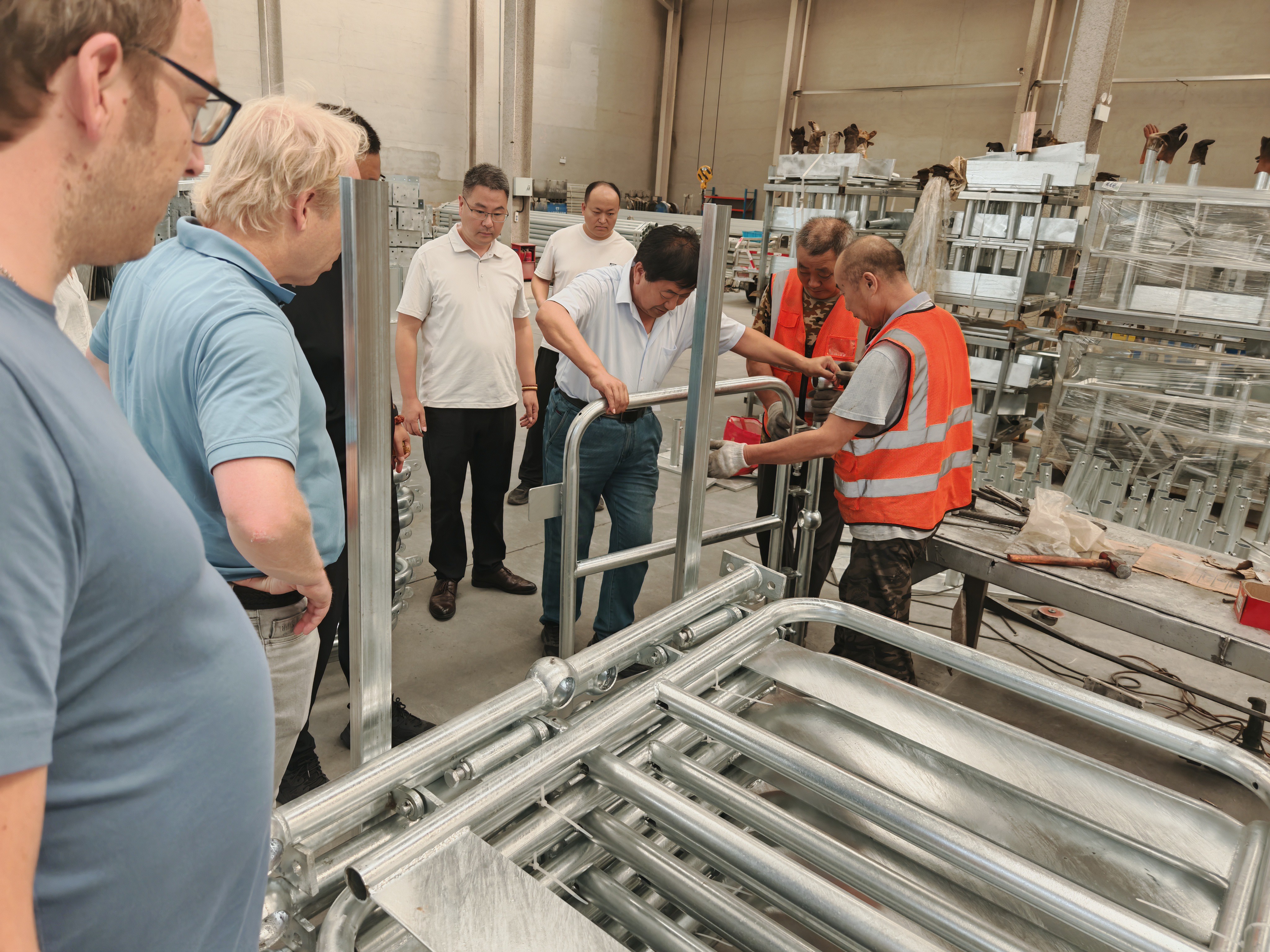
 Netherlands Client Delegation Visits Our Factory to Advance European Highway Guardrail CooperationOct 10, 2026
 AASHTO M180 Guardrail Requirements: A Practical Guide to Material ComplianceOct 10, 2026
 Port Safety Barriers: Selecting Protection for Vehicle Lanes and Loading AreasOct 10, 2026
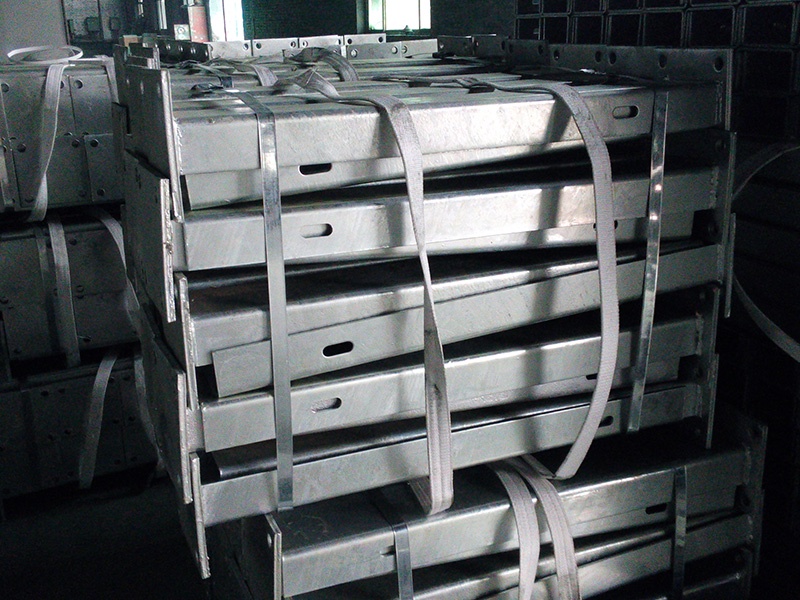
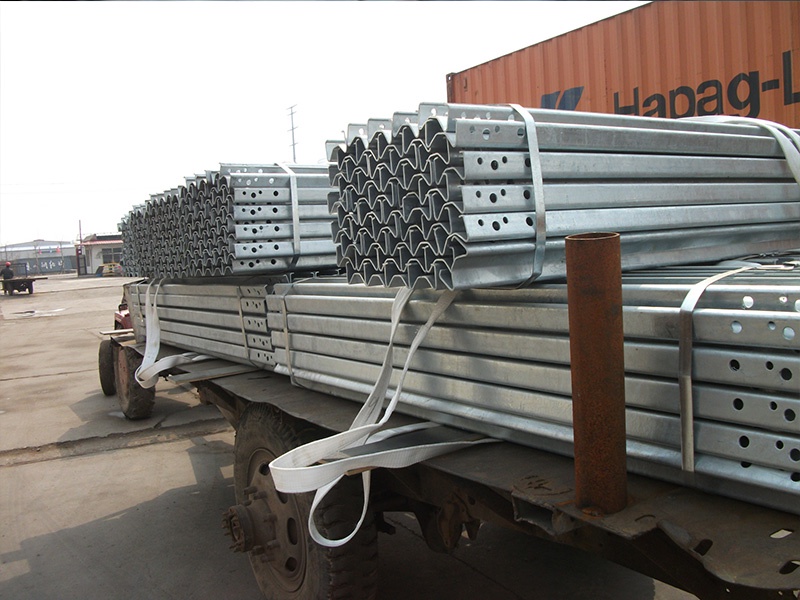
Selecting the right Brazil ABNT 6971 Guardrail system is critical for road projects that demand safety, durability, and compliance from day one. For project managers and engineering leaders, the challenge is not only meeting Brazilian standards but also balancing design accuracy, manufacturing quality, corrosion protection, and installation efficiency. This guide explores how to evaluate guardrail solutions for Brazilian road applications while reducing project risk and improving long-term performance.
In practice, guardrail selection for Brazilian road work is rarely a simple matter of choosing a standard drawing and placing an order. The real decision sits at the intersection of compliance, terrain, crash exposure, contractor capability, and long-term maintenance. A system that is technically acceptable on paper can still create delays, variation claims, premature corrosion issues, or installation conflicts if the specification and supply chain are not aligned early.
What ABNT 6971 means in a project decision
When teams search for “Brazil ABNT 6971 Guardrail,” they are usually not looking for a generic description of roadside barriers. They are trying to answer a more practical question: which system can be approved, installed, and maintained with the least downstream risk?
ABNT standards matter because they shape expectations around dimensions, material consistency, finish, and performance suitability in the Brazilian context. For project managers, however, compliance should not be treated as a checkbox. It affects procurement language, fabrication tolerances, inspection criteria, and even how disputes are resolved between owner, EPC contractor, and supplier.
A common mistake is to assume that any galvanized steel W-beam system advertised for highway use is automatically interchangeable. It is not. Even when a supplier also references international specifications such as AASHTO M180, the project team still needs to verify whether the supplied profiles, coating process, hole patterns, post configuration, and accessory sets align with the contractual requirements of the Brazilian project.
The first decision is not the rail profile, but the road condition
Experienced project teams usually begin with the hazard environment rather than the product brochure. Guardrails on a straight, low-embankment section with predictable traffic behavior may have a very different requirement profile from those used on mountain roads, bridge approaches, median transitions, or high-risk curves.
Three questions tend to shape the selection process more than anything else:
- What type of vehicle impact is most likely on this section?
- What roadside hazard must the barrier shield or redirect from?
- What environmental conditions will define the system’s service life?
If the project is located in coastal or high-humidity regions, corrosion protection becomes a primary engineering and budget issue rather than a finishing detail. If the alignment includes constrained shoulders or difficult foundations, installation practicality may outweigh a small unit-price advantage. If the road section has a history of severe run-off-road incidents, impact behavior and continuity of the barrier line become more important than procurement convenience.
This is why a technically sound guardrail decision often starts with roadway risk mapping, not vendor comparison.
Why compliance alone is not enough
Project leaders often discover too late that “compliant” and “project-ready” are different things. A guardrail package can nominally meet a standard and still fail the job because of weak manufacturing control, inconsistent galvanizing, undocumented material traceability, or poor fit-up on site.
For that reason, evaluation should move across four layers:
- Standard compliance
- Manufacturing capability
- Installation compatibility
- Lifecycle performance
In road projects with tight schedules, manufacturing capability is often underestimated. Hole positioning, bending accuracy, post straightness, and coating uniformity affect not only acceptance inspection but also field productivity. Minor dimensional inconsistencies multiply quickly when hundreds or thousands of meters are being installed. A cheap supply package may become expensive once crews start reworking parts in the field.
For buyers evaluating suppliers, it is worth looking beyond certificates and asking how the product is actually made: drilling, bending, rust removal, shot peening, non-destructive testing where relevant, galvanizing, and any paint or marking requirements. These steps are where quality is built—or lost.
Corrosion protection is a design variable, not a finishing option
For Brazilian road infrastructure, corrosion resistance has a direct impact on maintenance budgeting and operational disruption. Hot-dip galvanizing is widely used because it offers a practical balance between durability and industrial scalability. But project teams should avoid reducing the discussion to “galvanized or not.” The more relevant questions are about process control, coating consistency, environmental exposure, and expected service conditions.
Suppliers may state a service life of more than 20 years for galvanized systems, but actual field performance depends heavily on local conditions and installation quality. A damaged coating at bolt interfaces, cut edges, or transport handling points can shorten life materially in aggressive environments. Coastal exposure, standing water, soil chemistry around posts, and poor drainage all change the maintenance picture.
That is why corrosion review should be tied to the specific corridor. For inland expressways, standard hot-dip galvanized protection may be sufficient. For marine-adjacent or industrial corridors, teams should ask whether additional protective measures or tighter inspection criteria are justified.
One example of a solution typically evaluated in this context is Brazil ABNT 6971 Guardrail, which is described as using hot-dip galvanized coating and is positioned for highways and hazardous road sections. That kind of specification can be useful as a starting point, but it still needs to be tested against the project’s exposure class, maintenance strategy, and acceptance requirements.
Impact behavior matters more than many procurement documents reflect
The fundamental role of a roadside barrier is to absorb impact energy during vehicle collisions and guide vehicles back toward their normal path with manageable redirection. That sounds straightforward, but the system’s real-world behavior depends on the interaction of rail shape, post spacing, material properties, soil restraint, and installation continuity.
Wave-shaped steel beam systems remain common because they offer a practical combination of energy absorption, manufacturability, and repairability. Yet project managers should be careful not to evaluate only the beam itself. Terminal sections, transitions, splices, bolt assemblies, and post anchorage details all influence safety performance. A well-made rail paired with poorly specified transitions can create a weak point exactly where the system is needed most.
For hazardous sections, the right question is often not “Which guardrail is cheapest per meter?” but “Which complete system will behave predictably under local operating conditions and can be installed correctly by the available contractor base?”
Installation risk is one of the biggest hidden cost drivers
In many road projects, barrier work is scheduled late, after civil interfaces have already consumed float. That leaves little tolerance for fabrication errors, missing components, or field incompatibility. The result is familiar: crews wait on site, bridge transitions are improvised, and the opening date starts to depend on a seemingly minor barrier package.
From a project execution standpoint, several checks deserve more attention during selection:
- Whether post dimensions and embedment assumptions match actual ground conditions
- Whether bridge, culvert, and median interfaces are fully detailed before fabrication
- Whether expansion joints, drainage structures, and slope breaks create interruptions
- Whether the supplier can deliver a complete accessory package instead of only main rails and posts
- Whether installation tolerances are realistic for the contractor’s equipment and site access
These issues are not secondary. They determine whether the guardrail package supports progress or becomes a source of variation orders and safety punch-list items.
How to compare suppliers without reducing the decision to price
For project managers under procurement pressure, supplier comparison often collapses into a spreadsheet of unit rates. That is understandable, but risky. In guardrail packages, the lowest quoted tonnage or meter price does not necessarily produce the lowest project cost.
A more useful comparison framework includes:
- Documented alignment with applicable Brazilian requirements
- Evidence of repeatable manufacturing quality
- Galvanizing process control and inspection records
- Ability to manufacture to project drawings rather than only standard catalog items
- Lead time reliability for full-system delivery
- Support for design clarification and installation coordination
This matters especially on projects where the barrier layout is tied to custom geometry, local hazard treatment, or phased construction. Suppliers that can manufacture according to project drawings—and not just push a standard stock configuration—generally reduce downstream adjustment work.
Where a supplier also references standards such as AASHTO M180 alongside Brazilian requirements, the project team should treat that as supplementary context, not automatic equivalence. Cross-reference can be useful, but acceptance must still be based on the project specification and the governing approval framework.
Common selection errors on Brazilian road projects
Several errors recur across public and private road work.
The first is overemphasizing nominal compliance while underexamining fabrication detail. Teams often request certificates but do not sufficiently review tolerances, component matching, or inspection methodology.
The second is treating galvanizing as a commodity. Coating quality is frequently assumed rather than verified, even though corrosion performance has direct implications for maintenance intervals and operator safety.
The third is under-scoping interfaces. Bridge approaches, transitions, terminals, and curved sections are where installation complexity rises. If these are left vague during procurement, the project often pays for clarification later.
The fourth is ignoring logistics. Long steel components can be damaged during transport or handling, and replacement cycles can disrupt the sequence if spare quantities were not planned.
The fifth is selecting a system that is technically suitable but operationally difficult for the intended contractor to install. A project-friendly solution is one that can be delivered and assembled consistently under real site conditions.
What a stronger selection process looks like
For engineering leaders and project managers, a better evaluation path usually involves a short but disciplined review before award:
- Confirm the governing standard and project-specific acceptance criteria
- Map high-risk road sections and identify where barrier performance requirements differ
- Review corrosion environment and define coating expectations accordingly
- Request manufacturing and inspection evidence, not only certificates
- Check installation interfaces against actual drawings and site constraints
- Compare lifecycle implications, not just supply price
This process does not need to be bureaucratic. In fact, its purpose is the opposite: to prevent technical ambiguity from turning into schedule, cost, or safety problems during execution.
When reviewing options such as systems promoted with wave-shaped geometry, hot-dip galvanized finish, and highway impact-redirection functions, teams should focus on whether those characteristics translate into measurable project value. Reliable impact resistance, corrosion protection, and recognized standards are meaningful only when backed by fabrication discipline and installation compatibility.
The decision standard should be project performance
Choosing a guardrail system under ABNT 6971 is not really about selecting a steel product in isolation. It is about choosing a roadside safety solution that fits the corridor, satisfies the approval environment, can be manufactured accurately, and will not become a weak point in delivery or maintenance.
That is why the best decisions are usually made by connecting compliance review with field reality. A system that performs well in this evaluation will not just meet specification language; it will reduce installation friction, hold up under Brazilian environmental conditions, and support safer road operation over time.
For teams currently comparing options for hazardous road sections or long-run highway packages, the strongest signal is not the marketing claim but the supplier’s ability to turn drawings, tolerances, coating requirements, and delivery commitments into a consistent installed result. That is ultimately what determines whether a Brazil ABNT 6971 Guardrail choice protects the project as well as the roadway.
Leave A Reply
Need More Details?
Contact me for details on creating and managing design projects, project features, and services and prices
consult
Our company was established in 1998. It‘s a Chinese pioneer enterprise integrating production and sales, committed to providing high-quality steel products to customers at home and abroad.

First class quality service and professional after-sales team.
Get in Touch
*We respect your confidentiality and all information are protected.