






NEWS
Categories List
Recent Posts
 Netherlands Client Delegation Visits Our Factory to Advance European Highway Guardrail CooperationOct 10, 2026
 AASHTO M180 Guardrail Requirements: A Practical Guide to Material ComplianceOct 10, 2026
 Port Safety Barriers: Selecting Protection for Vehicle Lanes and Loading AreasOct 10, 2026
C Posts vs Z Posts: What Buyers Should Know Before Ordering Guardrail Supports
When sourcing guardrail supports, understanding the differences between C Posts and Z posts is essential for making the right purchasing decision. For teams buying for highway, bridge, ramp, or roadside protection projects, the post is not a minor accessory. It affects how the system performs under impact, how quickly crews can install it, and how well the barrier holds up in corrosive environments over time.
In practice, buyers rarely choose between C Posts and Z posts on shape alone. The better question is whether the post geometry, steel thickness, coating system, and manufacturing quality match the site conditions and the guardrail design being specified. A lower unit price can disappear quickly if the wrong support profile creates installation delays, mismatch with drawings, or premature replacement.
The structural difference is simple, but the procurement impact is not
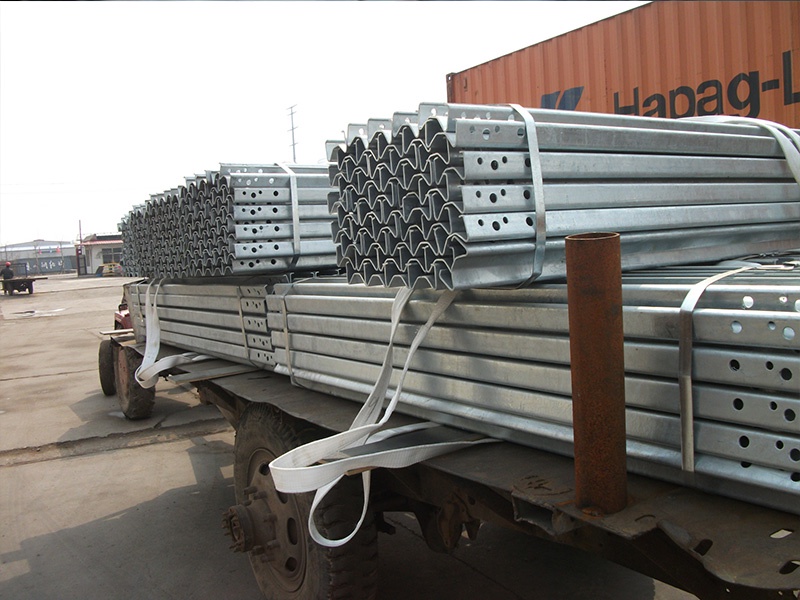
C Posts use an open channel section. Z posts use a Z-shaped cross section that changes how load is distributed through the member. On paper, both can serve as guardrail supports. In real projects, though, section shape influences stiffness, resistance to bending, and behavior during vehicle impact.
C Posts are often considered easier to recognize and straightforward to pair with standard roadside systems. Depending on the project standard and post dimensions, they may also be easier for some installers to align and handle. Z posts are frequently selected where engineers want a different balance of strength, deformation control, and section efficiency. That does not mean one is universally better. It means the buyer should check the approved system design before assuming interchangeability.
A common sourcing mistake is treating C Posts and Z posts as if they are only fabrication variants. They are not. If a tested or approved guardrail assembly was designed around one post type, substituting the other may require engineering review, and sometimes local approval, before purchase.
What usually drives the choice
For buyers in transportation projects, four factors usually matter more than the profile name:
- Compatibility with the specified guardrail system and drawings
- Load and deformation performance at the installation location
- Corrosion protection for the local environment
- Manufacturing consistency, hole accuracy, and delivery reliability
This is why experienced suppliers usually ask for more than a quantity list. They need to see plans, drawings, post spacing, rail type, foundation conditions, and any local coating or inspection requirements. In many cases, the most efficient route is not picking a standard catalog item, but manufacturing to the project drawings so the supports arrive ready for installation.
C Posts may be the right choice when installation simplicity matters
C Posts are often preferred for conventional roadside layouts where the design has already standardized around that section. If the project prioritizes repeatable installation across long highway runs, and if the approved barrier system calls for this post type, staying with C Posts can reduce avoidable complications. Procurement becomes easier when dimensions, punching patterns, and connection details are already familiar to the contractor.
That said, buyers should not stop at profile selection. The details make the difference: steel grade, wall thickness, post length, drilling tolerance, galvanizing quality, and whether the supplier can hold dimensional consistency across a large batch. Poorly controlled hole positions or uneven coating thickness can create site rework, even when the chosen post type is correct.
Z posts often come into the discussion where performance margins are tighter
Z posts are often considered in projects where buyers and engineers are paying closer attention to section efficiency and structural response. Bridge approaches, median openings, ramp divergences, and other sensitive zones may place more emphasis on how the support behaves under impact and how the full system transfers load.
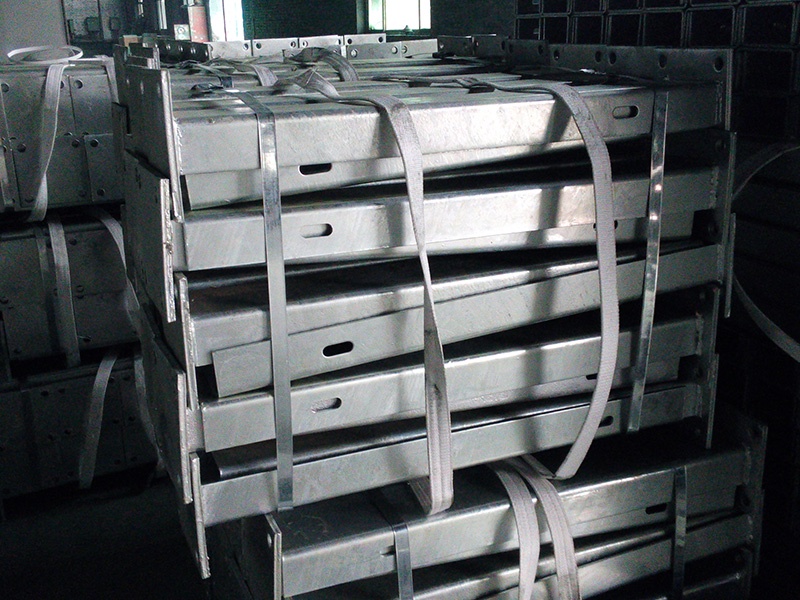
In these areas, the post is only one part of the assembly. Reinforcement components can matter just as much. For example, some highway safety systems use Hanging Plate elements made from high-quality hot-rolled steel plates in bridge sections, median strip openings, lighting pole protection zones, and similar critical locations. Where higher stiffness, higher impact resistance, and minimal deformation are required, these supporting components can improve the overall crash behavior of the barrier system rather than relying on the post section alone.
Do not separate material and coating decisions from post selection
For transport infrastructure, corrosion is often the slow cost driver that gets underestimated during bidding. A guardrail support that performs well structurally but fails early in a coastal or high-salt-fog environment is not a good purchase. This is why buyers should confirm not only whether the supports are galvanized or painted, but also what surface preparation and process control are involved.
Reliable production usually includes steps such as drilling, bending, rust removal, shot peening, non-destructive testing where required, galvanizing, and painting. Those are not just factory talking points. They affect fit, coating adhesion, defect detection, and long-term field durability. In more aggressive environments, some auxiliary components may also use zinc-aluminum-magnesium coatings or powder coatings, including warning colors such as yellow and green, depending on the application and specification. For certain reinforced parts, service life expectations may exceed 30 years in coastal or high-salt-fog conditions, but that should always be checked against the exact material and coating system being offered.
Questions worth asking before you place the order
A strong RFQ for guardrail supports should answer more than “C or Z.” Buyers should confirm:
- Is the post type exactly aligned with the approved barrier design?
- Are all hole patterns, lengths, and connection details based on project drawings?
- What coating process is required for the actual exposure environment?
- Are there special sections such as bridges, medians, or pier protection zones needing reinforced components?
- Can the supplier provide design support, fabrication, and installation coordination if the project scope demands it?
These questions are especially important when buying from a manufacturer that can work either from your plan or directly from your drawings. That flexibility is useful, but only if the technical review is done carefully at the front end. It is far better to resolve compatibility issues before fabrication than after a truck arrives at the site.
The practical buying view
If your project documents clearly specify C Posts, the safest decision is usually to stay with that system and focus on manufacturing quality, coating, and delivery control. If the project team is still evaluating post options, then the decision should be based on structural requirements, installation conditions, and whether special zones need stronger supporting elements such as a second Hanging Plate arrangement or similar reinforcement.
For procurement, the smartest move is often not chasing the lowest post price, but reducing the risk of mismatch. Confirm the drawings, confirm the environment, confirm the manufacturing route, and make sure the delivered supports truly fit the system they are meant to serve. With guardrails, that discipline usually matters more than whether the section starts with C or Z.
Leave A Reply
Need More Details?
Contact me for details on creating and managing design projects, project features, and services and prices
consult
Our company was established in 1998. It‘s a Chinese pioneer enterprise integrating production and sales, committed to providing high-quality steel products to customers at home and abroad.

First class quality service and professional after-sales team.
Get in Touch
*We respect your confidentiality and all information are protected.