






NEWS
Categories List
Recent Posts
 Netherlands Client Delegation Visits Our Factory to Advance European Highway Guardrail CooperationOct 10, 2026
 AASHTO M180 Guardrail Requirements: A Practical Guide to Material ComplianceOct 10, 2026
 Port Safety Barriers: Selecting Protection for Vehicle Lanes and Loading AreasOct 10, 2026
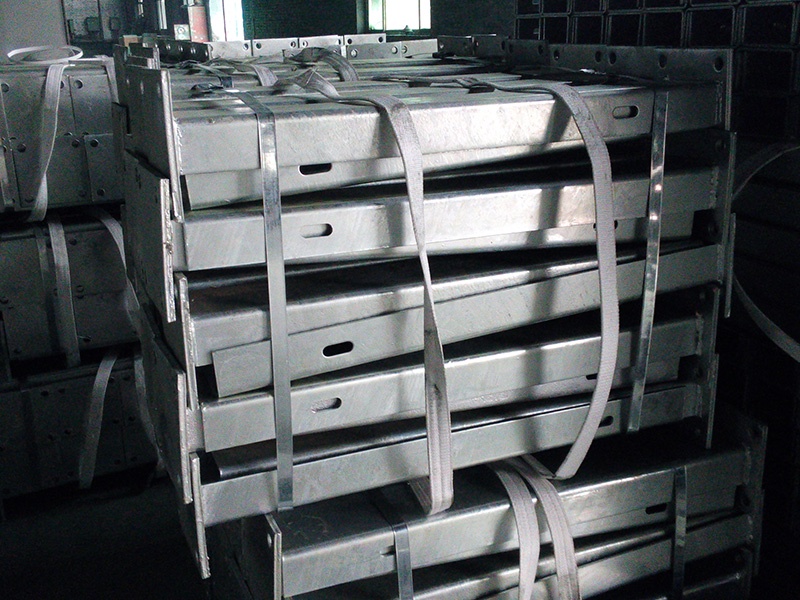
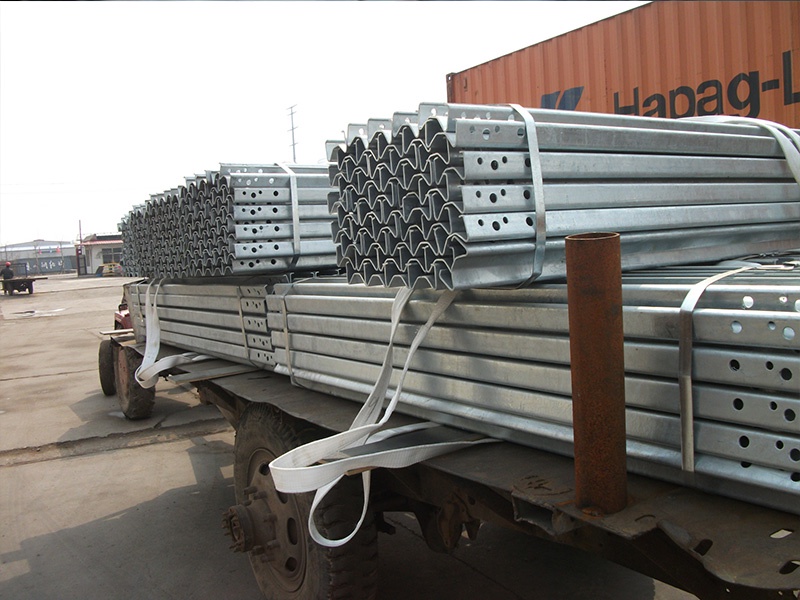
Technical review of C Posts starts with section geometry and load path. In roadside barrier systems, a C-shaped post is not simply a support member with a familiar profile. Its web depth, flange width, lip geometry if specified, wall thickness, and forming accuracy influence how the post carries bending stress, transfers wheel or impact-related loads into the soil or base, and connects to rails and blockouts without unintended eccentricity. Small dimensional variation can change bolt alignment, post spacing tolerance, and rail height consistency across a long installation.
The structural advantage of C Posts usually comes from directional stiffness. Compared with a flat section, the formed profile improves resistance to local deformation while keeping steel use relatively efficient. At the same time, that benefit depends on whether the section is proportioned for the expected application. A post selected for a shoulder with stable embedment conditions may behave differently in soft ground, on an embankment edge, or where drainage structures interrupt normal post installation depth. For that reason, the section cannot be judged by nominal size alone; the full installed condition matters.
Dimensional features that affect field performance
Several features deserve close attention when C Posts are evaluated against drawings and project requirements. Web straightness influences whether the rail sits true over multiple spans. Flange symmetry affects bolt seating and washer contact. Corner radii formed during bending can also matter, because excessive radius may reduce fit-up accuracy at connection points, while overly sharp forming may introduce residual stress or surface cracking in some steel grades.
Hole position is another frequent source of error. In transport applications, tolerance on hole diameter may appear simple, yet the more serious issue is hole location relative to the top of post, rail mounting face, and embedment reference. A post with acceptable hole diameter but poor vertical or lateral hole position can force rail twisting or shimming in the field. That kind of correction may slow installation and can create a connection that no longer reflects the intended structural arrangement.
Wall thickness should be read together with steel grade and coating thickness rather than viewed in isolation. A heavier section may appear safer, but if the design assumes a certain deformation pattern under vehicle impact, simply increasing thickness is not always neutral. In some systems the post is expected to yield in a controlled way, and over-stiff substitution may alter system response. Where the post works with a rail profile such as Thrie-Beam Guardrail, compatibility between post stiffness and rail behavior should remain consistent with the specified barrier arrangement.
Material quality and forming considerations
C Posts for highway guardrail and related steel applications are commonly assessed not only by chemical composition or nominal mechanical properties, but by how the steel behaves after drilling, bending, surface preparation, and coating. Cold forming changes the stress state at bends. If the material has limited ductility, the corners may become vulnerable to cracking, especially when the section includes tighter radii or when punching and forming are done without sufficient control.
Surface condition before galvanizing or painting deserves more attention than it often receives. Rust removal, shot peening where required, and clean preparation of drilled edges affect coating adhesion and long-term durability. Burrs around holes or sharp unclean edges can lead to thin coating zones. In transport infrastructure, those localized defects tend to matter because posts operate close to splash zones, de-icing agents, wet soil, and damaged shoulder surfaces. Corrosion rarely develops uniformly; it often starts where fabrication quality was inconsistent.
Non-destructive testing is relevant when the specification calls for it, particularly for batches where forming severity, weld details if any accessories are attached, or material traceability raises concern. C Posts are usually simple components in appearance, but simplicity at the drawing level should not lead to assumptions that every production lot behaves the same.
Embedment, base condition, and actual restraint
A C Post installed in soil does not perform as a free-standing steel member. The restraint comes from the interaction between the post and its surrounding medium. Embedment depth, soil density, moisture variation, frost action, and the presence of backfill with oversized aggregate can all change the post’s lateral resistance. On bridge approaches or near culvert transitions, restraint may differ significantly from the rest of the run, which can create weak or overly stiff zones if the same post and spacing are used without adjustment.
Where posts are mounted to concrete or other hard bases through base plates or sleeves, the governing issue shifts. Instead of soil resistance alone, bolt group arrangement, edge distance, base plate thickness, and local concrete capacity begin to control behavior. A technically acceptable C section can still underperform if the anchorage detail introduces prying action, misalignment, or insufficient tolerance for construction deviation.
Drainage should also be considered part of structural performance. Standing water around post bases accelerates deterioration, especially where coating damage from driving or installation handling was not repaired in accordance with project requirements. The post may remain visually acceptable above grade while losing section at the most critical buried or near-surface region.
Connection details often decide the outcome
Many field issues attributed to post quality are actually connection problems. Bolt hole clearance that is too tight can make installation difficult when rail slots, blockouts, and posts accumulate normal manufacturing tolerances over distance. Clearance that is too loose may permit unwanted movement or make it harder to maintain alignment before final tightening. Washer bearing area, bolt length, and whether the connection surfaces sit flush all influence force transfer.
When a barrier line includes a rail intended to absorb impact energy and redirect vehicles, the post-to-rail interface cannot be treated as a secondary detail. In systems using Thrie-Beam Guardrail in highways or hazardous road sections, the rail profile offers higher section capacity than simpler wave forms, so post geometry and connection layout need to remain compatible with the barrier design intent. A hot-dip galvanized finish is commonly selected in such systems because corrosion resistance must be maintained over long exposure periods, and service life expectations may extend beyond 20 years if environmental conditions and maintenance practice are favorable.
Frequent misjudgments in specification review
One common mistake is assuming that equal nominal dimensions mean equal performance. Two C Posts may share the same listed size while differing in corner form, steel consistency, coating build, hole accuracy, or straightness. Another is overreliance on coating appearance. A bright galvanized surface does not confirm proper base metal quality, dimensional compliance, or adequate thickness at edges and holes.
- Posts are sometimes compared by mass alone, even though section shape and connection geometry may control performance more directly than total weight.
- Drawings may show standard spacing, while the site includes transitions, median openings, shoulder widening, or buried utilities that change how the post can actually be installed.
- Inspection may focus on visible above-ground alignment and miss hidden damage from driving, including twisting, flange distortion, or coating loss near grade.
Another misjudgment appears during substitution review. If a proposed C Post claims compliance with a recognized standard elsewhere in the system, that statement should not be extended automatically to the post itself unless the section, tolerances, coating, and full connection arrangement are demonstrated as equivalent. For example, a guardrail assembly may reference standards such as U.S. AASHTO M180 or Brazil’s ANBT standards for associated barrier elements, but the installed performance still depends on how the post works within the complete assembly rather than on a borrowed certification reference alone.
Manufacturing details with practical consequences
Drilling sequence, punching quality, bending consistency, and handling after galvanizing all affect whether the delivered C Posts remain usable without site rework. Distortion after hot-dip galvanizing can be limited by proper process control, but thin sections or asymmetrical hole patterns may still move if fabrication was not balanced. Excess zinc buildup inside holes can interfere with bolting. Paint topcoats, when specified over galvanized steel, require surface preparation compatible with duplex coating systems; otherwise peeling may start at corners or impact marks.
Transport and unloading should not be treated as routine logistics only. Bundling pressure, chain contact, and rough stacking can deform flanges or damage protective coating before installation begins. A technically correct post leaving the factory can arrive on site with loss of fit-up quality if handling methods are poor. For long runs, that produces cumulative alignment issues that are difficult to correct once posts are already set.
In maintenance planning, replacement compatibility matters as much as initial supply. If future repair work must match existing rail height, hole pattern, and offset geometry, undocumented variation in C Posts becomes a long-term problem. Keeping dimensional consistency, traceable material records, and clear fabrication references reduces the chance that replacement posts will require field modification.
For transport applications, the useful question is rarely whether a C Post is strong in general terms. The real question is whether its shape, material, fabrication quality, coating condition, and installed restraint match the barrier detail and the road environment where it will work. That is where the section either remains a reliable structural component or becomes the weak point in an otherwise compliant system.
Leave A Reply
Need More Details?
Contact me for details on creating and managing design projects, project features, and services and prices
consult
Our company was established in 1998. It‘s a Chinese pioneer enterprise integrating production and sales, committed to providing high-quality steel products to customers at home and abroad.

First class quality service and professional after-sales team.
Get in Touch
*We respect your confidentiality and all information are protected.