






NEWS
Categories List
Recent Posts
 Netherlands Client Delegation Visits Our Factory to Advance European Highway Guardrail CooperationOct 10, 2026
 AASHTO M180 Guardrail Requirements: A Practical Guide to Material ComplianceOct 10, 2026
 Port Safety Barriers: Selecting Protection for Vehicle Lanes and Loading AreasOct 10, 2026
Understanding Brazil ABNT 6971 Guardrail requirements is essential for technical evaluators assessing roadway safety, compliance, and long-term performance. This article outlines the key dimensions, material specifications, and testing standards defined by the code, while also highlighting practical manufacturing considerations that affect quality and installation. Whether you are reviewing project plans or supplier capabilities, these insights will help you make more accurate and confident decisions.
For anyone evaluating roadside restraint systems in Brazil, the main challenge is not identifying what a guardrail is, but confirming whether a proposed system truly aligns with the technical intent of the applicable standard. In practice, many review problems arise from incomplete drawings, vague material descriptions, or supplier documents that mention compliance without showing how the system meets dimensional tolerances, steel quality, coating performance, and verification tests. That is where a closer reading of Brazil ABNT 6971 guardrail requirements becomes important.
Why ABNT 6971 matters in technical evaluation
ABNT standards are widely used as the technical basis for infrastructure procurement, design review, and construction acceptance in Brazil. For guardrails, the evaluator is usually not just checking a component list. The real task is to assess whether the barrier system can deliver consistent mechanical behavior under field conditions: impact redirection, structural continuity, corrosion resistance, and reliable installation geometry.
ABNT 6971 is commonly referenced in discussions of steel highway guardrail elements in the Brazilian market, but technical reviewers should be careful about one recurring mistake: treating compliance as a single certificate issue. In reality, compliance is a system question. Rail profile, steel thickness, post spacing, splice arrangement, bolt configuration, galvanizing quality, and fabrication tolerances all influence how the installed barrier performs. A supplier may provide acceptable steel but poor hole positioning; or a drawing may show correct profile dimensions but ignore coating mass or field connection details. Both situations create risk.
For this reason, a good technical review does not stop at a declaration of conformity. It asks for verifiable dimensional data, steel specifications, coating records, and testing evidence tied to the actual supplied configuration.
Dimensions are not administrative details; they control field performance
Dimensional review is often treated as a routine drawing check, yet it is one of the most important parts of guardrail assessment. The geometry of the rail and supporting members determines stiffness, deflection behavior, joint continuity, and installation compatibility.
In Brazilian highway projects, the most common steel beam guardrail format is broadly comparable to the corrugated W-beam family used internationally. Even when the overall appearance seems familiar, evaluators should avoid assuming interchangeability across standards. Small differences in nominal width, corrugation depth, steel thickness, hole patterns, lap direction, and terminal connections can affect both compliance and installation safety.
When checking dimensions under a Brazil ABNT 6971 guardrail specification, the following items deserve close attention:
- Nominal rail section dimensions, including overall developed profile and corrugation geometry
- Rail element length and effective overlap configuration
- Base metal thickness and permitted tolerance
- Location, size, and spacing of bolt holes and slotted holes
- Post section dimensions and wall thickness, where included in the project scope
- Spacer or blockout dimensions, if part of the approved system
- Assembly height in relation to finished road level
- Post spacing and transition geometry near bridges, terminals, and obstacles
These are not isolated checks. For example, rail thickness affects section capacity, but if the hole punching process causes edge distortion or the lap joints are misaligned, the theoretical capacity may not be realized in service. Similarly, post spacing may look acceptable on the drawing, yet become noncompliant in the field due to foundation constraints or shoulder geometry.
Technical evaluators should therefore request both manufacturing drawings and installation drawings. One confirms whether the component was made correctly; the other confirms whether the barrier will function correctly once installed.
Material specification is about ductility, consistency, and coating compatibility
Guardrails are expected to deform in a controlled way rather than behave like brittle steel members. That makes material selection more critical than many procurement documents acknowledge. The steel must be suitable not only for forming and punching during fabrication, but also for impact-related deformation in service and for long-term exposure under corrosive roadside conditions.
When reviewing material compliance, it is advisable to confirm at least the following:
- Steel grade and applicable chemical/mechanical property requirements
- Yield strength and tensile strength range
- Elongation or ductility-related criteria
- Material consistency across rails, posts, and accessories
- Compatibility of steel composition with galvanizing process quality
One of the most common technical misunderstandings is to focus only on minimum strength. Higher strength is not automatically better in guardrail fabrication. If the steel is too hard for the intended profile and forming process, cracking, residual stress, or poor edge quality may occur around punched holes and bends. That can create hidden reliability issues, especially in systems exposed to repeated minor impacts, vibration, and corrosive environments.
Evaluators should also look at whether the supplier controls upstream steel sourcing or purchases from multiple mills without stable qualification procedures. Mechanical properties that remain nominally acceptable can still vary enough to affect forming quality and coating behavior. In a mature production environment, incoming material inspection, traceability, and heat identification should be standard practice.
Galvanizing quality often decides lifecycle performance
In coastal zones, industrial corridors, or regions with high rainfall, the corrosion protection system may be as important as the structural design. A visually acceptable rail can still fail durability expectations if surface preparation, zinc coating mass, or adhesion quality is inconsistent.
Technical reviews should distinguish between simply asking whether the product is galvanized and verifying how galvanizing quality is controlled. Typical evaluation points include:
- Surface preparation before coating, including rust removal and contamination control
- Hot-dip galvanizing process parameters
- Coating mass or thickness requirements under the relevant specification
- Uniformity across flat areas, edges, punched regions, and formed profiles
- Adhesion and freedom from bare spots, runs, excessive ash, or brittle coating conditions
- Repair method for damaged areas after fabrication or installation
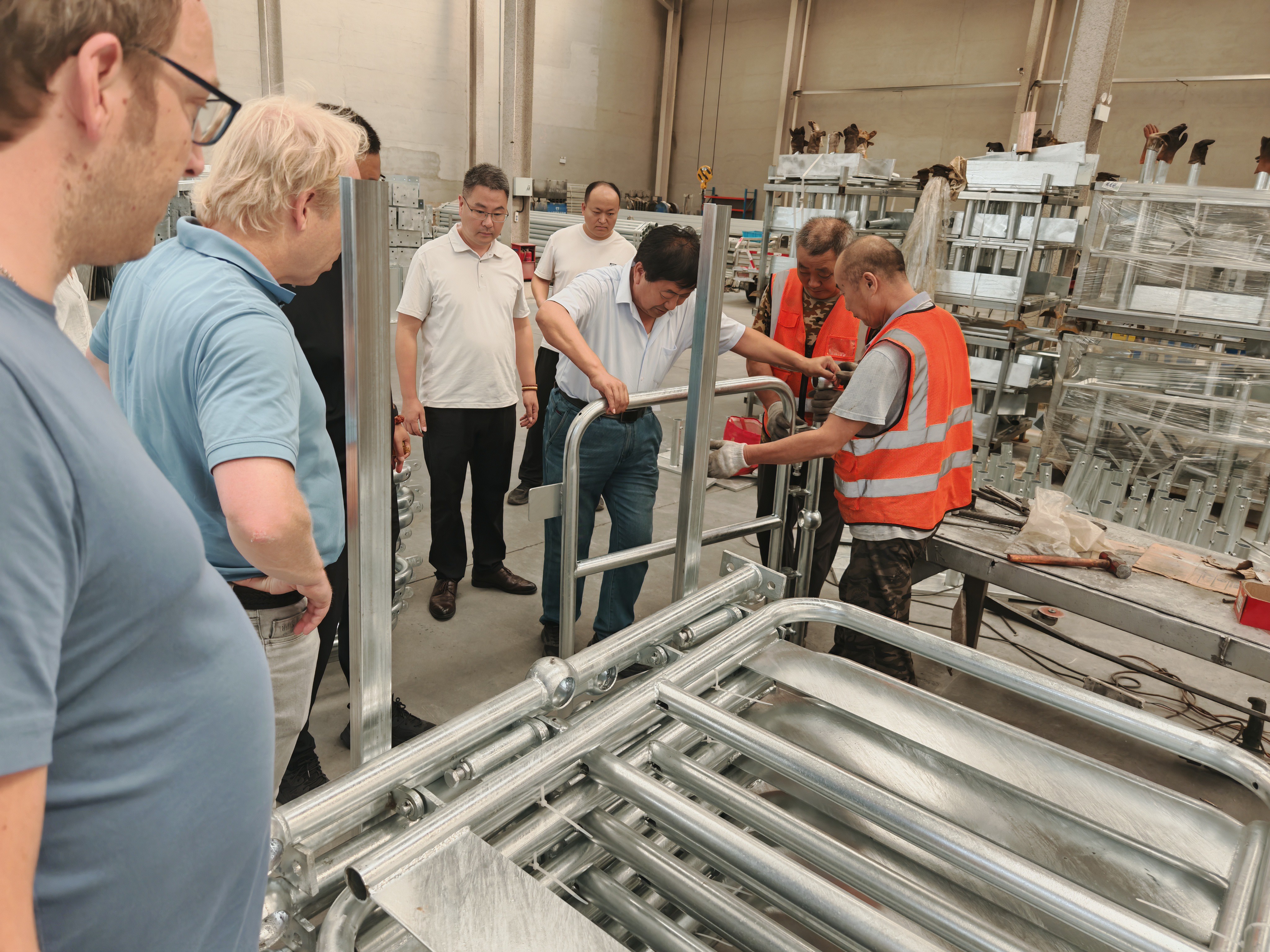
This is one area where manufacturing capability matters directly. Processes such as shot peening, rust removal, and controlled galvanizing are not just value-added services; they influence actual field performance. If a supplier offers integrated fabrication with drilling, bending, non-destructive inspection, galvanizing, and painting, that can reduce process fragmentation and improve consistency, provided the records are auditable.
On projects involving supporting assemblies beyond the rail itself, reviewers sometimes also assess related fabricated steel components such as Steel Frames where structural interfaces or barrier-adjacent supports are part of the wider roadside system. The key point is to verify that corrosion protection and fabrication tolerances are managed consistently across all exposed steelwork, not only the visible rail segment.
Testing should match the supplied product, not a generic catalog claim
Testing is where many technical submittals become weak. Suppliers may provide mill certificates, coating reports, or laboratory data, but the evaluator still needs to confirm that the evidence corresponds to the exact product form being offered.
For a guardrail system, relevant verification may include several layers:
- Dimensional inspection of finished components
- Mechanical testing of base steel properties
- Coating thickness or coating mass measurement
- Visual and surface quality inspection
- Non-destructive testing for selected fabricated parts, where specified
- System-level performance validation under applicable crash or impact criteria, if required by the project
It is important to separate product standard compliance from full installed-system performance qualification. A rail element may satisfy dimensional and material requirements under a manufacturing standard, but that alone does not prove that the complete roadside barrier configuration meets project crashworthiness expectations. On some projects, especially those with international financing, concession requirements, or higher-speed corridors, additional performance references may be required beyond manufacturing conformance alone. If such references are cited, they should be checked carefully for equivalence and applicability. Where the project documents are unclear, the correct notation is 【待核实】 rather than assumption.
Another issue is sampling. A single test coupon from one heat of steel does not establish lot-wide consistency. For higher-confidence evaluation, ask how many lots were tested, how traceability is maintained, and whether inspection records tie each batch to specific production runs.
Manufacturing details that frequently affect compliance
From a technical evaluation standpoint, the most useful supplier is not always the one with the lowest quoted price or the broadest product catalog. It is the one that can show process control over the stages that most often produce defects. In guardrail manufacturing, those stages are usually:
- Coil or plate sourcing and incoming inspection
- Profile forming accuracy
- Hole punching precision and edge condition
- Bending and straightness control
- Surface preparation before coating
- Galvanizing bath control and post-treatment handling
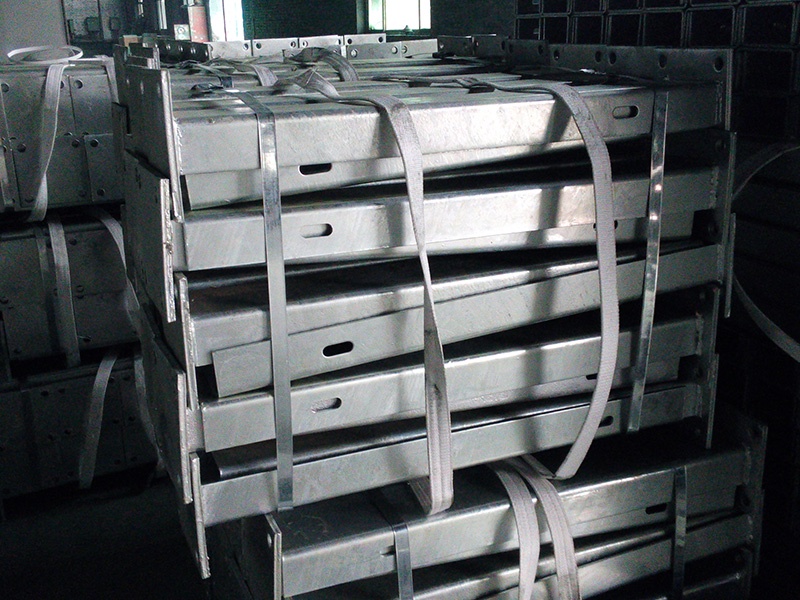
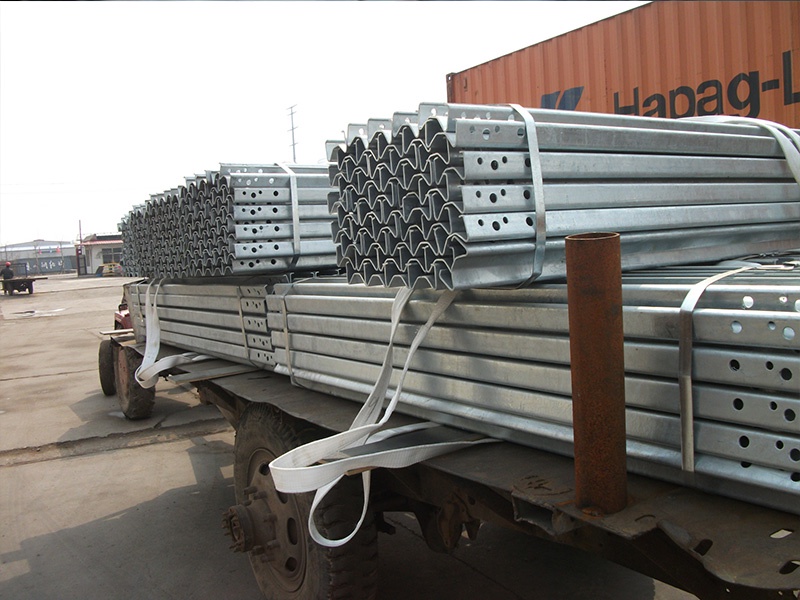
- Final dimensional inspection and packing protection
Several field failures that appear to be “installation problems” actually begin in fabrication. Mislocated holes force site rework. Poor straightness creates alignment difficulties. Thin zinc at formed corners accelerates corrosion. Damage during stacking and transport compromises the coating before installation begins.
Technical evaluators should therefore ask practical questions:
- Are hole locations checked with production jigs or with final template inspection?
- Are thickness measurements recorded per lot?
- Is the galvanizing subcontracted or controlled in-house?
- How are rails separated during transport to avoid abrasion damage?
- What is the procedure for rejecting distorted or undercoated parts?
These questions often reveal more about likely project performance than a polished compliance statement.
Installation geometry is part of technical compliance
A guardrail that is manufactured correctly can still perform poorly if installed outside the intended geometry. For technical reviewers, this means installation requirements should be considered part of the conformity assessment, not an afterthought left to the contractor.
Items that commonly deserve review include rail height, post embedment or anchorage, shoulder width, offset from traffic lane, terminal treatment compatibility, and transitions to rigid structures such as bridge parapets. Inadequate transitions are particularly risky because they create stiffness discontinuities that can change impact behavior significantly.
Site conditions in Brazil can also complicate standard application. Mountain roads, narrow shoulders, drainage interference, bridge approaches, and maintenance constraints may require adapted details. Adaptation is not necessarily a problem, but undocumented adaptation is. Once post spacing, rail height, or support details change, the evaluator should confirm whether the revised arrangement remains within the accepted design envelope.
Common evaluation mistakes in supplier submissions
Across international sourcing and domestic procurement alike, several patterns appear repeatedly:
- Quoting “guardrail compliant to Brazilian standard” without identifying the exact edition or referenced test basis
- Providing material certificates but no finished-product dimensional report
- Showing galvanized finish in photos without coating measurement records
- Submitting standard rail drawings while omitting posts, spacers, bolts, and connection hardware
- Offering equivalent sections that are close in appearance but not fully compatible with the specified hole pattern or joint arrangement
- Ignoring transport and packaging protection, leading to coating damage before arrival on site
For technical personnel, the lesson is straightforward: evaluate the supplied system as a manufactured and installable assembly, not as a nominal steel profile.
What a strong technical file should contain
If you are reviewing a supplier for a Brazil ABNT 6971 guardrail project, a credible submittal package should typically include clearly legible fabrication drawings, material certificates, dimensional inspection records, coating inspection results, and a statement of manufacturing scope. Where additional fabricated support structures are involved, related items such as Steel Frames should be documented with the same level of traceability if they affect installation interfaces or exposed durability.
The best submissions usually make evaluation easier by mapping each document to a requirement: section dimensions, thickness, steel properties, surface treatment, hardware specification, and inspection method. That level of discipline is often a stronger indicator of reliable supply than broad claims about production capacity alone.
Final assessment for technical reviewers
Brazil ABNT 6971 guardrail review is ultimately about engineering fit, not paperwork volume. The dimensions determine whether the system can be assembled and behave as intended. The material specification determines whether the rail can deform in a controlled, durable way. The test and inspection records determine whether compliance is demonstrated or merely asserted.
For technical evaluators, the most effective approach is to connect those three layers rather than checking them separately. If the rail geometry is correct but coating control is weak, long-term performance is exposed. If the steel certificate is acceptable but fabrication tolerances are poor, installation reliability drops. If test reports exist but do not match the offered configuration, the compliance basis is incomplete.
That is the practical standard to apply when assessing supplier capability or project submittals: not whether the documents look formal, but whether the evidence shows that the delivered guardrail system can meet Brazilian roadway requirements consistently in manufacturing, installation, and service.
Leave A Reply
Need More Details?
Contact me for details on creating and managing design projects, project features, and services and prices
consult
Our company was established in 1998. It‘s a Chinese pioneer enterprise integrating production and sales, committed to providing high-quality steel products to customers at home and abroad.

First class quality service and professional after-sales team.
Get in Touch
*We respect your confidentiality and all information are protected.