






NEWS
Categories List
Where Z Post Guardrail Works Better Than C-Post Layouts
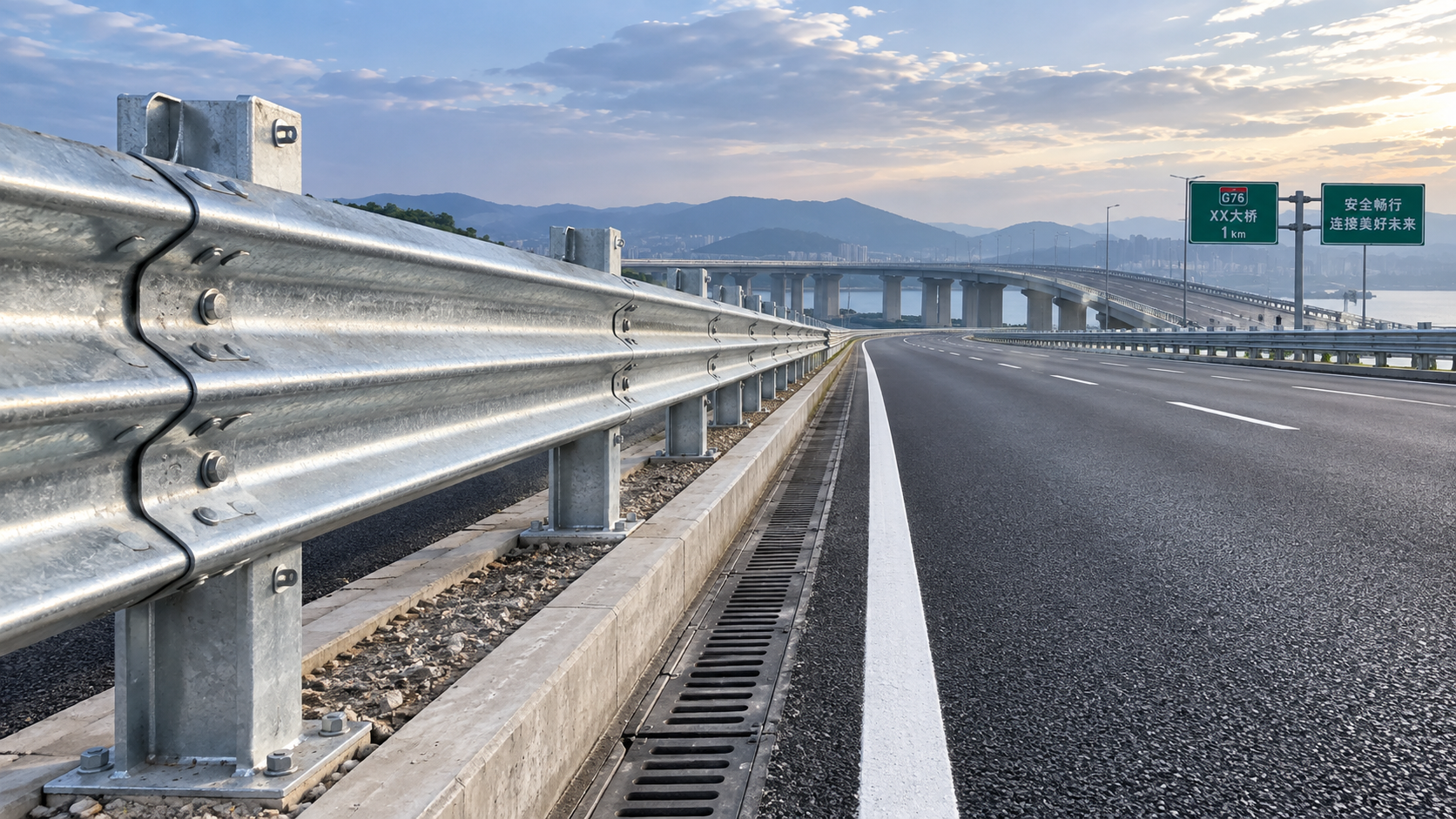
For a highway authority, contractor, or EPC team, the choice between a Z-post and a C-post guardrail layout is rarely just a matter of steel profile preference. It affects installation productivity, barrier behavior under impact, foundation requirements, maintenance access, and the practical cost of keeping the road safe over many years.
A Z Post Guardrail is often the stronger option where the roadside environment places higher demands on lateral restraint and post stability. That does not mean C-post systems are obsolete or unsuitable. C-post layouts remain common in many standard roadside applications, particularly where existing drawings, local specifications, and proven installation practices already support them. The better question is more specific: where does the Z-shaped post provide enough operational or structural advantage to justify selecting it?
The profile matters most when lateral loading is a concern
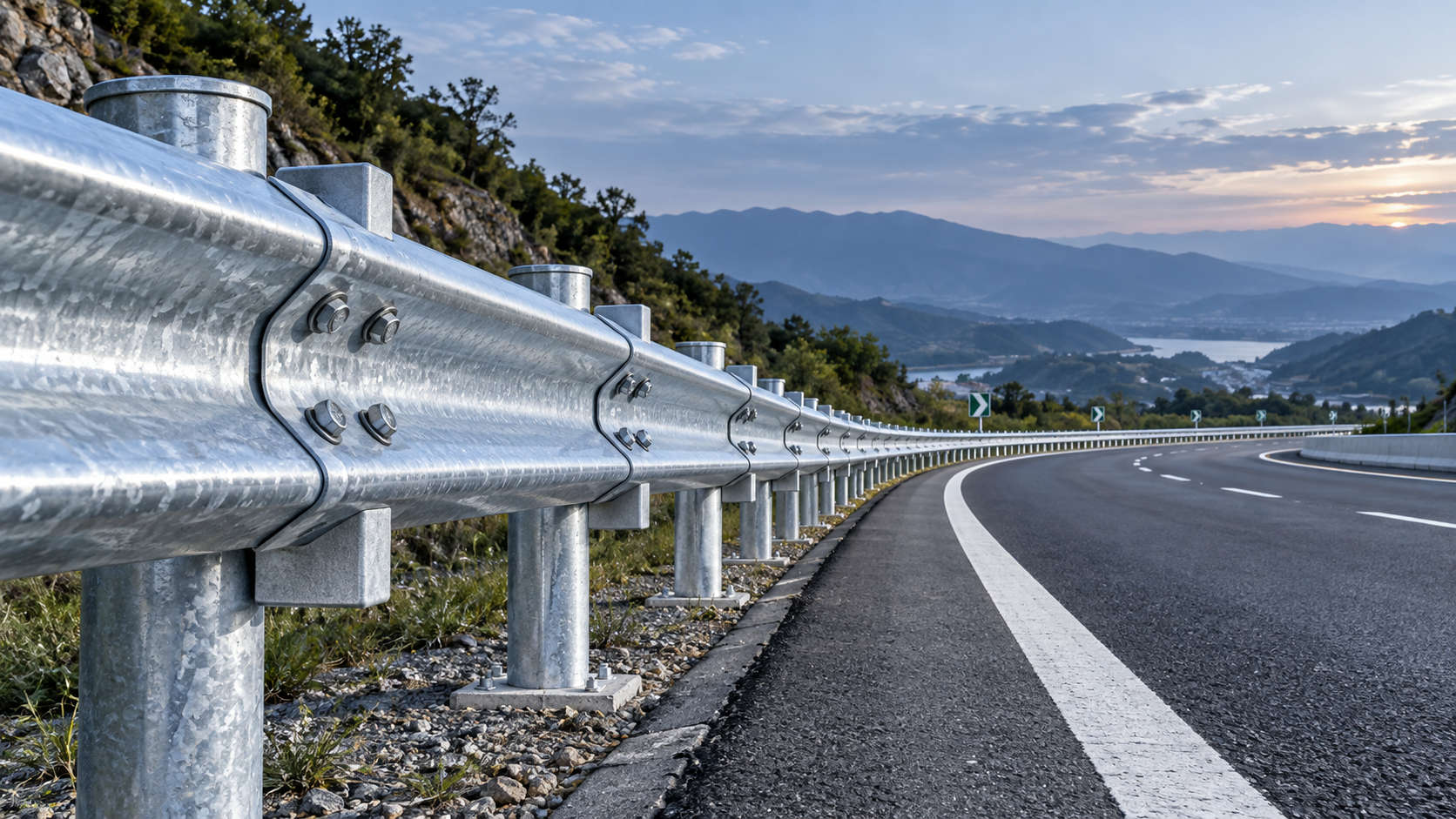
The core distinction lies in how the post section responds to loading and interacts with the soil. A Z-shaped steel post has flanges on opposing sides of its web, giving it a profile that can offer useful resistance to lateral movement and rotation when driven into suitable ground. In practical terms, this can be valuable when a vehicle strike transfers significant force into the guardrail line and its supporting posts.
On long, open highway stretches with relatively consistent soil, either layout may be workable if the design is properly engineered. The decision becomes more important at locations where the barrier cannot tolerate excessive movement: near embankment edges, drainage channels, bridge approaches, fixed roadside hazards, or narrow recovery zones. In these areas, the post is not simply holding up a rail. It is part of the system that controls rail deflection, redirects an errant vehicle, and keeps the barrier from losing its intended alignment.
A Z-post arrangement is therefore often worth evaluating where the project team needs a more stable support concept without automatically moving to a much heavier or more complicated barrier system. Final suitability still depends on post length, steel grade, rail geometry, spacing, foundation conditions, and the applicable crash-performance requirements. No post profile should be selected in isolation.
Soft, variable, or disturbed ground can change the decision
Soil is where many apparently straightforward guardrail decisions become difficult. A layout that works well on a compacted road shoulder may behave differently beside recently backfilled drainage works, on widened carriageways, near utility trenches, or in ground affected by seasonal moisture changes.
Where soil conditions are variable, a Z Post Guardrail can provide a more forgiving starting point because its shape may help develop resistance against lateral movement in the surrounding material. This is particularly relevant when post driving must be controlled carefully to avoid repeated repositioning, damaged galvanizing, or inconsistent embedment depth. It is not a substitute for geotechnical review, but it can reduce the risk of treating every roadside location as if it had identical support conditions.
There is an important limit here. Extremely weak soils, saturated ground, rock layers, buried concrete, or congested utility corridors may require a different solution altogether. Shorter posts, longer posts, drilled foundations, base-plated supports, or locally reinforced designs may be needed. A Z-section does not solve a foundation problem that has not been investigated.
Z-post layouts are useful where installation speed is under real pressure
Road projects are often installed under traffic management windows rather than ideal working conditions. Crews may have limited lane closures, restricted access along medians, or a narrow period between pavement completion and road opening. In that environment, a support system that can be efficiently driven and aligned has a direct effect on programme risk.
Z-post systems can be attractive for long runs where repeated, consistent post installation is possible. Their profile is well suited to conventional driving operations when the specified equipment and driving method are matched to the steel thickness and site conditions. The benefit is not merely faster progress per day. It can also mean fewer field modifications, less ad hoc welding, and better consistency across a continuous barrier line.
That said, fast installation should never become an excuse for poor quality control. Post plumbness, elevation, spacing, rail overlap direction, bolt tightening, and coating damage all need inspection. A barrier may look straight from a passing vehicle while still containing details that affect performance and maintenance later.
Narrow medians and constrained roadside zones favor a careful Z-post review
Constrained corridors are often where the limitations of a generic C-post layout become visible. In a narrow median, on an approach to a structure, or beside a steep slope, there may be little room for barrier deflection. The guardrail needs to remain within a defined working width while continuing to guide vehicles away from opposing traffic, bridge elements, poles, or other hazards.
A Z-post support configuration can be a sensible part of a higher-stiffness solution in these locations, provided the complete system has been designed and assessed for the required condition. Decision-makers should pay particular attention to transitions. A stiffened section placed next to a more flexible standard guardrail can create a change in behavior that must be deliberately designed, not improvised during installation.
The same principle applies around ramp divergences, median openings, lighting-pole protection zones, and high-risk expressway sections. These are not places to choose components solely by unit price. The barrier line must work as a connected assembly, including rails, posts, blocks or spacers where specified, terminals, transitions, bolts, and protective end components.
Do not overlook end treatments and local reinforcement
A well-selected post layout can still underperform if vulnerable endpoints and interruption points are treated casually. At bridge sections, median-strip openings, pier protection areas, and other locations where guidance and structural stability are especially demanding, end and closure components deserve the same level of review as the main rail.
For example, a high-rigidity End Cover manufactured from high-quality hot-rolled steel plate can be considered where the design calls for strong resistance to bending deformation and a more robust finish at a critical barrier location. Zinc-aluminum-magnesium coatings or powder-coated warning finishes may also be relevant where corrosion exposure or visual delineation is part of the project requirement. In coastal or high-salt-fog environments, the coating system should be reviewed alongside the expected service conditions rather than chosen as an afterthought.
The point is not to make every section excessively rigid. Overbuilding ordinary roadside runs can waste budget and complicate repairs. The better approach is to use stronger components where the consequence of deformation, misdirection, or loss of alignment is genuinely higher.
When C-post layouts may still be the better commercial choice
There are situations where staying with a C-post layout makes good sense. If a road agency has an established approved system, maintenance crews stock compatible replacement parts, site soils are predictable, and the project geometry is uncomplicated, changing post type may introduce more coordination work than benefit.
C-posts can also be a practical choice for standard rural roads with sufficient clear-zone space and conventional guardrail demands. The lowest-cost option is not always the best option, but neither is the structurally more substantial profile automatically the right answer. Procurement teams should avoid comparing only steel weight or price per post. They should compare installed cost, delivery lead time, compatibility with the rail and terminal system, inspection needs, future repair availability, and the consequences of a design change.
A practical selection checklist before committing
- Review soil conditions by road segment, especially around fill, drainage, utilities, and structures.
- Confirm the required barrier behavior, allowable deflection, and transition details under the project’s governing standards.
- Check whether post-driving equipment can achieve the required depth without damaging the post or protective coating.
- Compare complete-system compatibility rather than buying posts, rails, and terminals as unrelated items.
- Assess corrosion protection based on the actual environment, including coastal exposure, de-icing salts, industrial pollution, and drainage patterns.
- Ask how damaged sections will be replaced after an impact: availability of matching posts and hardware matters more than it seems during tendering.
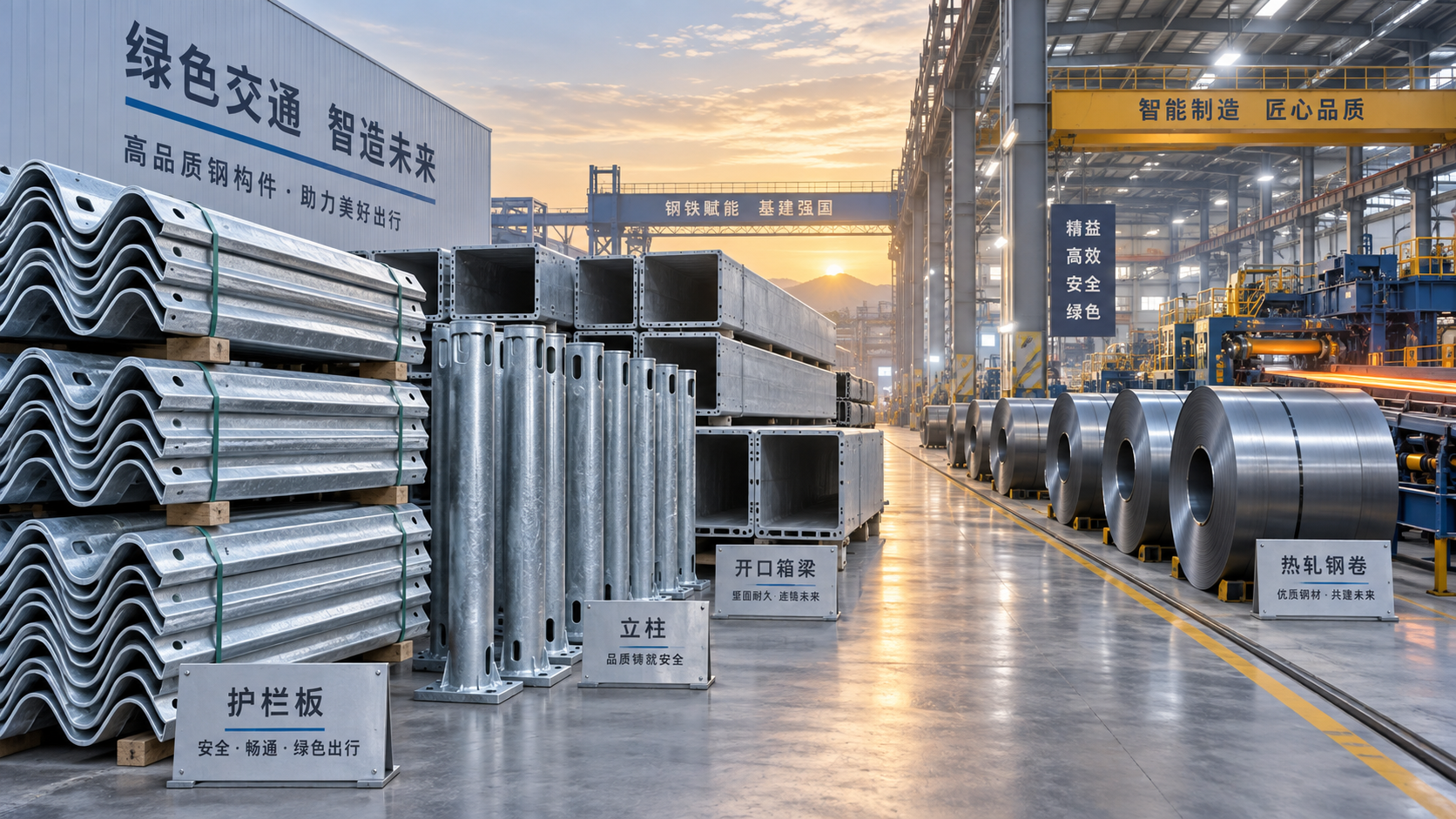
For custom highway guardrail work, the strongest supplier support is usually not limited to supplying standard steel. It includes reviewing drawings, confirming fabrication details, coordinating drilling and bending, managing rust removal and shot peening where required, carrying out appropriate inspection steps such as non-destructive testing when specified, and applying galvanizing or paint systems suitable for the job. This is especially useful when a project combines standard roadside lengths with unusual bridge, median, or hazard-protection sections.
The decision should be based on the difficult sections, not the easy ones
A C-post layout may be entirely adequate across most of a route, while Z-post support becomes the better choice at the sections that carry the greatest safety and maintenance risk. Soft shoulders, constrained medians, bridge approaches, high-impact zones, and locations requiring tighter control of barrier movement are where the added stability of a Z-profile is most likely to justify itself.
Before finalizing a specification, review the full barrier assembly against the road geometry, soil investigation, local requirements, installation method, and repair strategy. If the project team can explain why each post type is being used at each critical location, the procurement decision is probably on solid ground.
Leave A Reply
Need More Details?
Contact me for details on creating and managing design projects, project features, and services and prices
consult
Our company was established in 1998. It‘s a Chinese pioneer enterprise integrating production and sales, committed to providing high-quality steel products to customers at home and abroad.

First class quality service and professional after-sales team.
Get in Touch
*We respect your confidentiality and all information are protected.