






NEWS
Categories List
Steel Highway Barriers: Specification Factors for High-Speed Road Projects
Selecting a Steel Highway Barrier for a high-speed road project is not a matter of comparing rail thickness, post size, and unit price in isolation. The barrier is a complete roadside restraint system: rails, posts, spacers, terminals, fasteners, foundations, and installation tolerances all affect how it behaves in an impact. A component that appears acceptable on a drawing may still create risk if it is incompatible with the tested configuration, local ground conditions, drainage details, or the intended containment requirement.
For technical evaluators, the central question is not simply whether steel is strong enough. It is whether the specified system can redirect, contain, or manage the expected vehicle impact while limiting dangerous deflection, occupant risk, and secondary hazards. That assessment must be tied to the governing road authority requirements, the project’s design speed, traffic mix, roadside geometry, and maintenance realities.
Start with the Required Performance, Not the Rail Profile
A W-beam, thrie-beam, box beam, or other steel barrier profile does not automatically indicate a specific level of impact performance. The same visible rail type can be supplied with different post sections, rail heights, spacer blocks, anchorage arrangements, and terminal treatments. Those details change the response of the system under load.
The specification should identify the applicable performance framework required by the project rather than relying on generic wording such as “heavy-duty guardrail.” Depending on the market, this may involve a nationally adopted standard, a road authority specification, or a tested-system requirement. The evaluator should verify what vehicle types, impact conditions, containment level, working width or deflection limits, and redirection criteria are relevant. A median barrier beside opposing high-speed traffic calls for a different evaluation from a roadside installation protecting an embankment or fixed roadside object.
It is also important to distinguish structural capacity from system performance. Increasing steel thickness may improve local strength, but it does not prove that a modified system will behave as required in a collision. Changes to rail mounting height, post spacing, bolt positions, blockouts, or terminal geometry should be controlled against the approved design and applicable project requirements.
Material Grade and Section Geometry Need to Be Read Together
Steel grade, yield behavior, elongation, thickness tolerance, and section geometry determine how rails and posts absorb and distribute energy. High-speed impacts impose dynamic loading, so the desired outcome is rarely maximum rigidity everywhere. A barrier generally needs a controlled response: enough resistance to prevent excessive penetration or collapse, but sufficient deformation to manage impact energy and avoid abrupt vehicle deceleration.
Technical review should therefore include mill certificates or equivalent material documentation where required, dimensional checks on formed sections, hole patterns, edge condition, and consistency of bends. Drilled holes that are misplaced or poorly finished can create assembly difficulties and may affect load transfer at bolted joints. Forming quality matters as well; distortion around corrugations, sharp edges, or uncontrolled cracking near bends should not be accepted merely because nominal sheet thickness is achieved.
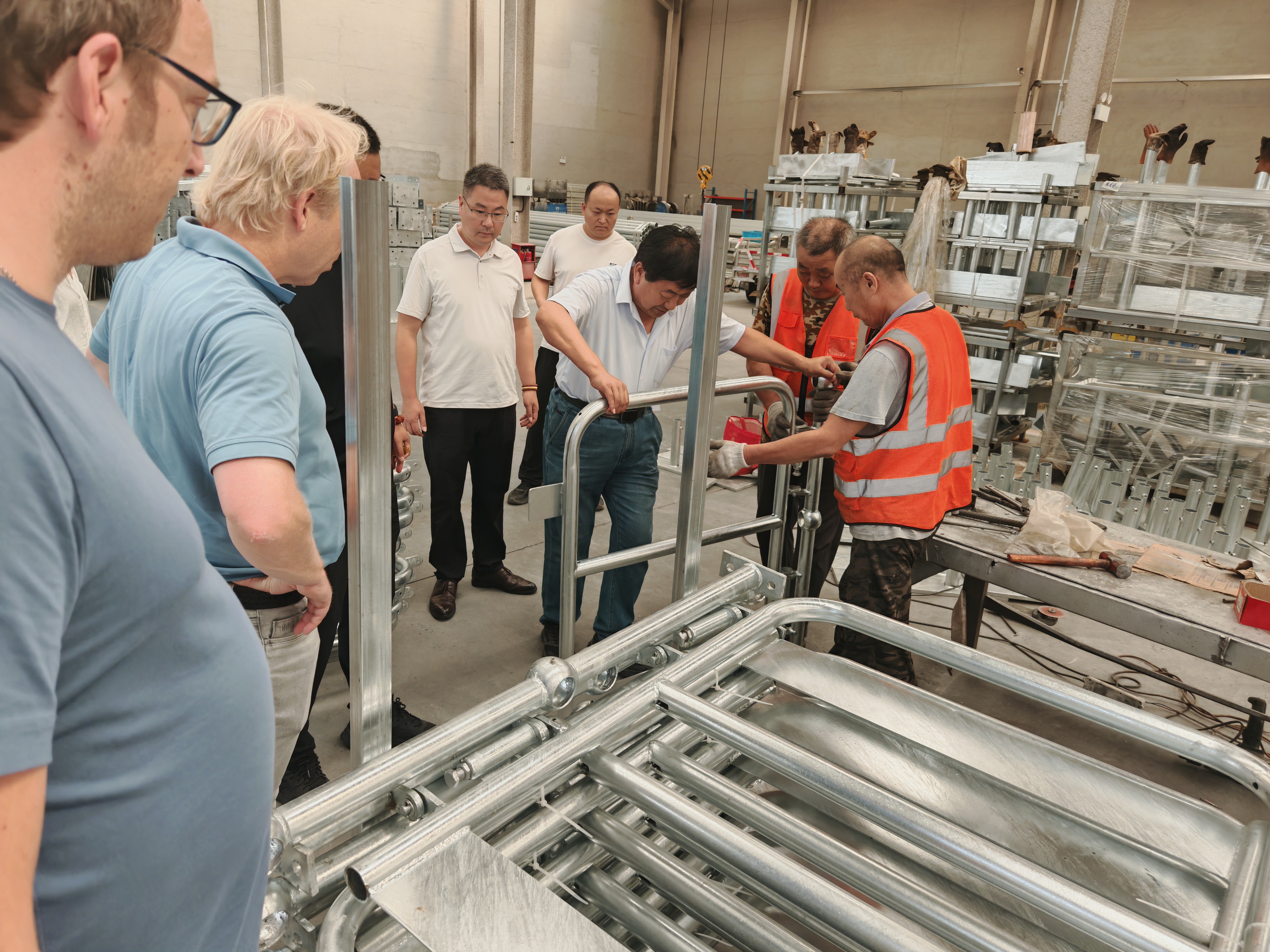
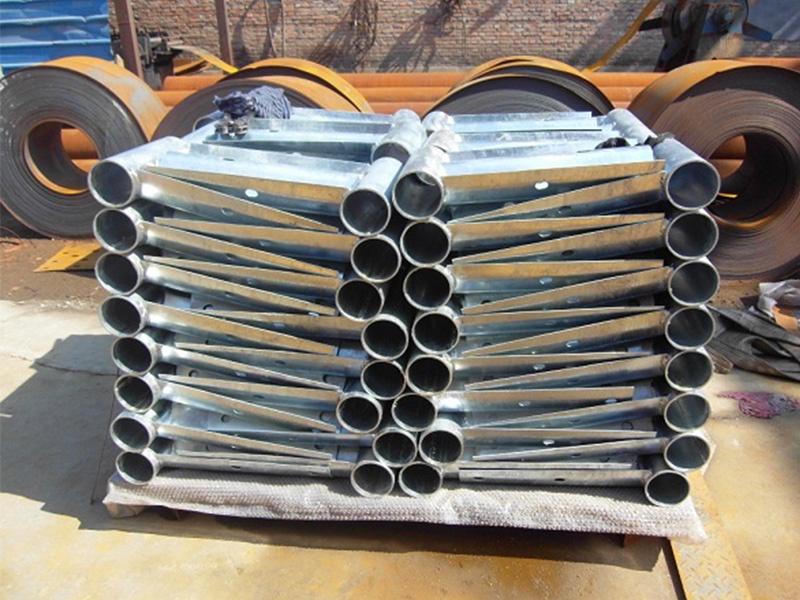
For fabricated steel components, a controlled process may include drilling, bending, rust removal, shot peening where specified, non-destructive testing when relevant, galvanizing, and painting. Not every project requires every process, but the manufacturing route should reflect the drawings, component function, and inspection plan. Traceability from raw material through fabrication is particularly useful when multiple barrier configurations are supplied within one contract.
Posts, Foundations, and Spacing Control the System Response
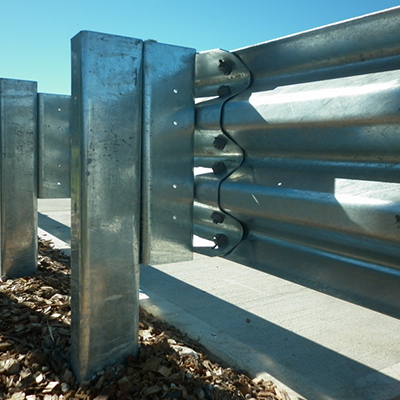
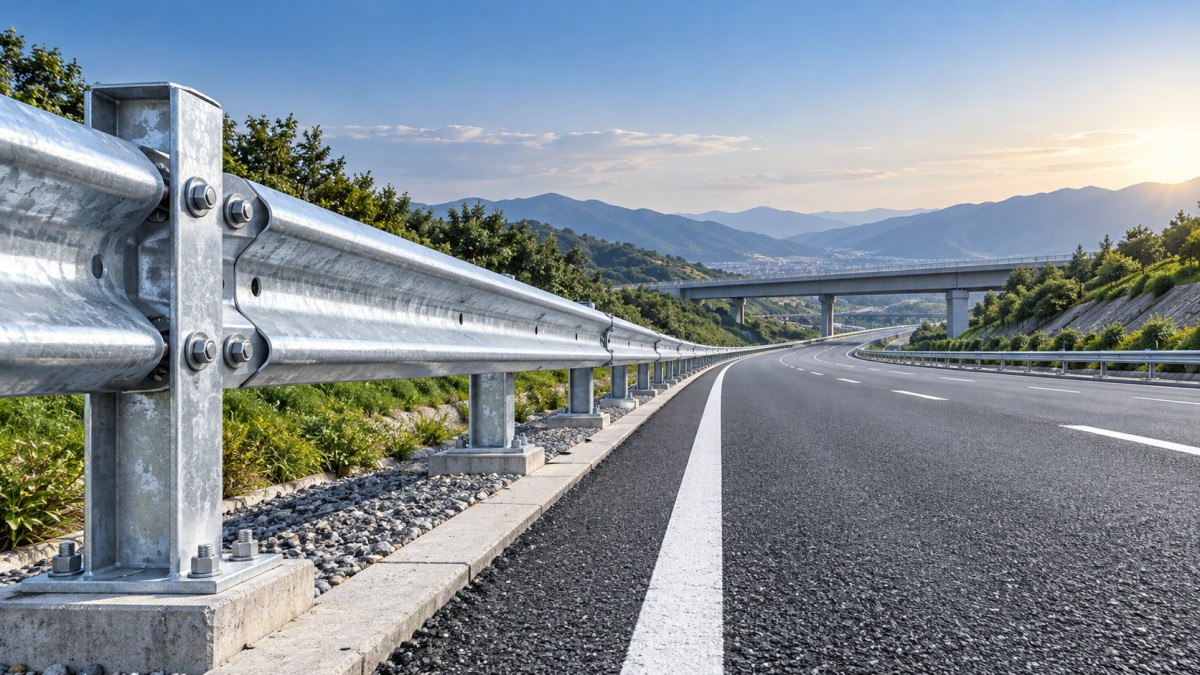
Posts are often treated as secondary items because they are partly concealed after installation. In practice, they govern much of the barrier’s lateral support and load transfer. Their embedment, cross-section, spacing, and connection to the rail influence whether the barrier deflects predictably or shifts excessively during an impact.
A common layout may use 4-metre post spacing in ordinary sections, while critical locations can require 2-metre spacing. These values should not be copied across a project without checking the approved layout. Bridge approaches, steep slopes, narrow verges, transitions, terminals, curves, culverts, and obstacle-protection zones often require different detailing. Soil type and compaction also matter: a post embedded in variable fill does not offer the same restraint as one installed in competent, properly prepared ground.
Where project geometry or drawings call for a particular profile, post selection can include C-type, U-type, Z-type, or H-type sections. Properly specified C Posts provide vertical support, transfer forces into the foundation, and help prevent significant system movement. They should be evaluated together with energy-absorbing blocks and bolted connectors, not as standalone steel members. Compatibility at this interface is essential to preserve rail height, spacing, and intended deformation behavior.
Corrosion Protection Is a Lifecycle Design Decision
A Steel Highway Barrier is exposed to moisture, road spray, de-icing materials, airborne pollutants, abrasion, and damage from routine maintenance. Corrosion protection should therefore be specified for the actual exposure environment rather than selected as a generic finish. Hot-dip galvanizing is widely used for posts, rails, brackets, and fasteners because it protects complex shapes and difficult-to-access surfaces. However, the required coating condition, repair method for damaged areas, and compatibility with any paint system should be defined in project documentation.
Galvanized surfaces deserve careful inspection after fabrication. Areas of concern include uncoated zones, rough deposits that interfere with fit-up, blocked bolt holes, distortion caused by processing, and inconsistent appearance that may signal surface-preparation issues. If a duplex coating system is required, the preparation sequence and paint compatibility should be confirmed before production. Applying paint over a poorly prepared galvanized surface can create an avoidable maintenance issue.
Technical evaluators should also consider fasteners. A corrosion-resistant rail paired with incompatible bolts, washers, or nuts creates a weak maintenance point. Joint corrosion can make future repairs slower and may compromise alignment if components cannot be removed cleanly after an incident.
Installation Tolerances Are Not a Site Detail
Many barrier problems emerge during installation rather than manufacturing. Incorrect rail height, uneven post plumbness, inconsistent lap direction, excessive gaps, misaligned holes, or uncontrolled tightening can alter the load path of the assembled system. The installation method should state how line and level will be checked, how posts will be driven or founded, and how deviations will be handled without unauthorised field modifications.
Terminals, transitions, and connections to bridge parapets require particular attention. These are locations where a standard roadside run becomes a different system condition. A design that works on open ground may not be appropriate at a rigid structure without a properly detailed transition. Drainage features and underground services should be reviewed before post locations are finalized; cutting posts short or relocating them casually can undermine the design intent.
A Practical Documentation Check Before Release
Before production approval, the technical file should connect the design requirement to the delivered components. At minimum, reviewers should be able to reconcile the approved drawings, bill of materials, applicable performance or authority requirements, material records where required, coating requirements, inspection points, and installation instructions. If non-standard posts are needed because of site constraints, they should be designed against the project information rather than substituted from a visually similar catalog item.
A manufacturer able to work from project plans or customer drawings can support this process through coordinated quotation, design review, fabrication, and installation planning. The useful contribution is not simply producing steel to length; it is identifying manufacturability issues early, confirming drilling and connection details, and maintaining consistency between the approved drawing set and the supplied barrier package.
For high-speed roads, the safest specification is usually the one with the fewest unexamined assumptions. Confirm the required system performance, lock down component compatibility, match corrosion protection to exposure, and treat installation geometry as part of the engineering requirement. Those checks provide a stronger basis for evaluating barrier reliability than rail price or nominal steel weight alone.
Leave A Reply
Need More Details?
Contact me for details on creating and managing design projects, project features, and services and prices
consult
Our company was established in 1998. It‘s a Chinese pioneer enterprise integrating production and sales, committed to providing high-quality steel products to customers at home and abroad.

First class quality service and professional after-sales team.
Get in Touch
*We respect your confidentiality and all information are protected.