






NEWS
Categories List
Recent Posts
Railway Safety Barriers: Protecting Platforms, Crossings, and Trackside Access
Railway environments concentrate people, moving equipment, electrical systems, and restricted operating areas within a narrow corridor. A well-planned Railway Safety Barrier is therefore more than a visible boundary. It controls access, separates incompatible movements, directs pedestrians away from hazards, and helps maintain a predictable operating environment during both normal service and maintenance work.
For project managers, the difficult part is rarely deciding whether a barrier is needed. The challenge is defining what that barrier must do at each location. A platform-edge protection arrangement, a level-crossing vehicle restraint system, and fencing around a trackside maintenance route may all use steel components, but they face different loads, access patterns, clearance limits, inspection needs, and local approval requirements.
The most reliable projects begin with the risk scenario rather than a catalogue profile. Who or what is being separated? Can a vehicle enter the area? Is the barrier intended to deter trespass, guide pedestrian movement, prevent falls, or resist impact? Those questions shape the material specification, post spacing, foundations, connection details, finish, and installation sequence.
Different Rail Locations Need Different Forms of Protection
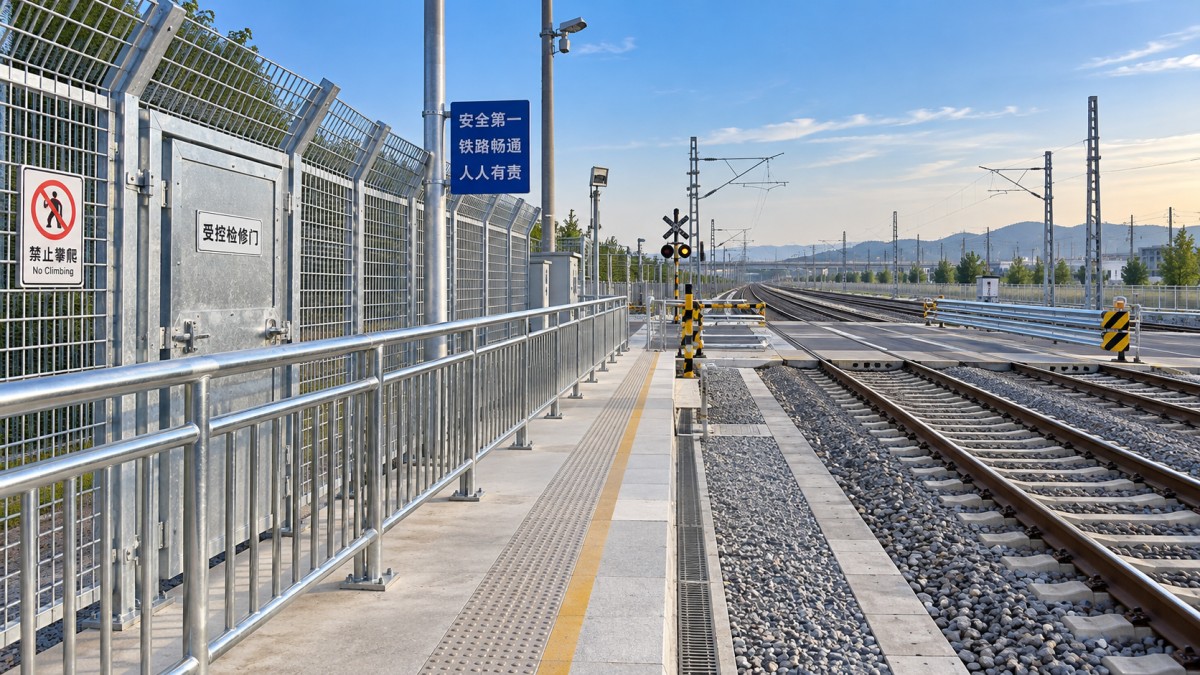
A railway station may contain several barrier types within a short distance. At public platforms, pedestrian railings and guardrails often define circulation routes, protect stairs or ramps, and discourage passengers from entering non-public zones. Their geometry matters: openings, handhold details, climbing resistance, gate locations, and sightlines all affect how people use the space. A barrier that blocks a necessary evacuation route or conflicts with tactile paving can introduce a new risk instead of solving one.
At level crossings, the concern is more dynamic. Road users must be channelled safely while rail operations retain necessary visibility and clearance. Vehicle containment barriers can be appropriate near embankments, drainage structures, bridge approaches, or other roadside hazards adjacent to the crossing approach. However, they should not be selected as a substitute for crossing-control equipment, warning systems, or compliant sight-distance design. The barrier’s role is to manage a specific departure-from-road risk, not to resolve every crossing hazard.
Trackside access requires another approach. Maintenance crews may need controlled gates, emergency access points, equipment passages, and safe routes beside active track. Continuous fencing can reduce unauthorized entry, but every opening must be deliberate. A poorly positioned gate can weaken security, complicate evacuation, or encourage unsafe shortcuts. Gate hardware, locking arrangements, hinge direction, and the ability to maintain a clear passage for authorized personnel should be resolved before fabrication.
Start with the Site, Not the Steel Section
Steel barriers are often specified by familiar shapes—tubular railings, mesh panels, channel posts, W-beam guardrails, or custom fabricated frames. Shape alone does not establish suitability. Site conditions determine whether the assembly will remain functional through its intended service period.
Corrosion is a practical example. Coastal stations, humid tunnels, industrial corridors, and areas exposed to de-icing salts can demand more than a standard paint finish. Hot-dip galvanizing is widely used for steel barrier components because it protects difficult-to-reach surfaces and supports long-term outdoor use. Yet coating selection should still consider cut edges, drilled holes, welded areas, drainage, water traps, and contact between dissimilar metals. A well-coated component can still deteriorate prematurely if the design holds standing water or if damage cannot be repaired easily.
Ground conditions also deserve early attention. Posts installed in concrete, bolted to slabs, fixed to retaining walls, or mounted on bridge structures behave differently. Existing utilities, cable routes, drainage channels, and buried foundations may limit post placement. If these constraints are discovered only after materials arrive on site, changes can affect safety clearances, programme dates, and installation cost.
Design for Interfaces and Maintainable Installation
Rail projects are interface-heavy. A barrier may meet platform finishes, drainage channels, cable containment, retaining walls, lighting columns, signals, or access-control systems. Drawings should make these interfaces visible rather than leaving them to site interpretation. The fabrication package should identify dimensions, tolerances, anchor locations, splice details, required site measurements, and which party is responsible for final setting-out.
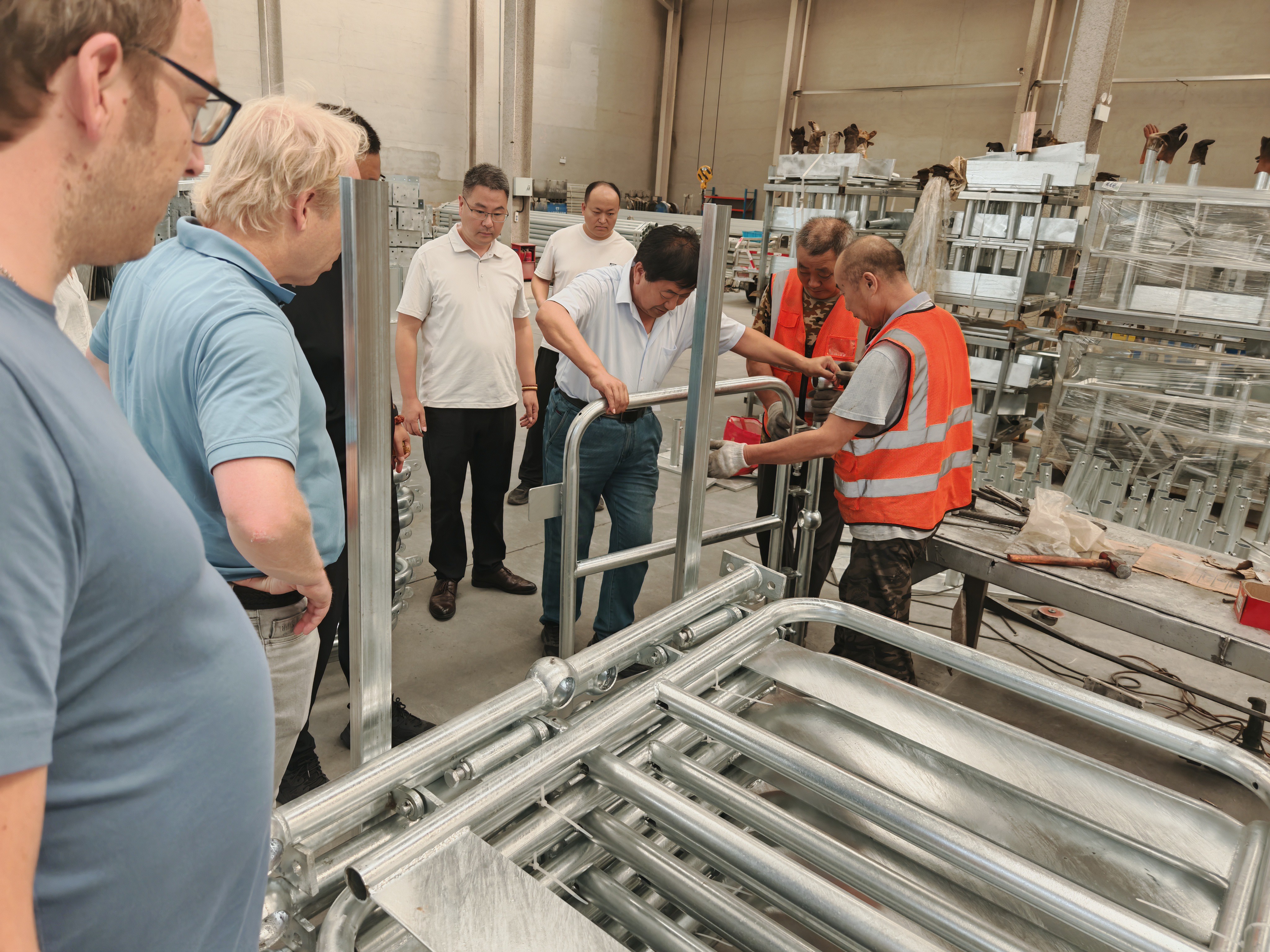
For fabricated steelwork, repeatability is valuable, but it should not erase site-specific requirements. A supplier that can work from project drawings or assist with design development can coordinate drilling, bending, rust removal, shot peening where specified, non-destructive testing, galvanizing, and painting within a controlled manufacturing sequence. This matters particularly when components must align with existing civil works or when an installation window is short.
Installation planning should also address how the work will be carried out around rail operations. Material lengths may be limited by access routes. Lifting methods may be restricted near overhead equipment. Temporary protection, possession arrangements, and inspection hold points can influence the most practical connection design. A barrier that is simple in a workshop can be difficult to fit safely beside a live railway.
Where Road-Grade Guardrails Fit into Rail Projects
Not every steel guardrail belongs inside a rail corridor, but road-grade systems can be relevant at road-rail interfaces, station access roads, maintenance depots, bridge approaches, and hazardous vehicle routes near railway property. In these settings, the design objective may be to absorb collision energy and redirect an errant vehicle away from a defined hazard.
For example, the Brazil ABNT 6971 Guardrail is a wave-shaped, hot-dip galvanized guardrail option associated with ABNT 6971 and AASHTO M180 references for highway applications. Its stated service life is over 20 years under appropriate conditions. That does not automatically qualify it for every railway location: the project team still needs to confirm the governing rail, roadway, structural, and local authority requirements. Its relevance is strongest where a vehicle-restraint function is clearly defined and the roadside standard aligns with the project’s design basis.
This distinction prevents a common specification error. Pedestrian segregation barriers should not be assumed to provide vehicle containment, and a highway guardrail should not be treated as a complete access-control solution. Each system should be selected against its actual hazard and anticipated loading condition.
Questions That Prevent Late-Stage Changes
- What event is the barrier intended to prevent or control: pedestrian intrusion, fall exposure, unauthorized entry, vehicle impact, or all of these in separate zones?
- Which standards, railway operator requirements, and local building or road rules govern the specific installation?
- Are track clearances, maintenance access, emergency egress, and visibility protected in the proposed layout?
- What corrosion environment applies, and can the selected finish be inspected and repaired after installation?
- Do drawings define foundations, anchors, transitions, gates, end treatments, and interfaces with existing structures?
- Can components be delivered, handled, and installed within the available rail access window?
These questions are especially useful when budgets are under pressure. Reducing steel weight or simplifying a post arrangement may appear economical, but the decision should be checked against the required function, foundation capacity, corrosion exposure, and replacement strategy. The lowest initial material cost can become expensive when access for repair requires track possessions or disruption to station operations.
A Practical Route to a Safer Barrier Package
A strong Railway Safety Barrier package combines a clear risk definition with coordinated drawings and manufacturable details. Before release to fabrication, project teams should verify the barrier type by zone, finish requirements, dimensions, fixing method, inspection expectations, and documentation required at handover. Where a custom steel solution is needed, manufacturing to approved drawings helps preserve design intent while allowing details such as drilled holes, bends, protective treatment, and connection plates to be prepared consistently.
The final decision should be based on the specific operating environment, not on a generic promise of durability. When the hazard, access constraints, corrosion conditions, and governing requirements are understood together, barriers become easier to install, easier to maintain, and far more likely to protect the people and assets they were intended to serve.
Leave A Reply
Need More Details?
Contact me for details on creating and managing design projects, project features, and services and prices
consult
Our company was established in 1998. It‘s a Chinese pioneer enterprise integrating production and sales, committed to providing high-quality steel products to customers at home and abroad.

First class quality service and professional after-sales team.
Get in Touch
*We respect your confidentiality and all information are protected.