






NEWS
Categories List
Recent Posts
 Netherlands Client Delegation Visits Our Factory to Advance European Highway Guardrail CooperationOct 10, 2026
 AASHTO M180 Guardrail Requirements: A Practical Guide to Material ComplianceOct 10, 2026
 Port Safety Barriers: Selecting Protection for Vehicle Lanes and Loading AreasOct 10, 2026
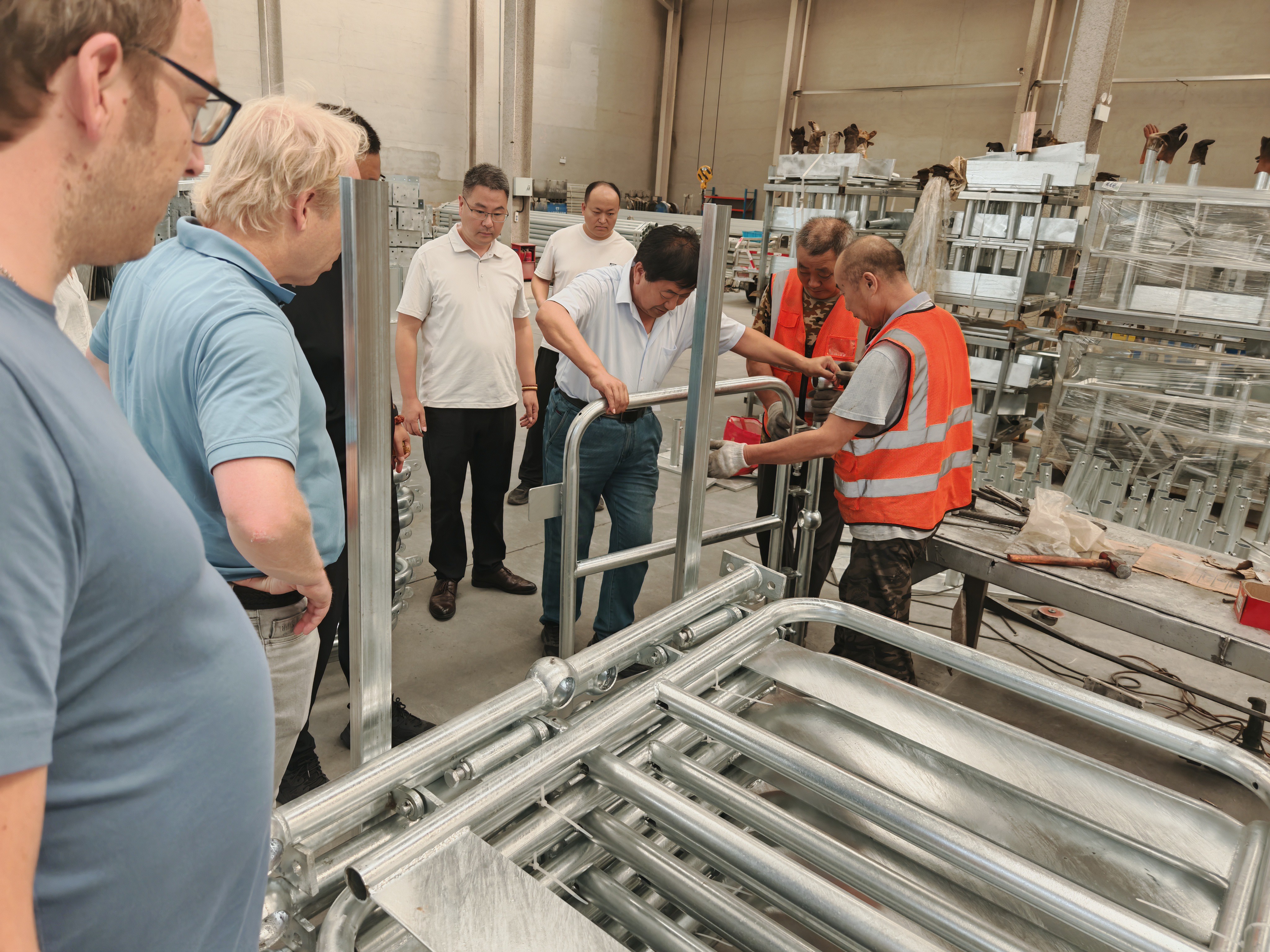
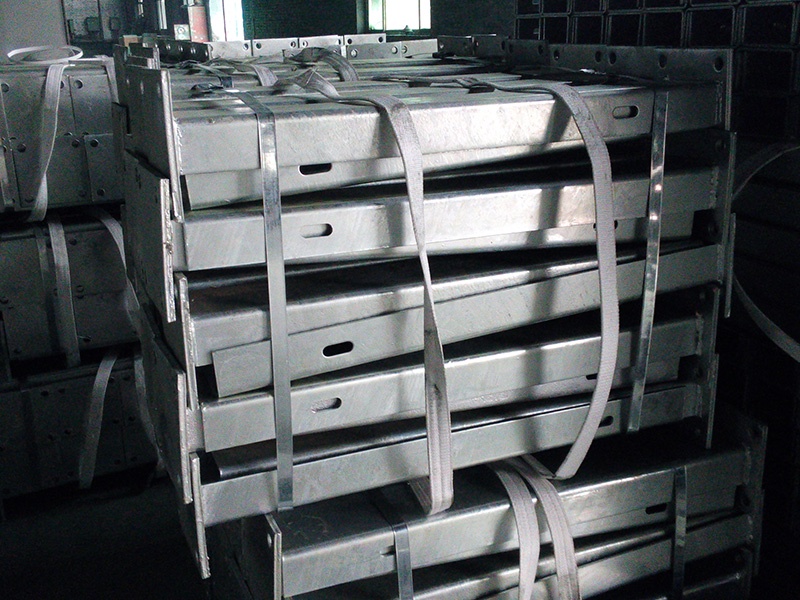
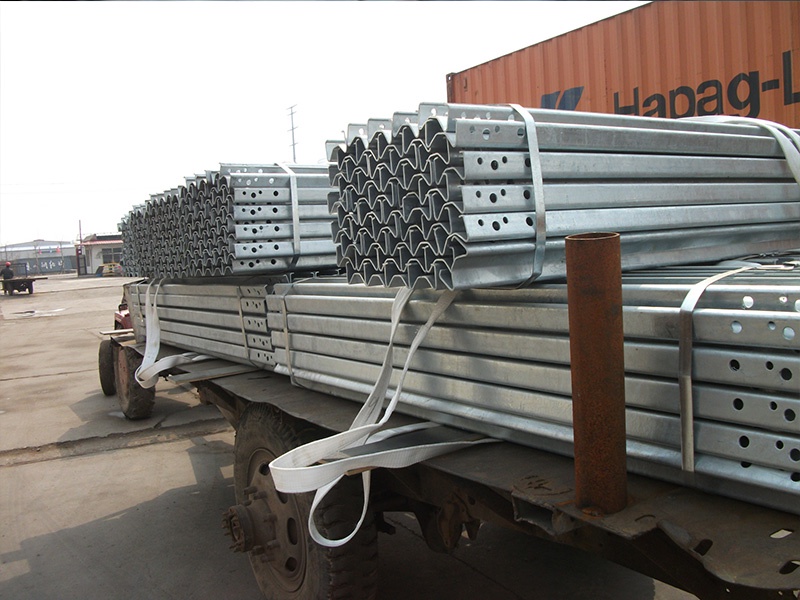
Understanding Highway Guardrail Components starts with a practical question: why do similar systems perform differently over time? On transport corridors, fit and service life depend on more than beam shape alone. Posts, bolts, spacers, end treatments, and coatings all influence alignment, impact response, corrosion resistance, and maintenance frequency. That is why component quality matters not only at procurement stage, but across design, fabrication, installation, and long-term roadside operation.
What the system includes in real projects
When people discuss Highway Guardrail Components, they often focus on the visible rail beam. In practice, the system is a coordinated assembly.
Typical components include steel posts, W-beams or thrie-beams, blockouts, splice bolts, nuts, washers, terminal sections, connectors, and protective finishes.
Each part has a structural role. If one element is out of tolerance, the whole run may become harder to install and less predictable in service.
Why fit is more than dimensional matching
Good fit means hole positions line up, beam laps connect cleanly, posts remain vertical, and transitions follow the road geometry without forced adjustment.
It also means the guardrail can be installed efficiently in the field. Excessive rework usually points to fabrication inconsistency or incomplete project coordination.
The manufacturing details that shape performance
Material selection is the first layer. Steel grade, thickness consistency, and mechanical properties affect strength, deformation behavior, and resistance to fatigue.
After that, process control becomes decisive. Drilling accuracy, bending precision, rust removal, shot peening, and galvanizing all influence whether Highway Guardrail Components perform as intended.
Manufacturers that work from project plans or customer drawings usually need tighter discipline. Small deviations during forming or punching can create cumulative installation problems across long roadway sections.
Non-destructive testing is also relevant where reliability expectations are high. It helps confirm that hidden defects will not shorten service life under repeated load and weather exposure.
Surface protection is not a finishing touch
For roadside steel, corrosion resistance is a primary performance issue. Galvanizing quality, coating thickness, paint adhesion, and edge protection influence how long the system remains serviceable.
This matters even more in coastal zones, mountain roads, industrial areas, and regions using deicing salts. In those environments, weak coating control usually appears early.
Where service life is gained or lost
The expected life of Highway Guardrail Components depends on a chain of conditions rather than a single specification.
In other words, durable performance comes from the match between product quality and project conditions. A strong component can still underperform if site demands were not considered early enough.
Project-specific design changes the component choice
Not every road section needs the same guardrail arrangement. Medians, bridges, ramps, embankments, and curves often require different layouts and accessory parts.
That is why Highway Guardrail Components should be reviewed as a system tied to drawing requirements, not as isolated stock items.
Corners and directional changes are a good example. In these areas, transition geometry and connection accuracy become more sensitive. Components such as Int & Ext Corners can support cleaner alignment where the guardrail path changes direction.
This is also where custom manufacturing capacity matters. When fabrication can follow drawings closely, installers spend less time compensating for mismatched parts on site.
What to check before comparing suppliers or specifications
A useful review should go beyond unit price. The more informative comparison usually includes process capability, inspection discipline, and consistency across batches.
- Confirm whether production follows your drawings, local standards, or a defined crash-performance requirement.
- Check tolerances for beam length, hole spacing, post section, and connector fit.
- Review galvanizing or painting specifications, especially for aggressive environments.
- Ask how drilling, bending, rust removal, and testing are controlled during production.
- Look at installation support, because field performance depends on more than delivered steel.
For transport infrastructure, this broader view usually leads to fewer adjustments, more predictable timelines, and lower lifetime maintenance pressure.
A practical way to move from research to decision
The most reliable understanding of Highway Guardrail Components comes from connecting three things: road conditions, drawing requirements, and manufacturing capability.
If a project includes custom geometry, harsh weather exposure, or strict installation tolerances, those points should shape the component review from the beginning.
A sensible next step is to map the full component list, compare critical tolerances, and verify coating and testing standards against the actual service environment. That creates a clearer basis for judging fit, expected maintenance, and overall service life.
Leave A Reply
Need More Details?
Contact me for details on creating and managing design projects, project features, and services and prices
consult
Our company was established in 1998. It‘s a Chinese pioneer enterprise integrating production and sales, committed to providing high-quality steel products to customers at home and abroad.

First class quality service and professional after-sales team.
Get in Touch
*We respect your confidentiality and all information are protected.