






Highway Guardrail systems are engineered to absorb and redirect crash energy, helping keep vehicles within the roadway and reducing the severity of impacts. Understanding their components supports safer selection decisions.
The key point is simple: a guardrail does not work because one steel beam is strong. It performs because connected components deform, transfer forces, and guide a vehicle predictably.
What Does a Highway Guardrail Need to Do During a Crash?
For researchers evaluating Highway Guardrail systems, the first question is not which profile looks strongest. It is whether the complete system can manage vehicle energy without creating another hazard.
When a vehicle strikes a roadside barrier, its momentum must be reduced, redirected, or both. The guardrail should prevent severe departure while avoiding abrupt deceleration or dangerous vehicle overturning.
A properly designed system generally allows controlled deflection. This movement spreads impact loads across the rail, posts, connections, and surrounding soil instead of concentrating forces at one location.
Guardrails are commonly installed beside embankments, bridge approaches, fixed roadside objects, medians, sharp curves, and other hazardous road sections where leaving the roadway carries serious consequences.
Performance depends on crash conditions, including vehicle mass, speed, impact angle, ground condition, rail height, post spacing, and available clearance behind the installation.
This is why material specifications alone are insufficient. A high-quality rail section can still underperform when posts, terminals, bolts, installation geometry, or maintenance practices are incorrect.
For practical comparison, readers should consider the guardrail as an energy-management assembly. Its purpose is to contain and redirect a vehicle while reducing the likelihood of severe secondary impacts.
How the Rail Beam Distributes Impact Energy
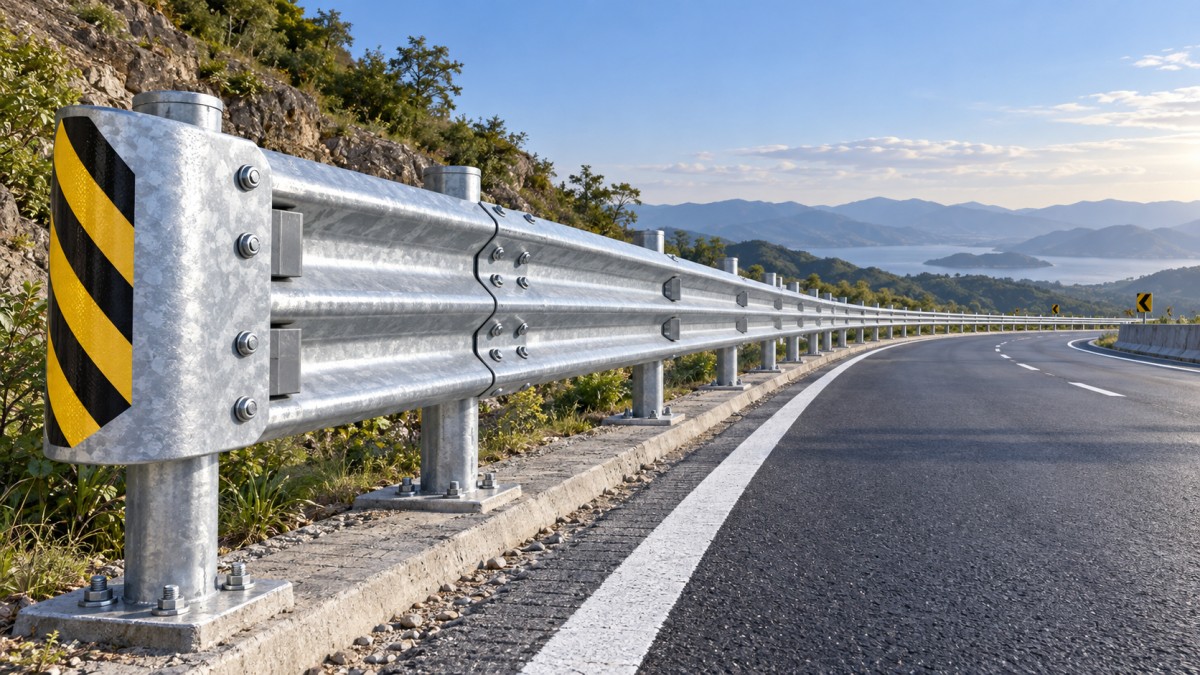
The rail beam is the most visible Highway Guardrail component. W-beam and thrie-beam profiles are widely used because their shapes provide useful stiffness while permitting controlled deformation.
During impact, the beam bends and develops tension along its length. Rather than stopping the vehicle instantly, it helps guide the vehicle parallel to the roadway.
Wave-shaped profiles are especially valuable because their geometry can flex under load while retaining structural continuity. The corrugated form also contributes to strength relative to flat steel strips.
Rail splices are equally important. Overlapping sections and correctly positioned bolts allow force transfer from one panel to the next, creating a continuous barrier rather than separate segments.
Splice orientation must follow the intended traffic direction. Improper overlap can expose an edge that catches a vehicle, reducing redirection performance and increasing the chance of rail damage.
Manufacturing quality affects this behavior. Hole locations, steel thickness, bending accuracy, edge condition, and coating coverage all influence whether panels fit correctly and transfer loads as designed.
For curved alignments and complex hazardous sections, a Bend Highway Guardrail can be manufactured to follow the roadway geometry while maintaining the intended protective function.
Why Posts Matter as Much as the Guardrail Beam
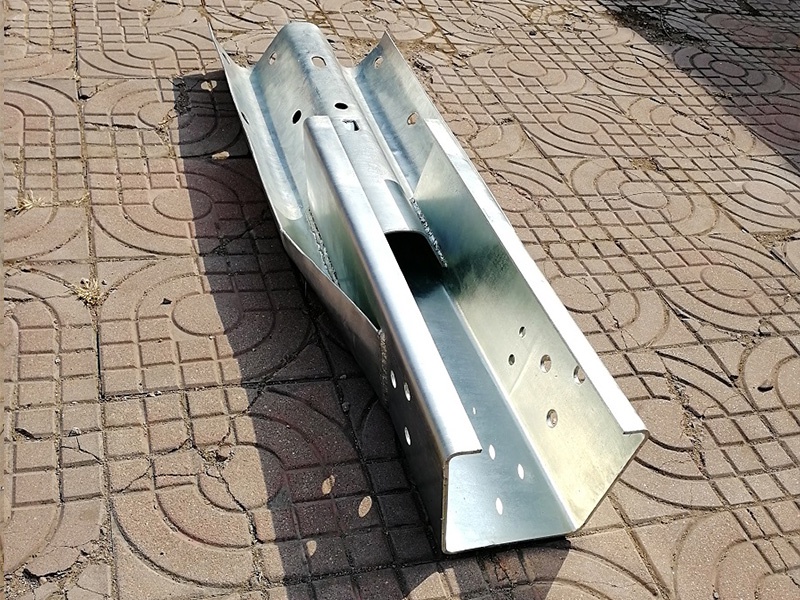
Posts anchor the barrier system to the ground and determine how much the rail can deflect. They are not merely supports placed beneath a steel beam.
At impact, posts resist lateral movement and transfer forces into the soil. Depending on the design, some posts may bend, rotate, release, or remain comparatively rigid.
Post spacing has a major effect on stiffness. Closer spacing generally creates a stiffer barrier with lower deflection, while wider spacing may permit more movement and energy absorption.
Neither arrangement is universally better. The correct selection depends on required containment level, available deflection distance, expected traffic, roadside hazards, and the tested or approved system configuration.
Soil conditions also deserve attention. Loose, saturated, rocky, or poorly compacted ground can alter post resistance, making field installation conditions materially different from nominal design assumptions.
Where soil cannot provide expected support, designers may need alternative foundations, longer posts, reinforced installations, or a different barrier type. This requires engineering review rather than field improvisation.
For procurement evaluation, confirm post section dimensions, steel grade, galvanizing requirements, hole patterns, and compatibility with the selected rail profile before manufacturing begins.
Blockouts Create Space for Safer Vehicle Redirection
Blockouts are spacer elements installed between the rail and the posts. Although relatively small, they play an important role in improving guardrail impact behavior.
Without a blockout, a struck vehicle may contact a post too early. This can increase snagging risk, disrupt the vehicle path, and create concentrated loading at the post location.
By holding the rail away from the post face, blockouts help the rail deform more freely. They can also improve the barrier’s ability to redirect a vehicle smoothly.
Common blockout materials include timber, steel, and composite products, depending on system requirements, environmental exposure, local specifications, and compatibility with the intended crash-tested design.
The blockout must be installed with correct orientation and dimensions. A substitute component that appears similar can change rail height, clearance, connection behavior, and vehicle interaction.
In replacement projects, damaged or missing blockouts should not be treated as cosmetic defects. Their condition should be assessed alongside rail damage, post alignment, and fastener integrity.
For information researchers, this component illustrates an important principle: Highway Guardrail performance depends on spacing and geometry, not only on steel strength or coating thickness.
Terminals and End Treatments Control the Start and Finish
Guardrail ends require special treatment because an exposed rail can present a serious penetration or spearing hazard during a head-on collision. End treatments manage this risk.
A terminal may absorb energy, allow controlled rail movement, or guide the vehicle away from the rail end. Its function depends on the approved design and impact direction.
Terminals should never be selected solely by visual similarity. Their effectiveness depends on the complete arrangement of posts, cables, anchors, rail connections, and installation dimensions.
Anchorage is another essential part of terminal performance. It provides resistance that allows the rail to develop tension and redirect an impacting vehicle along the barrier length.
Field modifications around driveways, drainage structures, signs, or utility conflicts can compromise terminal geometry. Such changes should be reviewed against applicable roadway authority requirements.
Inspectors should look for bent terminal parts, missing cables, damaged anchorages, exposed sharp edges, and ground erosion. These conditions may affect performance even when the rail appears intact.
Because end treatments involve complex interactions, buyers should seek drawings, tested-system documentation, installation instructions, and clear component identification from qualified suppliers or designers.
Fasteners, Coatings, and Fabrication Determine Long-Term Reliability
Bolts, nuts, washers, and splice hardware connect the guardrail into a working system. Incorrect fastener size, grade, placement, or tightening can change how loads travel during impact.
Fasteners should match the specified system and be protected against corrosion. Mixed or incompatible hardware can accelerate deterioration and create maintenance difficulties in exposed roadside environments.
Corrosion protection is particularly important because barriers are exposed to rain, salt spray, de-icing chemicals, temperature changes, and debris. Section loss can reduce long-term structural reliability.
Hot-dip galvanizing is widely used to protect steel guardrail components. A properly applied zinc coating helps resist corrosion and can support a service life exceeding twenty years in suitable conditions.
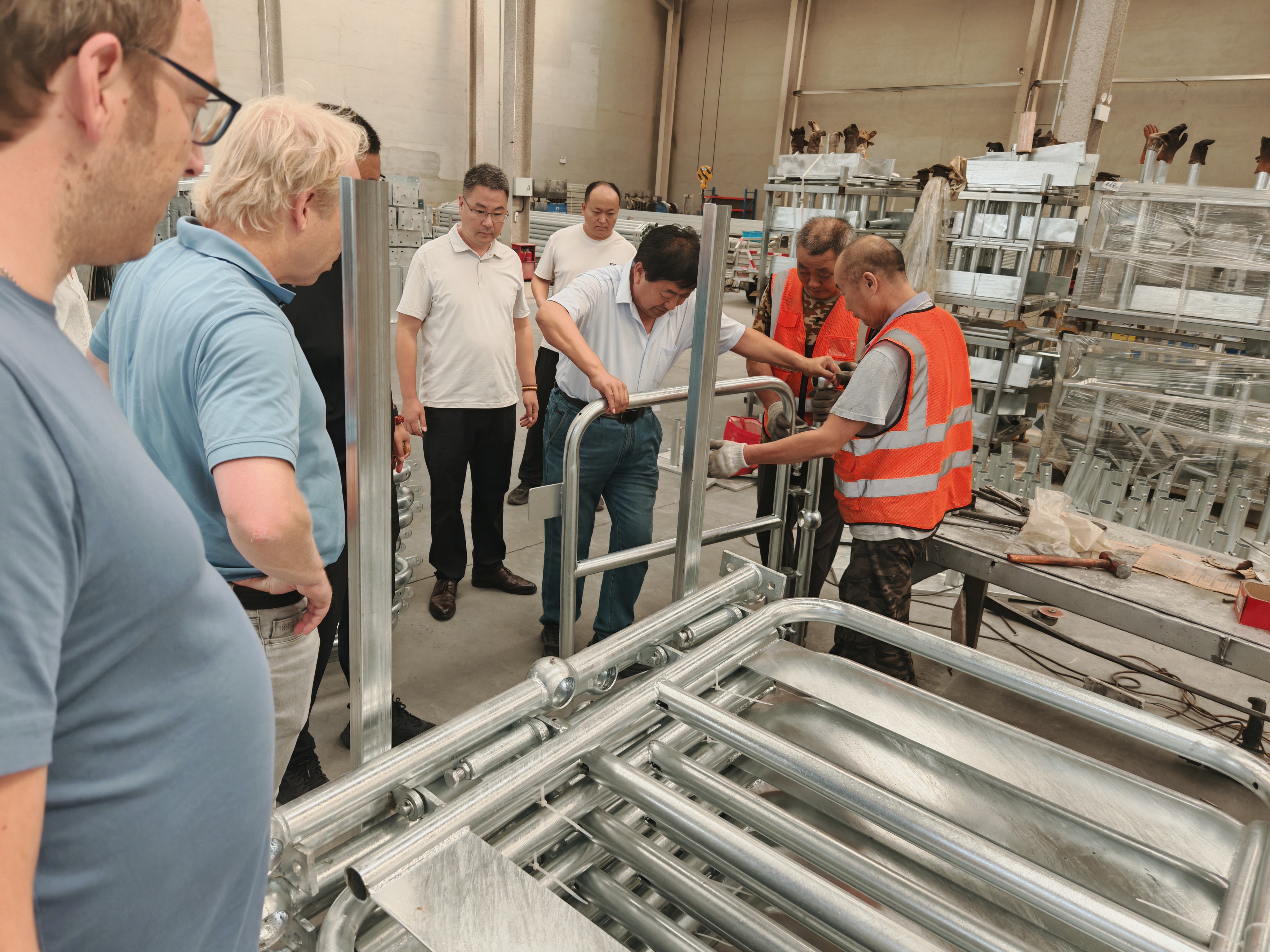
Reliable production also includes drilling, bending, rust removal, shot peening where required, non-destructive testing, galvanizing, and painting when project specifications call for additional protection.
When comparing suppliers, ask whether fabrication follows approved drawings, whether dimensional inspections are documented, and whether coating quality is verified before shipment and installation.
Relevant standards may include U.S. AASHTO M180 and applicable regional requirements, such as Brazil’s ANBT standards. Certification should be checked against the actual project specification.
How to Evaluate a Guardrail System Before Choosing It
Start with the roadside problem: identify the hazard, traffic speed, vehicle mix, required containment level, available deflection space, terrain, and environmental exposure at the installation location.
Next, evaluate the complete system rather than ordering rail panels independently. Confirm rail profile, post type, blockouts, terminal details, splice connections, hardware, and anchorage requirements together.
Ask for drawings that show dimensions, hole spacing, rail height, post intervals, curve requirements, and terminal assemblies. These details reduce ordering errors and simplify installation coordination.
For export or multi-region projects, confirm standards, test expectations, coating requirements, packaging, and documentation before production. Compliance assumptions can lead to expensive delivery or approval delays.
Installation quality should remain part of the selection decision. Even correctly manufactured components require proper alignment, embedment depth, torque practices, and field inspection to perform as intended.
Maintenance planning also matters. A system should be inspected after impacts and periodically checked for corrosion, missing hardware, loose posts, damaged terminals, and changes in surrounding ground conditions.
The most dependable choice is one that matches the site risk, governing requirements, and complete-system design. Strong materials are valuable, but coordinated engineering and installation create actual roadside protection.
Conclusion: Guardrail Safety Comes From the Complete System
A Highway Guardrail absorbs crash energy through coordinated deformation and load transfer among rails, posts, blockouts, terminals, anchors, fasteners, and the supporting ground.
For informed evaluation, focus on system compatibility, manufacturing precision, corrosion protection, applicable standards, and installation conditions. These factors determine whether roadside protection can perform when it is needed.
