






NEWS
Categories List
Recent Posts
 Netherlands Client Delegation Visits Our Factory to Advance European Highway Guardrail CooperationOct 10, 2026
 AASHTO M180 Guardrail Requirements: A Practical Guide to Material ComplianceOct 10, 2026
 Port Safety Barriers: Selecting Protection for Vehicle Lanes and Loading AreasOct 10, 2026
Angle Bracket load limits are a practical safety issue in roadside installations, not a minor detailing question. In guardrail systems, these brackets transfer force between rails, posts, and connection points under impact, vibration, wind, and corrosion exposure. A bracket that looks adequate on paper can still fail in service if load paths, material quality, or fabrication accuracy are not properly evaluated.
Why load limits matter in roadside systems
An Angle Bracket in a highway barrier does more than hold parts together. It helps maintain geometry, spacing, and resistance when a vehicle strike pushes the system beyond normal static conditions.
That is why load limits must be judged against real installation demands. Static capacity alone is not enough for roadside use, where dynamic impact and environmental degradation often control long-term performance.
From an evaluation standpoint, the bracket should be considered part of the whole restraint assembly. If its capacity is lower than adjacent members, the system may fail at the connection before the rail absorbs energy as intended.
What defines an Angle Bracket load limit
Load limit usually refers to the maximum force or combined stress a bracket can carry without permanent deformation, cracking, bolt-hole tearing, or connection slip beyond allowed tolerances.
In practice, the true limit depends on several linked variables:
- steel grade and thickness
- bracket geometry and bend radius
- hole position and edge distance
- bolt type, preload, and connection layout
- galvanizing or coating effects on tolerance
- installation alignment and field conditions
Simple calculations can estimate bearing, shear, and bending resistance. However, roadside installations often require a broader review of how the Angle Bracket behaves within the complete impact-tested barrier configuration.
Material and manufacturing factors behind performance
Bracket performance begins long before site installation. Manufacturing details directly affect whether the designed load limit is realistic and repeatable across batches.
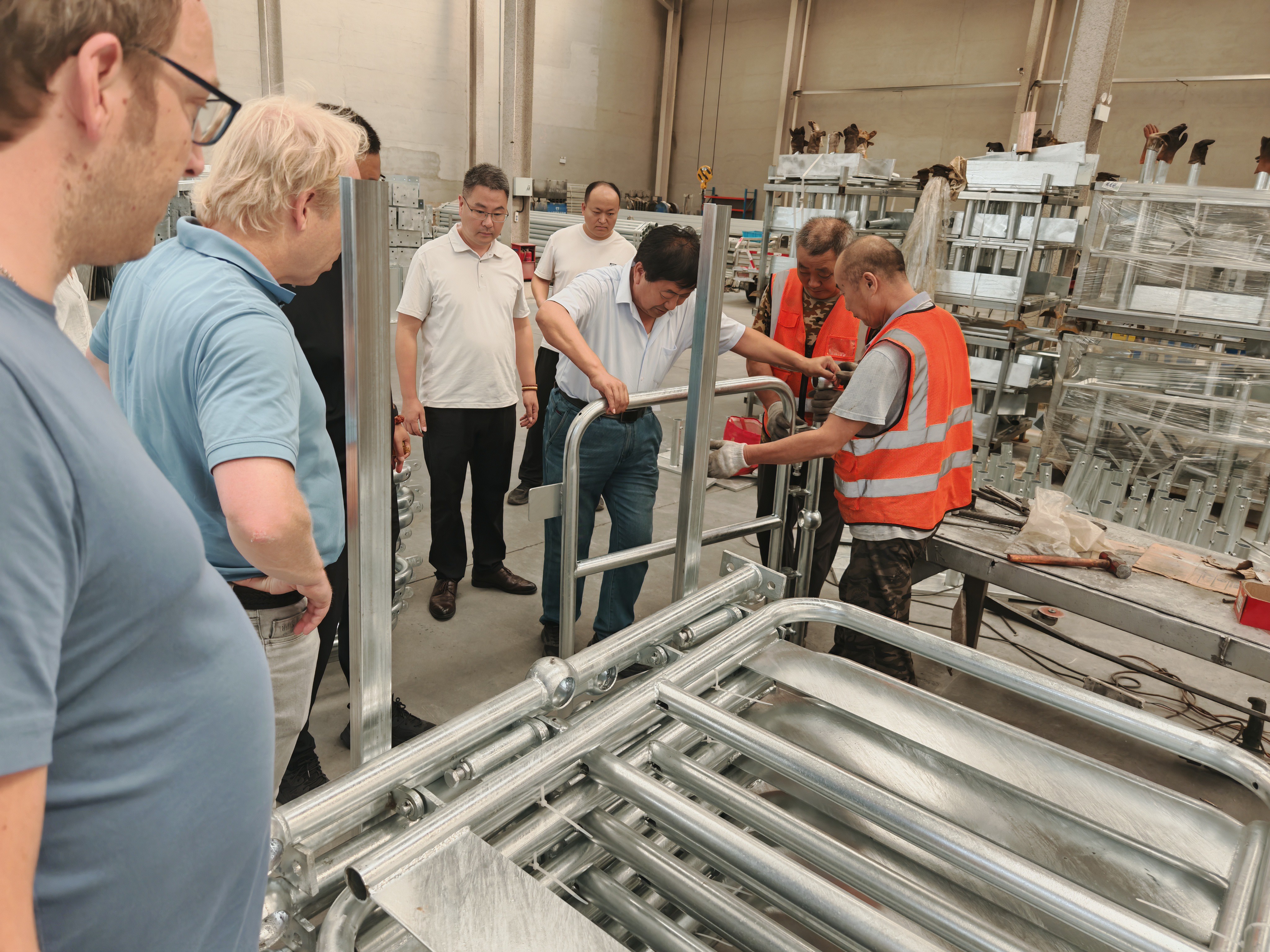
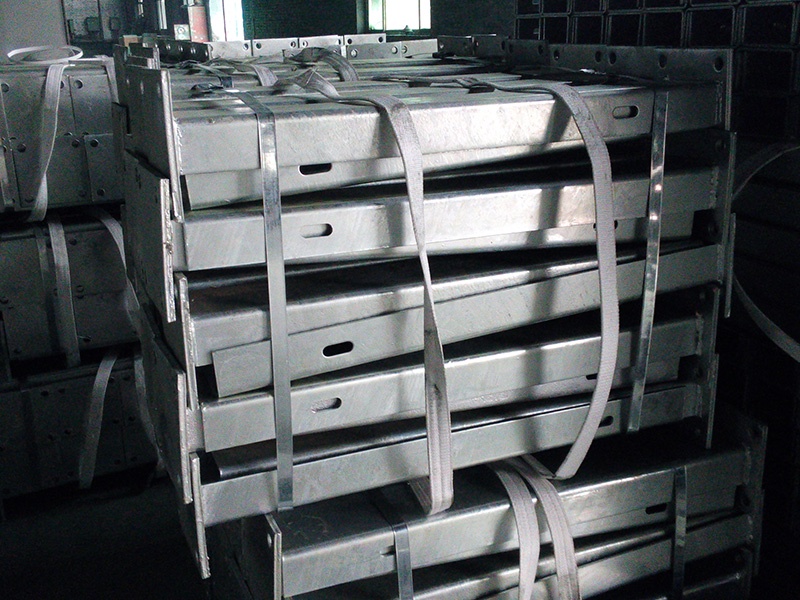
For highway guardrails and steel products, production capability matters because brackets are exposed to fatigue, moisture, road salts, and accidental overload. Fabrication stages such as drilling, bending, rust removal, shot peening, non-destructive testing, galvanizing, and painting are not cosmetic steps.
They influence crack initiation, dimensional consistency, surface durability, and corrosion resistance. A poorly controlled bend can reduce effective section strength. Misaligned holes can introduce eccentric loading. Inadequate coating coverage can shorten service life in aggressive roadside environments.
Where brackets are produced to project drawings, the review should confirm that fabrication tolerances and inspection methods match the required structural behavior, not just the nominal shape.
Typical failure modes worth checking
Where evaluation becomes more demanding
Not every roadside project places the same demand on an Angle Bracket. Straight highway sections with predictable loading differ from bridges, ramps, medians, and hazardous road sections.
More attention is usually needed when:
- the barrier transitions between systems
- post spacing changes
- the rail height or offset is customized
- the site has high corrosion exposure
- project drawings introduce non-standard brackets
In these cases, a review of catalog values alone is often insufficient. The bracket should be checked against the actual support condition, the rail profile, and the expected force redistribution during impact.
Reading product data in a useful way
When a guardrail system claims high impact resistance, the bracket evaluation should connect that claim to measurable details. Material certificates, coating records, dimensional checks, and test references all help separate robust assemblies from generic copies.
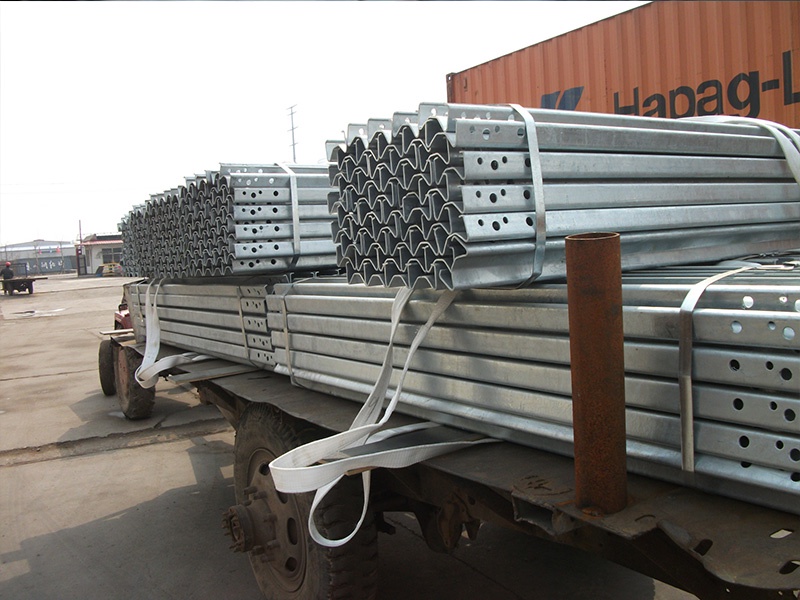
A useful example is Norway Guardrail, used on highways and hazardous road sections. Its wave-shaped design is intended to absorb collision energy and guide vehicles back toward their path, while hot-dip galvanizing supports a service life beyond 20 years in exposed conditions.
For evaluation, the point is not the product name itself. The point is whether the bracket and its connected members support the same performance target, with traceable compliance to standards such as U.S. AASHTO M180 and Brazil’s ANBT requirements.
Practical checks before approval
A reliable review usually combines design, fabrication, and installation evidence. The following checks are especially useful when verifying an Angle Bracket for roadside applications:
- Confirm the bracket matches approved drawings and rail geometry.
- Check whether calculated loads reflect impact conditions, not only dead load.
- Review bend quality, hole accuracy, and coating thickness records.
- Verify non-destructive testing or inspection where critical details require it.
- Assess whether bolts, posts, and rails have balanced capacities.
- Look for evidence that custom production follows the specified standard set.
This is where full-service manufacturing can reduce uncertainty. When quotation, design adaptation, fabrication, and installation support are aligned, it becomes easier to trace responsibility for bracket performance through the whole project chain.
A sound next step
Angle Bracket load limits should be judged as part of system behavior, not as isolated metal parts. The best decisions come from linking structural calculations, manufacturing quality, corrosion protection, and installation accuracy.
When comparing roadside solutions, start with the project drawings, expected impact conditions, coating environment, and relevant standards. Then check whether the proposed bracket details can be manufactured consistently and verified against those requirements before installation begins.
Leave A Reply
Need More Details?
Contact me for details on creating and managing design projects, project features, and services and prices
consult
Our company was established in 1998. It‘s a Chinese pioneer enterprise integrating production and sales, committed to providing high-quality steel products to customers at home and abroad.

First class quality service and professional after-sales team.
Get in Touch
*We respect your confidentiality and all information are protected.