






NEWS
Categories List
Selecting steel frames for corrosive transport environments should begin with the exposure condition, not the steel grade or the lowest quoted price. A frame that performs well on an inland roadside may deteriorate much faster beside a marine bridge, a de-icing route, an industrial corridor, or a tunnel approach with persistent moisture. For technical evaluators, the practical goal is to match structural capacity, corrosion protection, fabrication details, and inspection access to the actual service environment.
Steel frames used in guardrail assemblies, bridge transitions, sign supports, lighting protection zones, and median openings must retain both section capacity and connection integrity. Corrosion is not only an appearance issue. When it develops at bolt interfaces, welded edges, enclosed sections, drainage points, or damaged coating areas, it can reduce effective thickness and create maintenance work in locations where lane closures are expensive and disruptive.
Classify the Exposure Before Comparing Options
“Corrosive environment” is too broad to be useful on its own. The same steel frame may face very different risks depending on where it is installed and how contaminants remain on its surface.
This classification changes the decision. A heavier section with poorly protected joints can be a weaker long-term choice than a properly detailed frame with a suitable coating system. Likewise, a coating cannot compensate for a design that continually traps salt water or prevents inspection of critical connections.
Evaluate the Frame as a System, Not a Steel Section
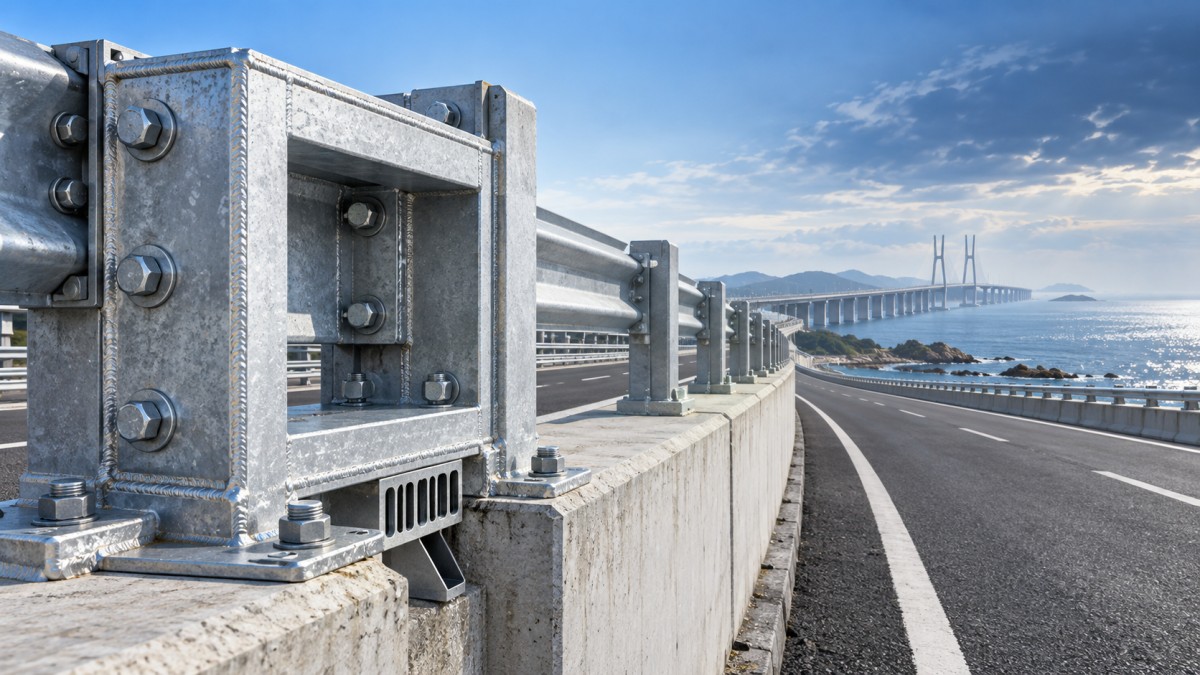
Section properties remain essential. The frame must carry its permanent loads, service loads, wind effects where relevant, vehicle impact actions, and any load transferred from connected barriers or equipment. However, evaluators should review the complete load path: frame members, welded joints, bolt groups, base plates, anchors, brackets, and interfaces with concrete or adjacent galvanized components.
For road safety installations, stiffness can matter as much as nominal strength. A frame that yields or twists excessively during an impact may change the behavior of the connected safety system. This is especially relevant at bridge sections, ramp divergences, median openings, and locations beside lighting poles or pier protection zones, where the installation often has limited space to dissipate impact energy.
Do not assume that a thicker plate automatically delivers a more durable solution. Increased thickness may provide corrosion allowance and improve resistance to local damage, but it also affects forming, welding, handling, support loads, and cost. The better decision is based on required structural performance plus a protection system designed for the exposure category.
Coating Choice Depends on Detail Quality
Galvanizing, zinc-aluminum-magnesium coatings, and paint or powder-coating systems can all have a role, but their performance depends heavily on surface preparation and fabrication sequence. Edges must be properly prepared; welds should be sound and free of defects that retain moisture; and drilled or cut areas require treatment consistent with the specified protection system.
A painted finish may provide visibility or identification benefits, including warning colors used in highway safety areas. It should not be selected only for appearance. The evaluator should establish whether it is a topcoat over a metallic protection system, how repairable it is after impact damage, and whether the expected inspection program can identify coating breakdown before corrosion spreads beneath the film.
Closed or hollow members deserve additional scrutiny. They can offer strong structural efficiency, yet internal moisture becomes a serious concern if openings, end closures, vents, drains, or weld details are poorly designed. Frames exposed to salt spray should shed water, avoid narrow crevices, and allow deposits to be removed during maintenance where practical.
Fabrication Controls Often Decide Service Life
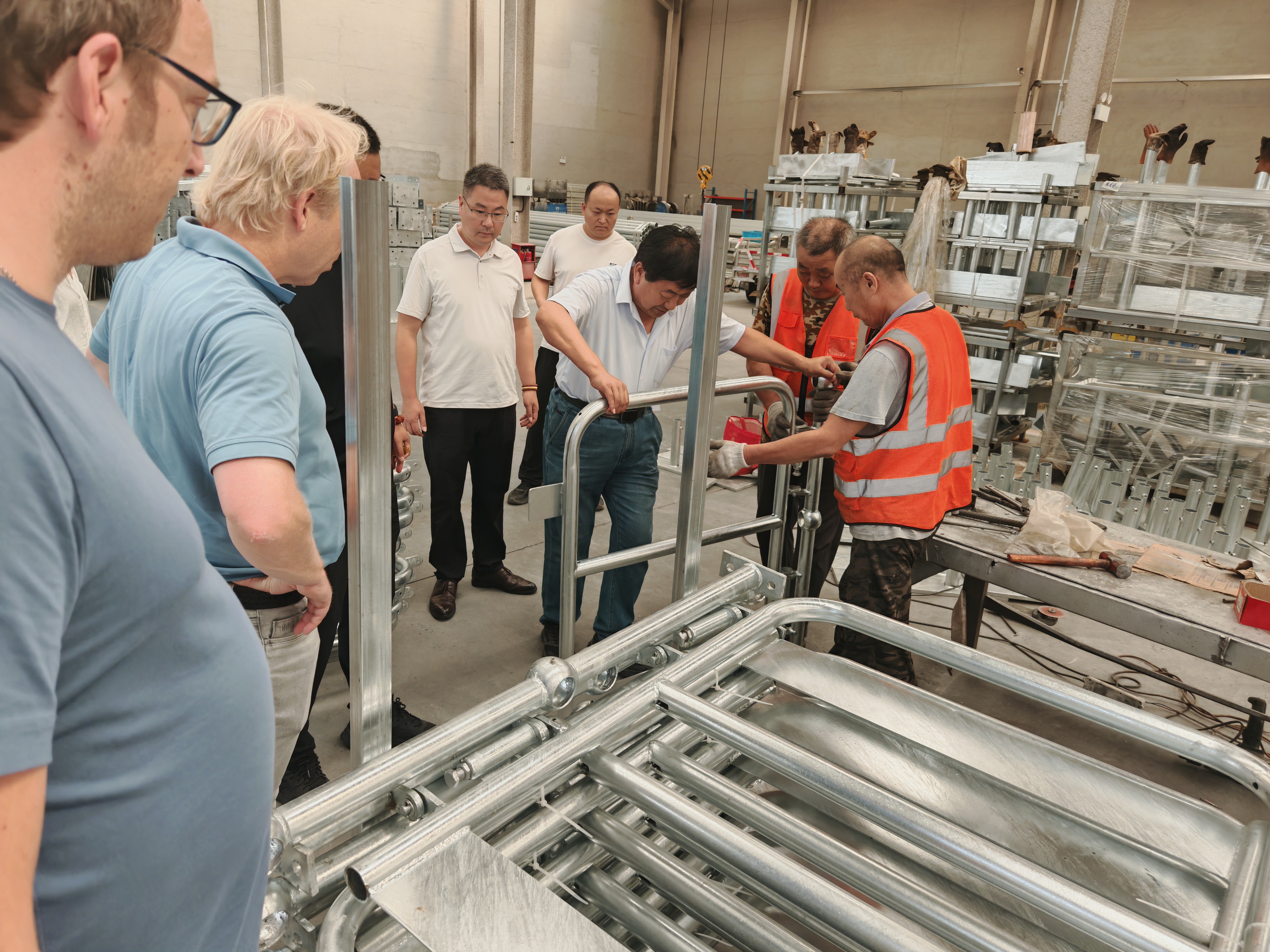
Corrosion resistance can be lost during manufacture long before the frame reaches the site. Technical review should cover material traceability, forming limits, welding procedures, weld inspection where the design requires it, surface cleaning, shot peening or other specified preparation, coating application, and handling protection after finishing.
For fabricated steel frames, drawings should identify not only member sizes but also drainage holes, venting requirements, connection clearances, field splice details, and treatment of damaged coating after installation. General notes such as “galvanize after fabrication” are often insufficient when a component has sealed boxes, overlapping plates, or field-drilled connections.
A capable manufacturer can work from issued drawings or support design development, but the technical package should make responsibilities clear. If the supplier is expected to design the frame, provide the design actions, site exposure, interface geometry, installation constraints, and required documentation. If manufacture is to drawing, confirm that the drawings specify the finish, inspection criteria, tolerances, and repair requirements needed for the intended environment.
Where a High-Stiffness Safety Frame Is Appropriate
At high-risk expressway sections, conventional corrugated beam arrangements may not provide the required rigidity or impact behavior for the available geometry. In those cases, a hollow rectangular steel beam solution can be appropriate when its crash-system compatibility, foundations, transitions, and corrosion protection are assessed together.
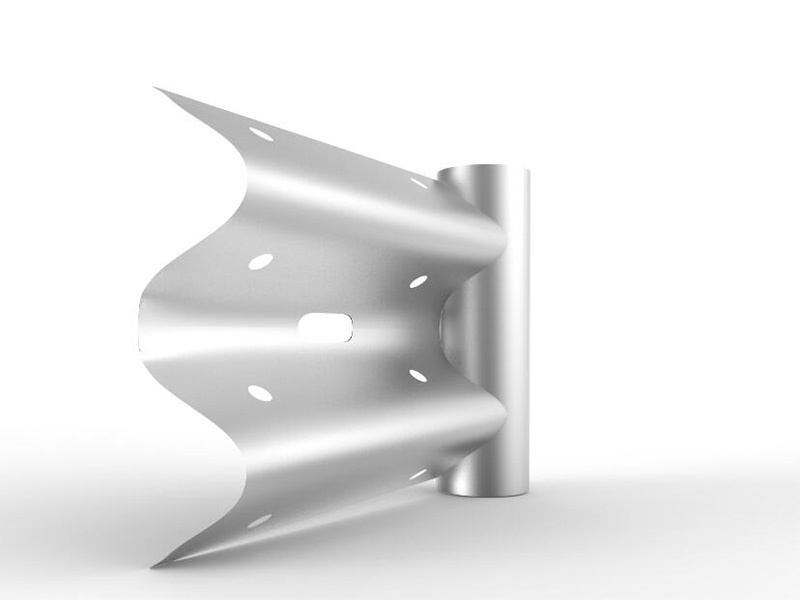
For example, an Open Box Connector is intended for highway safety systems, bridge sections, median-strip openings, ramp divergences, and protection zones near poles or piers. Its high-strength hot-rolled steel plate construction and hollow rectangular profile are relevant where high section modulus and bending stiffness are needed to limit deformation under vehicle collision. Zinc-aluminum-magnesium coating options can be particularly relevant for coastal or salt-fog exposure, while powder-coated warning finishes may suit locations where visibility is also part of the installation requirement.
That does not make a high-stiffness frame the default answer. A more rigid barrier-related component can alter load transfer to posts, anchors, bridge decks, or transitions. It should be selected only when the complete assembly is designed for that behavior and the maintenance team can inspect and repair it after an impact.
Review Maintainability Before Awarding the Order
Maintenance access is frequently undervalued during procurement. Ask where corrosion is most likely to start, whether inspectors can see that area, and whether repairs can be completed without extensive removal of surrounding infrastructure. Bolted covers, inaccessible cavities, tightly spaced members, and details located immediately above drainage paths can turn a routine repair into a traffic-management operation.
The most useful procurement comparison is therefore not initial frame price alone. It is the expected effort required to inspect, clean, repair, replace, and safely access the component throughout its service period. A solution with a higher initial coating and fabrication cost can be justified when it reduces repeated lane closures, localized corrosion repairs, or premature replacement in a severe exposure zone.
A Practical Technical Review Sequence
- Define the exposure at the exact installation location, including salt, standing water, industrial pollutants, splash zones, and drying conditions.
- Confirm structural actions and load paths for the frame, its connections, and the supporting structure.
- Review coating type, coating sequence, surface preparation, edge treatment, and field-repair method together.
- Check drawings for drainage, venting, crevice control, access for tightening and inspection, and protection of cut or drilled areas.
- Request manufacturing and quality records appropriate to the component, including dimensional checks, welding controls, non-destructive testing where specified, and coating inspection.
- Compare maintenance access and replacement practicality before making a final commercial decision.
The strongest selection is usually the steel frame that fits the actual exposure, transfers loads predictably, and remains inspectable after installation. Treating corrosion protection, fabrication quality, and structural behavior as one decision produces a more reliable transport-infrastructure asset than optimizing any one of them in isolation.
Leave A Reply
Need More Details?
Contact me for details on creating and managing design projects, project features, and services and prices
consult
Our company was established in 1998. It‘s a Chinese pioneer enterprise integrating production and sales, committed to providing high-quality steel products to customers at home and abroad.

First class quality service and professional after-sales team.
Get in Touch
*We respect your confidentiality and all information are protected.