






NEWS
Categories List
Highway Safety Equipment Standards That Matter During Project Acceptance
Project acceptance is where Highway Safety Equipment must prove more than visual compliance. Quality and safety managers need defensible evidence that installed systems match approved drawings, standards, and site conditions.
The practical question is not whether guardrails and steel components look complete. It is whether every item will perform predictably during impact, exposure, maintenance, and future inspections.
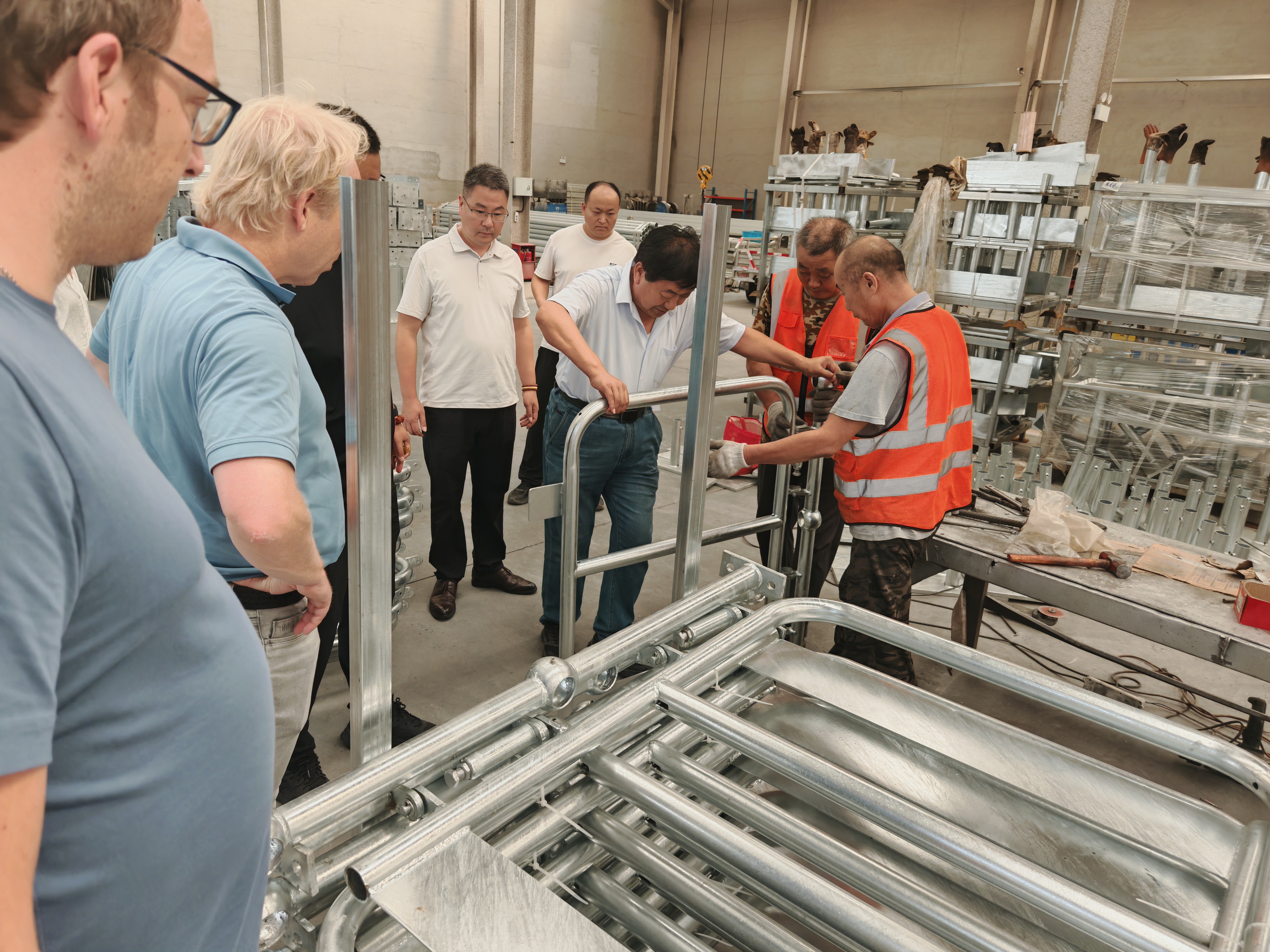
A reliable acceptance process combines document review, material traceability, dimensional measurement, coating inspection, installation verification, and corrective-action control before final handover.
Start With the Approved Acceptance Basis
Acceptance should begin with a controlled reference package, not a site walk alone. Inspectors need the latest approved drawings, specifications, method statements, and approved material submittals.
Confirm that the contract identifies applicable national, regional, or project-specific standards. Highway authorities may impose requirements beyond commonly recognized guardrail or steelwork specifications.
Check drawing revision numbers against the products installed on site. A technically compliant component can still fail acceptance when it follows a superseded layout or detail.
Prepare an inspection and test plan that assigns hold points, responsible parties, measurable criteria, records, and release authority. This reduces subjective decisions during the final inspection.
For Highway Safety Equipment, acceptance criteria should cover product type, performance classification, dimensions, fasteners, protective coatings, placement, and interaction with adjacent roadway elements.
Separate mandatory requirements from preferred construction practices. This helps teams identify actual nonconformities without delaying handover over issues that do not affect contractual or safety compliance.
Verify Material Identity Before Assessing Appearance
Material traceability is often the fastest way to uncover hidden risk. Request mill certificates, batch records, galvanizing certificates, and manufacturer inspection reports before approving installed steel products.
Certificates should be traceable to delivered lots through heat numbers, production batches, tags, packing lists, or other controlled identifiers. Generic certificates do not provide meaningful acceptance evidence.
Review steel grade, mechanical properties, chemical composition where specified, and thickness. These values matter because impact systems rely on predictable deformation rather than merely visible strength.
For formed guardrail beams, posts, brackets, and connection plates, verify that fabrication records reflect approved material grades. Unauthorized substitutions can change structural behavior and corrosion performance.
Where required by the project specification, confirm non-destructive testing results for critical welds or steel connections. Review both the testing method and the documented acceptance criteria.
Quality managers should also confirm that any repair work was authorized. Unrecorded welding, drilling, straightening, or coating repair may invalidate the product’s original compliance documentation.
Measure Guardrail Geometry and System Continuity
Dimensions are not cosmetic details in a roadside safety system. Rail height, post spacing, offset, embedment depth, and terminal positioning influence how the system redirects or contains vehicles.
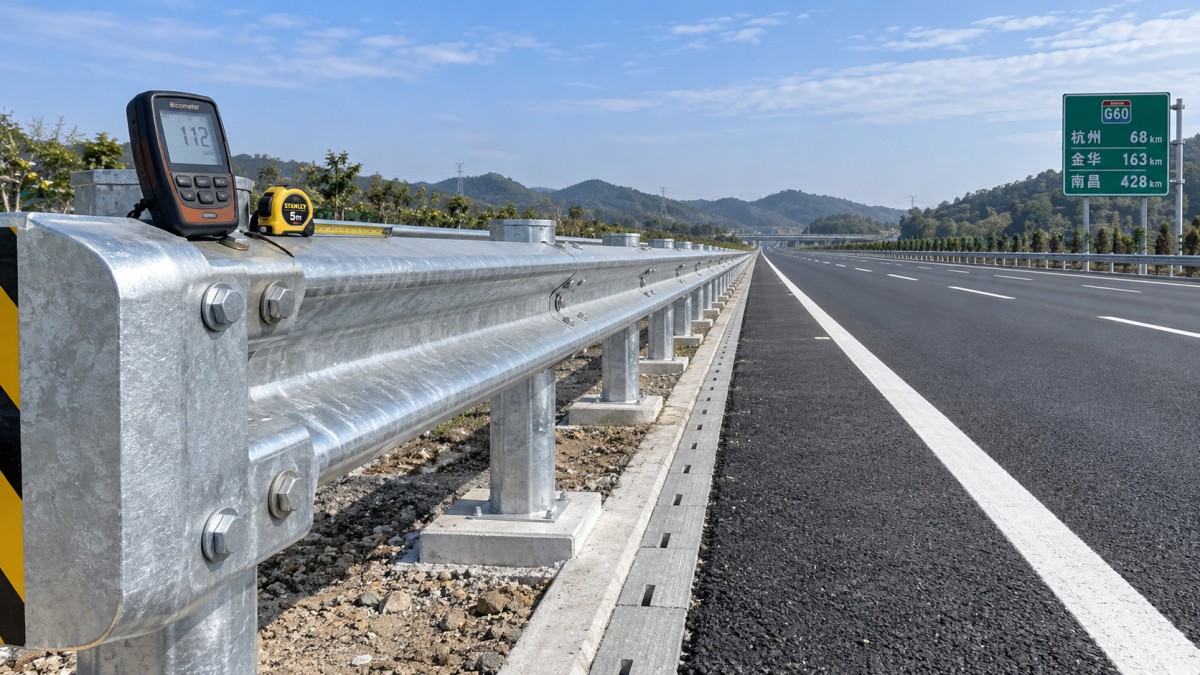
Use calibrated measuring tools and record results by location. Sampling may be permitted, but sampling plans should focus on transitions, curves, bridge approaches, terminals, and areas with unusual ground conditions.
Confirm that guardrail profile, rail overlap direction, bolt-hole alignment, and splice orientation match approved installation details. Incorrect overlap can create snagging points during a vehicle impact.
Check post plumbness and foundation conditions. Posts that appear secure may still be unacceptable when driven too shallow, installed in unsuitable soil, or obstructed by underground utilities.
Inspect the clear zone around the system. Drainage structures, curbs, signs, exposed concrete, temporary barriers, and embankment changes can affect the practical performance of installed Highway Safety Equipment.
Transitions deserve special attention because they connect systems with different stiffness. A mismatch between a guardrail, bridge rail, concrete barrier, or terminal can concentrate forces unexpectedly.
Use location-based checklists rather than broad statements such as “installation satisfactory.” A detailed record supports closeout decisions and makes later maintenance inspections substantially more efficient.
Inspect Coating Quality for Long-Term Safety Performance
Corrosion protection affects service life, maintenance cost, and structural reliability. Acceptance should verify coating type, coverage, thickness, adhesion where required, and the treatment of damaged areas.
For galvanized components, review galvanizing certificates and inspect for bare areas, excessive runs, sharp deposits, blocked holes, and surface conditions that compromise assembly or drainage.
Measure coating thickness using calibrated gauges at representative points. Test locations should include edges, formed sections, weld areas, repairs, and surfaces exposed to standing water or road spray.
Painted components require equivalent control. Confirm surface preparation, specified paint system, dry-film thickness, cure condition, color requirements, and compatibility with galvanized or previously coated substrates.
Do not accept touch-up work solely because it looks uniform. Confirm that repaired areas use approved materials and procedures, especially where zinc-rich repair systems or multi-coat systems are specified.
Pay attention to drainage and moisture traps. Poorly detailed connections can allow water accumulation even when individual components have compliant coatings, accelerating corrosion after acceptance.
Check Fasteners, Accessories, and Small Components
Small components can determine whether a safety system functions as designed. Inspect bolts, nuts, washers, blockouts, reflectors, anchors, brackets, and proprietary connectors with equal discipline.
Verify fastener grade, diameter, length, finish, quantity, and tightening requirements. Missing washers or incorrectly substituted bolts may alter slot movement, load transfer, and corrosion compatibility.
Where torque values are specified, verify them using calibrated equipment and documented sampling. Avoid assuming that visibly tight bolts meet the required preload or assembly condition.
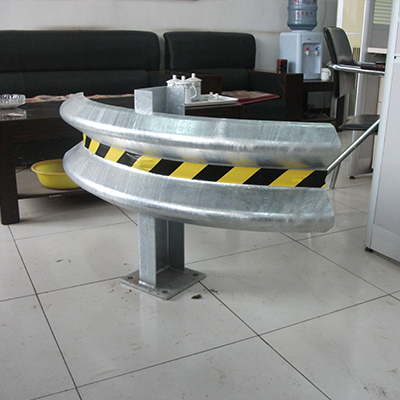
Accessory components should be inspected against their approved drawings and intended function. For example, Spring Steel Buffers may require confirmation of orientation, attachment method, and movement clearance.
Ensure proprietary components are not mixed with visually similar alternatives. Safety hardware is often tested as a complete system, meaning unapproved substitutions can affect system eligibility for acceptance.
Inspect all connections for sharp projections, damaged threads, excessive gaps, misaligned holes, and field modifications. These issues can create hazards for vehicles, road users, maintenance crews, and inspectors.
Confirm Installation Quality Against Real Site Conditions
Project acceptance must account for field conditions, not only workshop quality. Compare actual installation locations with approved chainage, road geometry, slope, shoulder width, and drainage arrangements.
Review areas affected by site changes after design approval. Pavement widening, utility relocation, revised drainage, or changes in embankment profile may require updated safety-equipment details.
Verify that terminals and end treatments have sufficient space to function. Obstructions, grading changes, or unauthorized landscaping can reduce effective length or introduce secondary impact hazards.
Inspect interfaces with signs, lighting poles, fencing, noise barriers, pedestrian facilities, and maintenance access routes. Coordination failures frequently remain hidden until the final acceptance walk.
Where installation includes concrete foundations or anchorages, review concrete strength records, anchor placement measurements, curing information, and approved repair reports before releasing the work.
Site cleanliness also matters. Remove loose steel, packaging, surplus bolts, sharp offcuts, and temporary supports before handover, since these can create operational hazards after traffic opens.
Close Nonconformities With Evidence, Not Assumptions
A useful punch list identifies the exact location, requirement, observed condition, responsible party, corrective action, due date, and verification result for every nonconformity.
Classify findings by safety consequence and acceptance impact. Critical defects affecting containment, transition performance, structural stability, or corrosion protection should be resolved before conditional acceptance is considered.
Require documented reinspection after corrective work. Photographs alone are rarely sufficient when the repair concerns hidden dimensions, coating thickness, material identity, or fastening condition.
Maintain a final turnover package containing drawings, certificates, inspection reports, test records, calibration evidence, warranties, as-built locations, maintenance requirements, and approved deviation records.
This documentation protects both the project owner and the acceptance team. It demonstrates that decisions were based on objective evidence rather than incomplete visual observations or informal assurances.
Make Acceptance a Readiness Decision
Effective project acceptance confirms that Highway Safety Equipment is ready to protect road users throughout its intended service life, not simply ready to be removed from a contractor’s scope.
Quality control and safety managers should prioritize traceability, geometry, coatings, connections, site compatibility, and closed corrective actions. These checks address the failures most likely to matter after opening.
When records, materials, installation, and field conditions align, acceptance becomes a confident operational decision. When they do not, early correction is far less costly than a post-opening safety failure.
Leave A Reply
Need More Details?
Contact me for details on creating and managing design projects, project features, and services and prices
consult
Our company was established in 1998. It‘s a Chinese pioneer enterprise integrating production and sales, committed to providing high-quality steel products to customers at home and abroad.

First class quality service and professional after-sales team.
Get in Touch
*We respect your confidentiality and all information are protected.