






NEWS
Categories List
Recent Posts
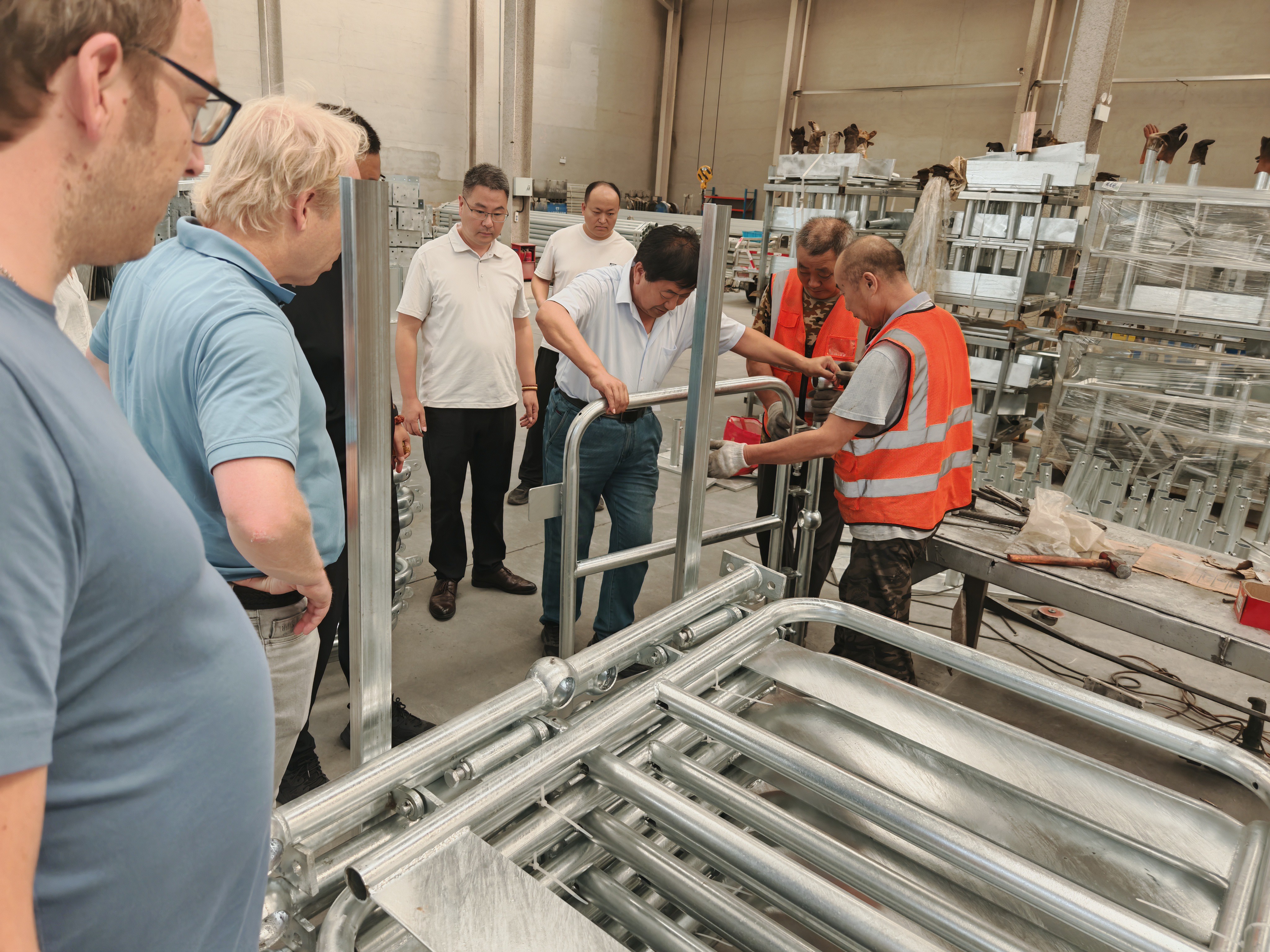
 Netherlands Client Delegation Visits Our Factory to Advance European Highway Guardrail CooperationOct 10, 2026
 AASHTO M180 Guardrail Requirements: A Practical Guide to Material ComplianceOct 10, 2026
 Port Safety Barriers: Selecting Protection for Vehicle Lanes and Loading AreasOct 10, 2026
Why do ABNT Guardrail checks matter before approval?
ABNT Guardrail approval is not a paperwork exercise. It is a performance decision that affects roadside safety, maintenance exposure, and project acceptance.
In practice, the biggest failures start earlier than installation. Material mismatch, poor drilling accuracy, weak galvanizing, or incomplete inspection records often create hidden risk.
That is why approval reviews should connect design, fabrication, surface protection, and field fit-up. A guardrail can look correct and still fail key ABNT Guardrail expectations.
For steel barrier projects, it helps to treat approval as a checkpoint chain. Quotation, drawing review, manufacturing, testing, galvanizing, painting, and installation all need traceable control.
What should be confirmed first in an ABNT Guardrail review?
Start with the baseline documents. The most useful question is simple: does the supplied product match the approved drawing, project class, and required ABNT Guardrail specification?
Before looking at appearance, confirm these essentials:
- Steel grade and mechanical properties
- Beam profile, thickness, and section type
- Post spacing, hole positions, and connection details
- Coating system, zinc mass, and finish condition
- Mill certificates, inspection reports, and lot traceability
If drawings are project-specific, dimensional tolerance becomes even more important. A small deviation in punched holes or bent sections can delay installation across the whole alignment.
More complete manufacturers usually support this stage with drawing-based production, quotation review, and fabrication planning. That reduces the gap between design intent and finished guardrail parts.
Which product checks usually decide whether ABNT Guardrail items pass or fail?
Most approval outcomes are driven by a few measurable points. The table below helps separate visual acceptance from technical acceptance.
Dimensional checks should always be sampled against approved drawings. Coating checks should be measured, not guessed from color or gloss.
Where connection continuity matters, some projects also review interface parts such as Third Wave Connector to confirm fit, alignment, and compatibility with the barrier system.
How do manufacturing steps affect ABNT Guardrail compliance?
A compliant ABNT Guardrail result depends on process discipline, not only final inspection. Problems introduced during drilling, bending, or galvanizing are rarely corrected later without cost.
For example, inaccurate hole punching may force field modification. That can damage zinc protection and create a nonconforming installation, even when the original steel grade is correct.
A stronger approval routine usually asks how the product was made. Useful evidence includes:
- Process records for drilling and bending
- Non-destructive testing where specified
- Rust removal and shot peening control
- Galvanizing bath control or paint inspection data
- Final lot identification linked to drawings
When production follows the project plan or supplied drawings from the beginning, approval becomes more predictable. Rework, rejected lots, and site delays usually drop.
Where do approval teams most often make the wrong call?
One common mistake is approving by appearance alone. Clean finish matters, but ABNT Guardrail acceptance depends on measurable conformity, not visual neatness.
Another issue is treating installation as separate from product approval. In reality, post embedment, alignment, bolt tightening, and terminal transitions can affect barrier performance.
There is also a documentation trap. Missing heat numbers, incomplete test records, or unclear coating reports can stop approval even when the fabricated parts seem usable.
A practical review question is this: if a failure occurs later, can every ABNT Guardrail component be traced back to its drawing, process route, and inspection result?
What is the best way to prepare for a smooth ABNT Guardrail approval?
The best preparation starts before fabrication. Confirm drawings, tolerances, coating expectations, and inspection hold points early, especially for custom highway barrier projects.
It also helps to align manufacturing and installation logic. Beam sections, posts, bolts, and transition parts should be reviewed as one system, not as isolated items.
For projects using specialized connection details, components such as the Third Wave Connector should be checked within the full assembly, not only as individual parts.
A sensible next step is to build an approval checklist around four areas: drawing match, manufacturing control, coating quality, and installation readiness.
That approach keeps ABNT Guardrail reviews focused on real safety outcomes. It also makes supplier comparison, risk control, and project sign-off much easier to defend later.
Leave A Reply
Need More Details?
Contact me for details on creating and managing design projects, project features, and services and prices
consult
Our company was established in 1998. It‘s a Chinese pioneer enterprise integrating production and sales, committed to providing high-quality steel products to customers at home and abroad.

First class quality service and professional after-sales team.
Get in Touch
*We respect your confidentiality and all information are protected.